Rejoignez-nous pour un voyage dans le monde des livres!
Ajouter ce livre à l'électronique
Grey
Ecrivez un nouveau commentaire Default profile 50px
Grey
Abonnez-vous pour lire le livre complet ou lisez les premières pages gratuitement!
All characters reduced
Social Status Symbols - cover

Social Status Symbols

Xena Mindhurst

Traducteur A AI

Maison d'édition: Publifye

  • 0
  • 0
  • 0

Synopsis

"Social Status Symbols" explores the intricate relationship between our material possessions and social identity, revealing how the items we own serve as powerful communicators of our place in society. The book skillfully weaves together research from psychology, economics, and anthropology to demonstrate how status symbols function as a sophisticated language of social communication, influencing everything from career prospects to romantic partnerships.Through a systematic examination of consumer behavior and cross-cultural studies, the book unveils three fundamental mechanisms through which people use material goods: social differentiation, group affiliation, and personal validation. Particularly fascinating is the book's analysis of how status symbols adapt across different cultures while maintaining their core function in establishing social hierarchies.The authors present compelling evidence from both developed and developing economies, showing how luxury brands, cultural artifacts, and even digital possessions serve as modern-day markers of social position. The narrative progresses from examining the neurological foundations of status-seeking behavior to exploring how different societies encode status in material objects, before culminating in an analysis of emerging digital status symbols.By combining quantitative research with anthropological field studies and psychological experiments, the book offers readers a comprehensive understanding of how material possessions shape our social dynamics and self-perception. This approach makes it particularly valuable for professionals in marketing, social researchers, and anyone interested in understanding the psychology behind consumer behavior and social status.
Disponible depuis: 31/01/2025.
Longueur d'impression: 118 pages.


D'autres livres qui pourraient vous intéresser

  • Freedom from Health Anxiety - Understand and Overcome Obsessive Worry about Your Health or Someone Else's and Find Peace of Mind - cover

    Freedom from Health Anxiety -...

    PhD Karen Lynn Cassiday, PsyD...

    • 0
    • 0
    • 0
    Are you constantly worrying about your health, or the health of a loved one? Do you frequently check yourself for lumps, bumps, tingling, or pain? Do you find yourself endlessly looking up symptoms on the internet? Perhaps you find yourself asking others for reassurance or validation that you’re okay, obsessing over health scares in the media, or monitoring your blood pressure on an hourly basis? No matter how your health anxiety manifests, it can be a crippling psychological burden. Endlessly ruminating about illness and death can affect all aspects of life—at home, work, school, as well as the doctor’s office. 


    In Freedom from Health Anxiety, nationally recognized anxiety expert Karen Lynn Cassiday teaches you skills to conquer health anxiety, once and for all. You'll learn to switch from focusing on worst-case scenarios to appreciating the joy of the present moment—regardless of  health status. Using a blend of cognitive behavioral therapy (CBT), positive psychology, and the author's "learned inhibition" model, you'll finally acquire the tools you need to take charge of your fear and break the cycle of stressing over your—or your loved one's—well-being. You'll also learn effective methods for tolerating health uncertainty, getting in touch with your body's cues, and rediscovering the pleasure of the present.
    Voir livre
  • The Sand Garden by the Sea - Marty and Devorah's Story - cover

    The Sand Garden by the Sea -...

    Debra J Cohen

    • 0
    • 0
    • 0
    Once, in a place called Gaza, Jewish families lived among gardens, vineyards, and the peaceful sound of the sea. It was a land filled with beauty and hope. The Jewish people who lived there loved their homes, their schools, and their neighborhoods. 
    In a spirit of peace, the Jews gave this land to their Palestinian neighbors, hoping it would be the beginning of friendship. But sadly, instead of peace, the leaders called Hamas destroyed the gardens and vineyards. They built only concrete walls and hidden tunnels meant to bring harm, not kindness. 
    Since then, the people of Israel have not found the peace they offered. On October 7, 2023, a terrible attack brought much sorrow and fear. Since that day, the Jewish people have faced more pain and danger, even though their deepest wish is to live safely and peacefully in their homeland. 
    This book was written so children and families around the world will know the story: that the Jewish people long for peace, but their neighbors chose hatred instead of friendship. The author hopes that by remembering the past and telling the truth with gentle hearts, we can all dream of a future where peace and kindness will finally grow again-like gardens by the sea. This book reflects a true story that happened in Gaza when the Jews were forced off of their land as part of a peace deal with the Palestinians. Only the names have been changed to protect the innocent.
    Voir livre
  • @ EMBRACE YOUR INNER CHILD - Volume of emotions 01 - cover

    @ EMBRACE YOUR INNER CHILD -...

    Carlos Arroba (arrobaverso)

    • 0
    • 0
    • 0
    This work is a multisensory exercise for you to reconnect with your inner child, discovering and integrating its wounds. 
    It's a summary of what has been lived and experienced, to understand everything that I had grown and learned in this process that was not pleasant, but made me become an even more humane being. 
    Do you want to transform your life and understand your current process? 
    Here are some keys that I share with you, so that you yourself become your own spiritual teacher. 
    You will find digital art illustrations and songs composed to accompany each chapter. By enjoying these works, you will feel what I have felt. 
    I translate emotions into works of art, so you will have an exhibition of emotions in images, with music as a companion. 
    Thank you for choosing this work to understand your path, I continue to share with you in more works, everything that I have learned.
    Voir livre
  • The History of England Volume 4 - The Reign of Queen Elizabeth I - cover

    The History of England Volume 4...

    David Hume

    • 0
    • 0
    • 0
    In Volume 4, Hume closes his account of ‘England Under the House of Tudor’ begun in Volume 3, and devotes it entirely to the reign of Queen Elizabeth I. It was not really expected that she would survive to accede to the monarchy; and it was certainly unexpected that she would rule for so long (1558-1603) while steadfastly declining to take a husband. All in all, her reign was a remarkable achievement. 
    Elizabeth had so much to contend with over the years. From the start, she had to oversee the reinstatement of the Protestant religion after the tumultuous reign of her sister, Mary. Then came the testing matter of Mary, Queen of Scots which dragged on for decades.  
    There were also numerous Catholic conspiracies (many threats to her personally), requiring close attention by her protective spymaster ministers William Cecil and Francis Walsingham.  
    Then there were the complex relationships with other leading European powers, France and Spain, culminating in the spectacular climax in 1588 when Sir Francis Drake (and the weather) routed the Spanish Armada. 
    Hume does not approach Elizabeth and her reign with the ‘unbounded panegyrics’ so often adopted by historians before him. He criticises them for ‘having been so extremely ignorant of the transactions of this reign as to extol her for a quality which, of all others, she was the least possessed of – a tender regard for the constitution, and a concern for the liberties and privileges of her people.’ This, Hume insists, was not quite Elizabeth. 
    Despite acknowledging her popularity, Hume is at pains in his History to present a more rounded portrait. ‘The prerogatives of this princess were scarcely ever disputed, and she therefore employed them without scruple: Her imperious temper, a circumstance in which she went far beyond her successors, rendered her exertions of power violent and frequent, and discovered the full extent of her authority.  
    However, he continues, ‘the great popularity, which she enjoyed proves that she did not infringe any established liberties of the people’. 
    In Volume 4, Hume shows himself to be a historian of character and clarity, but also demonstrates his scholarly integrity. In the controversial issue of the guilt or innocence of Mary, for example, he went back to original documents to support his opinion. This is why his History of England remains an informative and stimulating account in the 21st century.
    Voir livre
  • Last Slave Ship The: Book Summary & Analysis - cover

    Last Slave Ship The: Book...

    Alexander Pike

    • 0
    • 0
    • 0
    This content is an independent and unofficial summary created for informational and educational purposes only. It is not affiliated with, authorized, approved, licensed, or endorsed by the original author or publisher. All rights to the original work belong to its respective copyright holders. This summary is not intended to substitute the original book, but to offer a concise overview and interpretation of its main ideas.


    Buried beneath the muddy waters of the Mobile River lay a secret too powerful to remain hidden forever.
     
    The Last Slave Ship uncovers the haunting true story of the Clotilda—the final vessel to bring enslaved Africans to America, decades after the transatlantic trade was outlawed. But this is not just a story about a ship. It’s a story about survival, memory, and the extraordinary strength of a people who refused to be erased.
    Voir livre
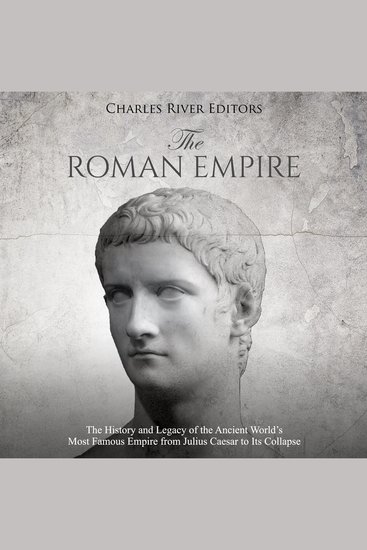
  • Roman Empire The: The History and Legacy of the Ancient World’s Most Famous Empire from Julius Caesar to Its Collapse - cover

    Roman Empire The: The History...

    Editors Charles River

    • 0
    • 0
    • 0
    Possibly the most important man of antiquity, and even all of history, was Julius Caesar. Alexander Hamilton, the famous American patriot, once remarked that “the greatest man who ever lived was Julius Caesar”. Such a tribute, coming from one of the Founding Fathers of the quintessential modern democracy in reference to a man who destroyed the Roman Republic, is testament to the enduring mark that Caesar left upon the world. The ultimate conqueror, statesman, dictator, visionary, and opportunist, during his time in power Caesar expanded the borders of Rome to almost twice their previous size, revolutionized the infrastructure of the Roman state, and destroyed the Roman Republic for good, leaving a line of emperors in its place. His legacy is so strong that his name has become, in many languages, synonymous with power: the Emperors of Austria and Germany bore the title Kaiser, and the Czars of Russia also owe the etymology of their title to Caesar. His name also crept further eastward out of Europe, even cropping up in Hindi and Urdu, where the term for “Emperor” is Kaisar. 
    Even in his time, Caesar was in many ways larger than life, and because of his legacy as virtual founder of the Roman Empire, much of what was written about – and by – him during his life and immediately after his assassination was politically motivated. His successor, Octavian Augustus, had a strong interest in ensuring that Caesar’s life be painted in a favorable light, while Caesar’s political enemies attempted to paint him as a corrupt, undemocratic dictator who was destroying the old order of the Republic.  
    As Roman leaders vied with each other for power and constantly fought civil wars, Rome’s famous roads fall into disrepair, the economy was crippled, the continent-wide trade system that had flourished in the previous years was replaced with a basic barter system, and there was a reduction in international trade.
    Voir livre