Unisciti a noi in un viaggio nel mondo dei libri!
Aggiungi questo libro allo scaffale
Grey
Scrivi un nuovo commento Default profile 50px
Grey
Iscriviti per leggere l'intero libro o leggi le prime pagine gratuitamente!
All characters reduced
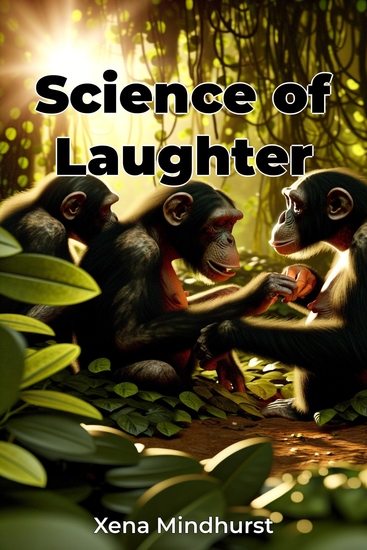
Science of Laughter - cover

Science of Laughter

Xena Mindhurst

Traduttore A AI

Casa editrice: Publifye

  • 0
  • 0
  • 0

Sinossi

"Science of Laughter" explores the multifaceted nature of laughter, bridging subjective human experiences with objective scientific analysis. It investigates laughter's biological underpinnings, psychological impact, and social significance.

 
Delving into the neurobiology of mirth, the book examines which brain regions are activated during laughter and the roles of neurotransmitters like dopamine and serotonin. It explains how laughter serves as a sophisticated signaling system that fosters cooperation, reduces stress, and strengthens relationships.

 
The book uniquely integrates neurobiological, evolutionary, and social perspectives to provide a comprehensive understanding of laughter. Starting with historical attempts to define laughter, it progresses through the neurobiological mechanisms, evolutionary origins, and social dimensions of mirth, drawing on diverse data sources like neuroimaging studies and behavioral experiments.

 
By understanding laughter, one can unlock fundamental truths about human connection and brain function.
Disponibile da: 12/02/2025.
Lunghezza di stampa: 57 pagine.

Altri libri che potrebbero interessarti

  • COLLECTION OF SONG POEMS A (90 PoeLyrics) - cover

    COLLECTION OF SONG POEMS A (90...

    Steve Dafoe

    • 0
    • 0
    • 0
    A collection of 90 Song Lyrics turned to Poems. Thereby PoeLyrics! Based on the music of Steve Dafoe.
    Mostra libro
  • The Cleveland John Doe Case - cover

    The Cleveland John Doe Case

    Thibault Raisse

    • 0
    • 0
    • 0
    Ohio. A suicide, no fingerprints, no identity. 


    In July 2002, the Eastlake police discovered a decomposed body in a modest studio apartment in Cleveland, Ohio. It appeared to be a suicide by firearm. The man was Joseph Newton Chandler III, a retiree whom neighbors and former colleagues described as quiet, secretive, and strange. But as the investigation progressed, less and less about Joseph's life and identity made sense. 


    In 2018, thanks to scientific advances in DNA, the man's true identity was finally discovered: Robert Ivan Nichols. A veteran with a wife and three sons, Nichols eventually left his family, telling his wife "One day you will know why." A few years later, in 1965, his family reported him missing. By 1978, he had stolen the identity of Joseph Newton Chandler III, who had been killed in a car accident at eight years old. But who was this man and why did he change his name? What secret was he trying to hide? 


    Thibault Raisse examines the case, exploring the many theories that have emerged, from the craziest to the most credible. Among these theories is a possible connection to the Zodiac Killer, whose murders date back to 1968 and 1969 in California.
    Mostra libro
  • Plato of Athens - A Life in Philosophy - cover

    Plato of Athens - A Life in...

    Robin Waterfield

    • 0
    • 0
    • 0
    Considered by many to be the most important philosopher ever, Plato was born into a well-to-do family in wartime Athens at the end of the fifth century BCE. He finally decided to go into politics, but became disillusioned, especially after the Athenians condemned his teacher, Socrates, to death. He began teaching in his twenties and later founded the Academy, the world's first higher-educational research and teaching establishment. Eventually, he returned to practical politics and spent a considerable amount of time and energy trying to create a constitution for Syracuse in Sicily that would reflect and perpetuate some of his political ideals. The attempts failed, and Plato's disappointment can be traced in some of his later political works. 


    In his lifetime and after, Plato was considered almost divine. This led to the invention of many tall tales about him-both by those who adored him and his detractors. In this first ever full-length portrait of Plato, Robin Waterfield steers a judicious course among these stories, debunking some while accepting the kernels of truth in others. He explains why Plato chose to write dialogues rather than treatises and gives an overview of the subject matter of all of Plato's books. Clearly and engagingly written throughout, Plato of Athens is the perfect introduction to the man and his work.
    Mostra libro
  • Carlist Wars The: The History and Legacy of the Spanish Civil Wars in the 19th Century - cover

    Carlist Wars The: The History...

    Editors Charles River

    • 0
    • 0
    • 0
    Thinking of Spain as a modern nation state today distorts the complicated reality that the Iberian Peninsula faced in the past. Spain was a nation in progress, consisting of regions united under the Spanish crown, but with strong regional identities based on different historical and cultural experiences. The largest entities were the kingdoms of León and Castile, but Spain also included the kingdoms of Navarre, Andalusia, Granada, Jaén, Aragon, and Valencia. There were also the principalities of Asturias and Catalonia, the lordship of Vizcaya, and both Guipúzcoa and Alava were “exempted provinces.” Navarre, Aragon, and Catalonia had separate Cortes, which were versions of parliaments (Parker 18-19). This complex system of entities granted privilege to local power structures over the concept of a unified nation and made administration difficult, because there were few standards that applied to all of Spain. Many of the regions had special laws that respected and allowed traditional institutions, administrative patterns, and cultural patterns. These local and regional rights were called fueros and were fiercely defended against centralization. The fueros originated as rights agreed to when the regions joined the Spanish crown. Before becoming king, the king-designate had to swear to maintain and respect the fueros. This meant that the rights of the king were to a considerable extent limited. 
    Inevitably, liberals and centralizing monarchs alike tried to change the situation over the years, which produced political tensions. The Carlists promised to maintain the older system, which is why they were so firmly backed in the Basque regions by most of the peasants and nobility. The Carlist claimants were strong Catholics and were strongly supported by the Church, and thus by the more fervently Catholic portions of the population. 
    Mostra libro
  • Red Symphony - Chapter 40 X-Ray of Revolution - cover

    Red Symphony - Chapter 40 X-Ray...

    Joseph Landowski

    • 0
    • 0
    • 0
    Dr. Landowski was a Russianized Pole and lived in Russia. His father, a Colonel of the Russian Imperial Army, was shot by the Bolsheviks during the 1917 revolution. The life-story of Dr. Landowski is astonishing. He finished the Faculty of Medicine in Russia before the revolution and then studied two years at the Sorbonne in Paris, and he spoke fluent French. He was interested in the effects of drugs on the human organism, to help surgeons in operations. Being a talented doctor, he carried out experiments in this field and had achieved considerable results. The all-seeing NKVD (secret police) became interested in these works and easily discovered the real author. His specialty was very valuable for them. One day in 1936 there was a knock at the doctor's door. He was invited to follow, and he was never again allowed to rejoin his family. He was placed in the building of the chemical laboratory of the NKVD near Moscow. He lived there and was forced to carry out various jobs given to him by his masters, he was a witness at questionings, tortures and the most terrible happenings and crimes. This book is an exact recorded report of the questioning of the former Ambassador in France, C.G. Rakovsky during the period of the trials of the Trotskyists in the USSR in 1938, when he was tried together with Bukharin, Rykoff, Yagoda, Karakhan, Dr. Levin and others. The questioning took place in French by this agent. The doctor was present in order to put drug pills unnoticed into the glass of Rakovsky, to induce energy and a good mood. Behind the wall the conversation was registered on apparatus, and the technician who operated it did not understand French. Then Dr. Landowski had to translate into Russian, with two copies, for Stalin and Gabriel. Secretly he dared to make a carbon copy, which he hid anyway.
    Mostra libro
  • Love is That Quality of Mind in Which There is No Division - Bombay (Mumbai) 1971 - Public Talk 3 - cover

    Love is That Quality of Mind in...

    Jiddu Krishnamurti

    • 0
    • 0
    • 0
    Love is that quality of mind in which there is no division" - 14 February 1971To live in this world with intelligence, in spite of all the complications. Is it possible to be free of fear, not only the superficial fear in relationship but the deep-rooted fear? Thought nourishes, sustains and gives continuity to fear and pleasure.When you are learning, your mind is awake. Truth isn’t second-hand; you can’t get it through a guru, a book, you have to learn about it. The beauty of learning is that you don’t know what truth is.What is love? A man who has not love in his heart, but the things made by thought, will make a monstrous world, will construct a society that is totally immoral. To find out, you must undo everything that you have done.What does it mean to die?
    Mostra libro