Rejoignez-nous pour un voyage dans le monde des livres!
Ajouter ce livre à l'électronique
Grey
Ecrivez un nouveau commentaire Default profile 50px
Grey
Abonnez-vous pour lire le livre complet ou lisez les premières pages gratuitement!
All characters reduced
Night vs Day - cover

Night vs Day

Xena Mindhurst

Traducteur A AI

Maison d'édition: Publifye

  • 0
  • 0
  • 0

Synopsis

"Night vs Day" explores the profound relationship between natural light cycles and human biology, revealing how our circadian rhythms fundamentally shape our performance, health, and well-being. Through a compelling blend of scientific research and practical insights, the book illuminates how modern society's departure from natural light patterns through technology and round-the-clock operations impacts our biological functioning and daily performance.The book progresses systematically from basic chronobiology principles to real-world applications, presenting three crucial areas: circadian rhythm mechanisms, artificial light's effects on human performance, and schedule optimization based on individual chronotypes. Drawing from extensive sleep research and workplace studies, it reveals fascinating findings about how our bodies respond to light cues, including how shift workers' cognitive abilities fluctuate under different lighting conditions and how office environments can be designed to support our natural rhythms.What sets this work apart is its interdisciplinary approach, connecting sleep science with practical applications in architecture, workplace health, and urban planning. The book offers evidence-based strategies for improving daily performance, managing jet lag, and optimizing work schedules, all while maintaining scientific rigor and accessibility. Whether you're a health professional, business leader, or someone interested in enhancing your daily productivity, the insights provided offer actionable solutions for better alignment with your natural biological rhythms.
Disponible depuis: 19/01/2025.
Longueur d'impression: 120 pages.

D'autres livres qui pourraient vous intéresser

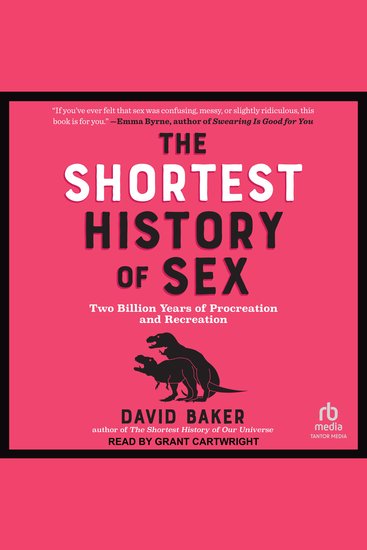
  • The Shortest History of Sex - Two Billion Years of Procreation and Recreation - cover

    The Shortest History of Sex -...

    David Baker, Simon Whistler

    • 0
    • 0
    • 0
    From the first microbial exchanges of DNA to Tinder and sexbots, how did sex begin, and how did it evolve to be so varied and complex in humans? What influence do our genetic ancestors have on our current love lives? And what might sex look like in the future? 


    With acuity, humor, and respect for human diversity, The Shortest History of Sex reveals where the many facets of our sexuality—chemical, anatomical, behavioral, social—come from. Chasing down our evolutionary family tree, from the first aquatic creatures to primate societies, David Baker sheds light on our baffling array of passions, impulses, and fetishes, and guides us toward a clear understanding of one of the deepest, most abiding forces of human nature. 


    The Shortest History of Sex also charts how sex changed for humans across the foraging, agrarian, and modern eras, showing how, even as our biology and sexual instincts have remained the same, the current nature of our sex lives has no historical or evolutionary precedent. 


    The result is a revealing, utterly unique insight into history and human behavior—and the profound forces of nature and nurture compelling our most intimate relationships.
    Voir livre
  • The Mississippi Scheme - In which a Scottish Adventurer destroys the Economy of France - cover

    The Mississippi Scheme - In...

    Man with a Cat

    • 0
    • 0
    • 0
    In the early 18th century, eighty years prior to revolution, France went wild for stocks and bonds. Mechanics dropped their tools, tradesmen closed their shops. There was but one profession, one employment, one occupation, for persons of all ranks from peasant to prince. And that profession was speculating in stocks. This is the story of the time one adventurous Scotsman played chance against an entire nation. 
    That Scotsman was John Law and historians are still divided in opinion as to whether they should call him a knave or a madman. Both epithets were unsparingly applied to him in his lifetime, but posterity has found reason to doubt the justice of the accusation, and to confess that John Law was more deceived than deceiving, more sinned against than sinning. Posterity, however, has also found reason to uphold its first judgement and declare John Law to be a bankrupt, murderer and outlaw; gambler, cheat and card-sharp; a flatterer, sycophant and projector unmatched in the art of hyperbole. This is his story.
    Voir livre
  • The Hidden Life of Life - A Walk through the Reaches of Time - cover

    The Hidden Life of Life - A Walk...

    Elizabeth Marshall Thomas

    • 0
    • 0
    • 0
    An iconoclast and best-selling author of both nonfiction and fiction, Elizabeth Marshall Thomas has spent a lifetime observing, thinking, and writing about the cultures of animals such as lions, wolves, dogs, deer, and humans. In this engrossing book, she provides a plainspoken, big-picture look at the commonality of life on our planet, from the littlest microbes to the largest lizards.Inspired by the idea of symbiosis in evolution—that all living things evolve in a series of cooperative relationships—Thomas leads listeners on a journey through the progression of life. Along the way she shares the universal likenesses, experiences, and environments of “Gaia’s creatures,” from amoebas in plant soil to the pets we love, from proud primates to Homo sapiens hunter-gatherers on the African savanna. Fervently rejecting “anthropodenial,” the notion that nonhuman life does not share characteristics with humans, Thomas instead shows that paramecia can learn, plants can communicate, humans aren’t really as special as we think we are—and that it doesn’t take a scientist to marvel at the smallest inhabitants of the natural world and their connections to all living things.A unique voice on anthropology and animal behavior, Thomas challenges scientific convention and the jargon that prevents us all from understanding all living things better. Narrated by Thomas, this joyful book is a fascinating look at the challenges and behaviors shared by creatures from bacteria to larvae to parasitic fungi, a potted hyacinth to the author herself, and all those in between.Elizabeth Marshall Thomas, an anthropologist and animal behaviorist, has published thirteen previous books, including the New York Times best seller "The Hidden Life of Dogs." She lives in Peterborough, New Hampshire. Learn more at elizabethmarshallthomas.net.
    Voir livre
  • Tunisgrad: Victory in Africa - cover

    Tunisgrad: Victory in Africa

    Saul David

    • 0
    • 0
    • 0
    A Waterstones and BBC History Magazine Best Book of the Year 
    The Aspects of History Book of the Year 2025 
    'Terrific – full of drama … it has profoundly altered my understanding of the Second World War' PATRICK BISHOP 
    FROM THE SUNDAY TIMES BESTSELLING AUTHOR OF SBS COMES AN EPIC HISTORY OF THE ALLIED VICTORY IN NORTH AFRICA DURING THE SECOND WORLD WAR. 
    On 8 November 1942, British and American troops invaded French North Africa as part of Operation Torch, the largest amphibious operation of the war to date. The Germans responded by flooding troops into Tunisia and the stage was set for one of the most decisive clashes of the war. 
    For months the outcome hung in the balance. The Allies failed to capture Tunis before Christmas, and early in the New Year the legendary German commander Erwin Rommel ( the ‘ Desert Fox ’) inflicted a series of crushing defeats on inexperienced American troops in the mountain passes of central Tunisia. But once the two Allied armies – the First and the Eighth – had joined hands in southern Tunisia in early April, the defeat of Axis forces was inevitable. The end came on 13 May when the remnants of the First Italian Army surrendered to British troops in northern Tunisia, leaving the Allies ‘ masters of the North African shores ’. 
    It was, with Guadalcanal in the Pacific and Stalingrad in Russia, one of three Axis defeats in early 1943 that changed the course of the war. Historians have recognized the significance of the others, but not Tunisia which they have either ignored or characterized ( as the Americans did at the time ) as a sideshow. Yet it ended Axis sea power in the Mediterranean, destroyed more than 2,400 Axis aircraft ( 40 per cent of the Luftwaffe ’ s strength ), and resulted in the surrender of over 250,000 German and Italian troops, more than were captured at Stalingrad. Such was the scale of their defeat that the German public wryly dubbed it ‘ Tunisgrad ’. 
    It was the first campaign fought by the Anglo-American alliance, and would determine how and where the Allies would fight for the rest of the war. It was where America first brought to bear the full weight of its industrial strength, and where the Allies learned, after early setbacks, how to defeat the Germans with a combination of air, land and sea power. It featured many of the great commanders of the Second World War, including ‘ Ike ’ Eisenhower, George S. Patton Jr, Omar N. Bradley, Harold Alexander, Bernard Montgomery and Erwin Rommel. But the campaign ’ s chief significance is that it extinguished any lingering hopes in Italy that the war could be won and led, inexorably, to the dissolution of the Axis in Europe. By destroying the Axis it marked, for Hitler, the beginning of the end. 
    Tunisgrad is the first comprehensive 360-degree history, told from the perspective of all the combatants, and ranging in focus from politicians and senior commanders to ordinary servicemen fighting in and over the mountains of Tunisia, and across the Mediterranean. Using a variety of first-hand sources, it restores the campaign to its rightful place as a defining moment of the war 
    Saul David's latest work, Tunisgrad, is a comprehensive exploration of the conflicts that shaped the 20th century. As the Sunday Times bestselling author, David's non-fiction account of modern wars is an up-coming top pick for history enthusiasts. 
    For fans of Damien Lewis (SAS Daggers Drawn), Stephen Fisher (Sword Beach), Stephen R. Platt (Imperial Twilight), Joseph Wheelan (Bitter Peleliu), and Geoffrey Wawro (A Mad Catastrophe). 
    HarperCollins 2025
    Voir livre
  • Bible Defence of Slavery - cover

    Bible Defence of Slavery

    Josiah Priest

    • 0
    • 0
    • 0
    The full title of this book is Bible Defense of Slavery; and Origin, Fortunes, and History of the Negro Race, by Rev. Josiah Priest, A. M. 5th edition. This is a compilation of pro-slavery literature and propaganda that went through numerous editions in the Southern United States before the Civil War. It contains the highly influential book, Slavery, as it Relates to the Negro, or African Race, by Rev Josiah Priest, which was originally published in 1843. This compilation also includes many essays and favorable reviews of Rev Priest’s book from contemporary magazines and newspapers, and written endorsements from national politicians. From the preface: ‘The question, “Is slavery, as it exists in the United States, justifiable?” is one which, at least, admits of discussion. If it be in harmony with the immutable principles of truth and justice, and not a “crime against humanity,” and a libel upon our holy religion, let it be so understood and practiced by our honest citizens, whose highest ambition consists in faithfully serving God, and living in obedience to the laws of the country.’ (Summary by JoeD)
    Voir livre
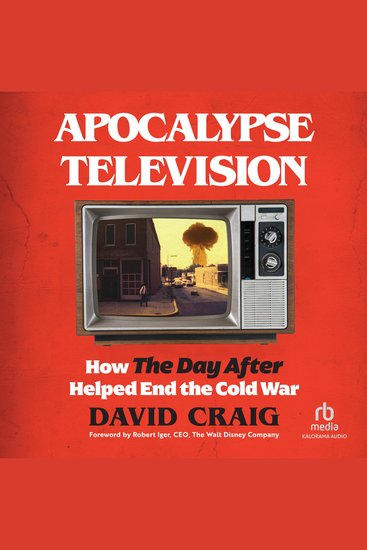
  • Apocalypse Television - How The Day After Helped End the Cold War - cover

    Apocalypse Television - How The...

    David Craig, Robert Iger

    • 0
    • 0
    • 0
    On November 20, 1983, a three-hour made-for-TV movie, The Day After, premiered on ABC. Set in the heartland of Lawrence, Kansas, the film depicted the events before, during, and after a Soviet nuclear attack with vivid scenes of the post-apocalyptic hellscape that would follow. The film was viewed by over 100 million Americans and remains the highest rated TV movie in history. 


    The path to primetime for The Day After proved nearly as treacherous as the film's narrative. Battles ensued behind the scenes at the network, between the network and the filmmakers. But these skirmishes pale in comparison to the culture wars triggered by the film in the press, alongside a growing Nuclear Freeze movement, and from a united, pro-nuclear Right. Once efforts to alter the script failed, the White House conducted a full-throttled propaganda campaign to hijack the film's message. 


    Apocalypse Television features a dramatic insider's account of the making of and backlash against The Day After. No other book has told this story in similar fashion, venturing behind-the-scenes of the programming and news divisions at ABC, the backlash from the conservative movement and Religious Right, the challenges encountered by the film's production team, and the experiences of the citizens of Lawrence, Kansas, where the film was set and shot.
    Voir livre