Rejoignez-nous pour un voyage dans le monde des livres!
Ajouter ce livre à l'électronique
Grey
Ecrivez un nouveau commentaire Default profile 50px
Grey
Abonnez-vous pour lire le livre complet ou lisez les premières pages gratuitement!
All characters reduced
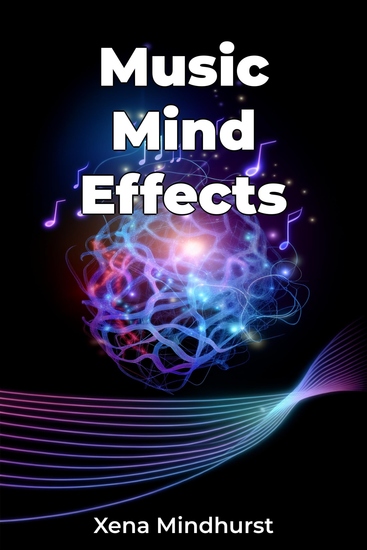
Music Mind Effects - cover

Music Mind Effects

Xena Mindhurst

Traducteur A AI

Maison d'édition: Publifye

  • 0
  • 0
  • 0

Synopsis

Music Mind Effects delves into the fascinating intersection of music and human cognition, presenting cutting-edge research on how musical experiences influence our brain function and psychological well-being. Through comprehensive neuroimaging studies and clinical research, the book reveals how music serves as more than entertainment, functioning as a powerful tool for cognitive enhancement and emotional regulation.

 
The book systematically explores three key areas: how musical engagement enhances cognitive abilities, the neurological mechanisms behind emotional regulation through music, and music's physiological impact on stress response systems. Drawing from decades of research conducted at major neuroscience centers worldwide, it presents complex neurological concepts in an accessible manner while maintaining scientific rigor.

 
Real-world applications, including structured musical interventions for stress management and cognitive training protocols, provide practical value for readers. Progressing through four main sections, the book begins with foundational concepts in neuromusicology before examining music's impact on memory, attention, and learning. It then explores emotional regulation mechanisms and concludes with practical applications in clinical settings.

 
By combining quantitative medical research with qualitative behavioral observations, the book offers a balanced perspective that appeals to both professionals and general readers interested in understanding and utilizing music's psychological benefits.
Disponible depuis: 24/01/2025.
Longueur d'impression: 118 pages.
D'autres livres qui pourraient vous intéresser

  • Egyptian Art and Architecture - From the Old Kingdom to the New Kingdom - cover

    Egyptian Art and Architecture -...

    Omar Khalil

    • 0
    • 0
    • 0
    The art and architecture of ancient Egypt are deeply intertwined with the civilization’s religious beliefs and cultural practices. Spanning over three millennia, these artistic expressions were not merely decorative but held profound symbolic meanings, reflecting the Egyptians’ worldview and their connection with the divine. The foundations of Egyptian art and architecture were laid during the early dynastic period, evolving through distinct stages that shaped the visual language of one of history’s most iconic civilizations. 
    Religion played a central role in shaping the aesthetic and thematic aspects of Egyptian art. Temples, tombs, and monuments were designed as sacred spaces, serving as a bridge between the human and divine realms. The concept of Ma’at, representing order and harmony, influenced the geometric precision and symmetrical layouts seen in temple complexes and pyramid construction. Deities were depicted with specific attributes, emphasizing their powers and roles within the cosmos. This symbolic representation extended to Pharaohs, who were portrayed as divine intermediaries, blending human and godly features to signify their sacred status. 
    Symbolism permeated every facet of Egyptian art, from monumental statues to delicate jewelry. Hieroglyphs and pictorial motifs were not merely decorative; they conveyed narratives, prayers, and genealogies. The ankh, symbolizing life, and the scarab, representing transformation and rebirth, are recurring motifs that held spiritual significance. Colors also played a symbolic role: red signified vitality, blue denoted divinity, and gold represented eternity. This symbolic language was meticulously maintained across centuries, creating a consistent artistic identity despite historical changes.
    Voir livre
  • Royal Navy Versus the Slave Traders - Enforcing Abolition at Sea 1808–1898 - cover

    Royal Navy Versus the Slave...

    Bernard Edwards

    • 0
    • 0
    • 0
    On 16 March 1807, the British Parliament passed The Abolition of the Slave Trade Act. In the following year the Royal Navy's African Squadron was formed, its mission to stop and search ships at sea suspected of carrying slaves from Africa to the Americas and the Middle East. With typical thoroughness, the Royal Navy went further, and took the fight to the enemy, sailing boldly up uncharted rivers and creeks to attack the barracoons where the slaves were assembled ready for shipment. 


    For much of its long campaign against the evil of slavery, Britain's Navy fought alone and unrecognized. Its enemies were many and formidable. Ranged against it were the African chiefs, who sold their own people into slavery, the Arabs, who rode shotgun on the slave caravans to the coast, and the slave ships of the rest of the world, heavily armed, and prepared to do battle to protect their right to traffic in the forbidden so-called "black ivory." 


    The war was long and bitter and the cost to the Royal Navy in ships and men heavy, but the result was worthy of the sacrifices made. The abolition of the slave trade led to a scramble for empires and, in place of slaves, Africa began to export cocoa, coffee, timber, palm oil, cotton and ores, all very much in demand in the West.
    Voir livre
  • Crime and Punishment in Ancient Egypt: The History and Legacy of the Egyptians’ Concepts of Justice - cover

    Crime and Punishment in Ancient...

    Editors Charles River

    • 0
    • 0
    • 0
    In ancient Egypt, the underpinning concept in law, in theory, was that rich and poor citizens should be treated equally, but this was an aspiration that was rarely fulfilled in practice. At the same time, the types of treatment delivered to those deemed guilty could also be harsh - common punishments included confiscation of property, slavery, beatings, and mutilation. During both the Old Kingdom (c. 2700 BCE – 2200 BCE) and Middle Kingdom (c. 2030 BCE – 1650 BCE), crime was dealt with by local officials using their own private police forces. However, during the New Kingdom (c. 1539 BCE – 1075 BCE) a centralized police force emerged, consisting of Nubian tribesmen under an Egyptian supervisor, who were armed with staffs and used specially trained dogs. 
    	In extreme cases, the death penalty was invoked, sometimes with the additional punishment of ensuring that the convicted were refused a burial or were buried but without full rituals. Based on the Egyptians’ religious beliefs, both situations resulted in the guilty being denied entry to the afterlife. 
    	Perhaps not surprisingly, not all laws related directly to criminal activity. Civil disputes were common, and suits by a plaintiff against a defendant provide another major source about the Egyptian legal system, as do the copies of the many legal transactions and contracts that date from the 7th century BCE onwards when the popular form of the written language (Demotic) started to become more widely used. Indeed, it is often difficult to distinguish between civil and criminal cases in the available records. Following the introduction of writing, however, written deeds or contracts quickly replaced traditional oral agreements, and many of these extant documents reveal considerable detail about the laws of ancient Egypt.
    Voir livre
  • Candy Caning: A Kinky Holiday Story - cover

    Candy Caning: A Kinky Holiday Story

    L.A. Witt

    • 0
    • 0
    • 0
    Nate is dreading the annual Christmas visit with his family, during which they will ignore or insult his partner and Dominant.Stephen tries hard to take Nate’s mind off the trip with the promise—and threat—of a three-foot-long candy cane. It’s a race to see if Nate’s resolve or the candy cane will shatter first.
    Voir livre
  • Weapons of Mass Confusion: Unraveling Schooling's Hidden Truths - "Transform your understanding! Access compelling audio lessons to unravel the secrets of education and excel!" - cover

    Weapons of Mass Confusion:...

    Lysander Greewood

    • 0
    • 0
    • 0
    Weapons of Mass Confusion: Unraveling Schooling's Hidden Truths 
    ⭐⭐ Simplified Guide & Explanations Included ⭐⭐ 
    Are you eager to advance in your career and deepen your understanding by tackling the complexities of modern education? 
    In search of a thorough guide that addresses all essential aspects of challenging outdated teaching methods? 
    Your quest ends here! 
    This guide is your essential resource for enhancing your knowledge, applying critical skills, and engaging in practical exercises. With this tool, you're set for success. 
    Updated for the latest insights into transformative education. 
    Key Features of This Enriched Guide: 
    - In-depth analysis of educational challenges and innovative teaching strategies   
    - Comprehensive explanation of transforming education through modern methods   
    - Effective strategies for addressing outdated practices and fostering new learning environments   
    Our guide stands out due to its extensive coverage, crucial for your success in reshaping educational experiences. Concepts are not just touched upon; they are explored in depth and with clarity. 
    Crafted with a logical structure and easily digestible language, our guide to transforming education ensures seamless transitions between topics. Say goodbye to confusing terminology and embrace clear, concise, and technically accurate information. 
    So, why wait? Click the BUY NOW button, secure your guide, and embark on your journey to revolutionizing education!   
    Step into your future with clarity and confidence!
    Voir livre
  • On Poetry - cover

    On Poetry

    Jackie Wills

    • 0
    • 0
    • 0
    We begin with a drive to write something that's never been said before, to protest, to offload, to challenge or catch the zeitgeist. We imagine we write like the poets we admire. Slowly we learn the craft, understanding eventually that a writer is indentured for life.
    Drawing on decades of experience as a poet and tutor, this compelling book is part hands-on guide and part reflection on ways that poetry can make a difference to how we live. It is also a survey of many varied and inspirational writers, especially women poets from the end of the 20th century.
    The final section of this unique book offers starting points and resources that will prove essential for new and experienced poets alike. Jackie Wills is herself one of our most genuine and brilliantly insightful poets; and, as the sections on writing workshops show, she has helped people of all ages find their way into poetry.
    Voir livre