Rejoignez-nous pour un voyage dans le monde des livres!
Ajouter ce livre à l'électronique
Grey
Ecrivez un nouveau commentaire Default profile 50px
Grey
Abonnez-vous pour lire le livre complet ou lisez les premières pages gratuitement!
All characters reduced
More Cargoes - 1897 - cover

More Cargoes - 1897

W.W. Jacobs

Maison d'édition: DigiCat

  • 0
  • 0
  • 0

Synopsis

In "More Cargoes," W. W. Jacobs continues to enchant readers with his signature blend of humor and maritime adventure. This collection of short stories revolves around the lives of sailors and the peculiarities of life at sea, showcasing Jacobs's deft storytelling and vibrant characterizations. With a rich narrative style that balances wit and pathos, Jacobs vividly captures the essence of early 20th-century maritime life, steeped in the lore and language of seafaring. From comical misadventures to more poignant reflections, the collection highlights the unpredictability of the ocean and the human spirit's resilience against it. W. W. Jacobs, born in 1863, was greatly influenced by his own experiences growing up in London, close to the bustling docks. His background, coupled with a natural affinity for storytelling, provided him with a wealth of material for his writings. Jacobs's earlier works established him as a prominent figure in British literature, and the intuitive humor present in "More Cargoes" reflects his understanding of the common man's struggles and triumphs, particularly in the context of maritime culture. This delightful anthology is highly recommended for readers who appreciate a blend of humor, adventure, and keen observations of human nature. Jacobs's ability to immerse readers in the world of sailors makes "More Cargoes" not only entertaining but also a poignant reflection on life's unpredictability. Whether you are a long-time fan of Jacobs or new to his work, this collection promises to leave a lasting impression.
Disponible depuis: 16/09/2022.
Longueur d'impression: 118 pages.
D'autres livres qui pourraient vous intéresser

  • Forgotten Authors The - Women - Volume 2 - Maud Diver to Mary Elizabeth Hawker - cover

    Forgotten Authors The - Women -...

    Maud Diver, Mollie Frank Bloch,...

    • 0
    • 0
    • 0
    Throughout the long centuries of human history is the want, and the need, to share information, to exchange ideas and for that knowledge and experience, for curiosity and learning, to be the basis of a civil society. 
    In literature the ambition is much narrower.  In order to be known, to be popular, you had to be published.  And for that people had to know you existed and your ideas worth reading.  Obviously for most of humanity’s time people couldn’t read and texts couldn’t be published in any great number. 
    In the 15th Century Gutenberg’s printing press began the revolution to address the second and by the 19th century had gathered pace with startling speed and mass distribution.  Education for the many was brought in to help people understand more of their world and, with new skills, how to have a better place within it.  Now, if the powers that owned the presses and means of distribution agreed an audience would now be able to avail themselves of your ideas, your printed words.  
    All too often the talents of women have been scorned, mocked and laughed at.  In reality that was more usually by those who’s own talents were hardly fit to even grace their shadows.   
    But society in general still connived and set women to one side in almost everything that men considered their rightful territory.  And literature was one such territory.  Remarkably resilient as well as talented these women strove to be published, to show themselves as equals.  The results more often than not proved that they were.   
    Sadly, in the thirst for the new, the recent and the past fell from sight, relegated to dark corners and dusty shelves.    
    But the printed word is rarely without someone, somewhere busying themselves through piles of papers and books rediscovering what a good story is, whatever its age. 
    In this volume we offer up a small selection of talents whose time has now come again.
    Voir livre
  • Bad Houses - cover

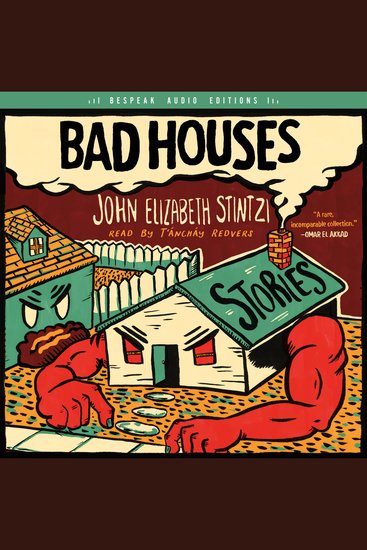
    Bad Houses

    John Elizabeth Stintzi

    • 0
    • 0
    • 0
    A boisterous collection of surreal, darkly humourous short stories that will delight fans of George Saunders and Kelly Link
    		 
    From John Elizabeth Stintzi, the mind that created the daringly bizarre novel My Volcano, comes an electrifying collection of strange and dark tales.
    		 
    In the surreal, often precarious realities of Bad Houses, a doctor discovers a double-edged cure for the Ebola virus, a college student loses a different body part each time they return home for the summer, Midas's hairdresser strives to keep his secrets, and a young girl develops a fascination with the trolls who harvest her father's pumpkin patch. At once humourous and horrifying, these stories will inevitably take residence in your mind.
    		 
    Present throughout Bad Houses is a deep and abiding sense of humanity sprinkled with a dash of alienation, guilt, and instability. Filtered through a fabulist lens, these stories contemplate the struggles of modern existence. Each character lives their own haunted life, trying to navigate the path from bad houses to good homes.
    Voir livre
  • The Unparrelled invasion - From their pens to your ears genius in every story - cover

    The Unparrelled invasion - From...

    Jack London

    • 0
    • 0
    • 0
    John Griffith Chaney was born on January 12th, 1876 in San Francisco.   
    His father, William Chaney, was living with Flora Wellman when she became pregnant.  Chaney insisted she have an abortion.  Flora's response was to turn a gun on herself.  Although her wounds were not severe the trauma made her temporarily deranged. 
    In late 1876 his mother married John London and the young child was brought to live with them as they moved around the Bay area, eventually settling in Oakland where now, calling himself Jack, he completed grade school. 
    Jack worked hard at several jobs, sometimes 12-18 hours a day, but his dream was university.  He studied hard and borrowed the money to enrol in the summer of 1896 at the University of California in Berkeley. 
    In 1897, at 21, Jack searched out newspaper accounts of his mother's suicide attempt and for the name of his biological father. He wrote to Chaney, then living in Chicago, who claimed he could not be Jack’s father because he was impotent and casually asserted that London's mother had relations with other men.  Jack, devastated by the response, quit Berkeley and went to the Klondike. Other accounts suggest that his dire finances presented Jack with the excuse he needed to leave. 
    In the Klondike Jack began to gather material for his writing but also accumulated many health problems, including scurvy, which together with hip and leg problems he would carry for the rest of his life. 
    During the late 1890's Jack was regularly publishing short stories and by the turn of the century full blown novels. 
    By 1904 Jack had married, fathered two children and was now in the process of divorcing.  A stint as a reporter on the Russo-Japanese war of 1904 was equal amounts trouble and experience. But that experience was always put to good use in a continuing and remarkable output of work. 
    In 1905 he married Charmian Kittredge who at last was a soul and companion who brought him some semblance of peace despite his advancing alcoholism and his incurable wanderlust. 
    Twelve years later Jack had amassed both wealth and a literary reputation through such classics as ‘The Call of the Wild’, ‘White Fang’ and many others. He had a reputation as a social activist and was a tireless friend of the workers.   
    Jack London died suffering from dysentery, late-stage alcoholism and uremia, aged only 40, on November 22nd 1916 at his property in Glen Elen in California.
    Voir livre
  • Childhood Boyhood Youth - cover

    Childhood Boyhood Youth

    Leo Tolstoy

    • 0
    • 0
    • 0
    "It is in the moments of solitude that the most profound changes occur within us; it is when we learn to see beyond mere appearances."
    
    Published when Tolstoy was just twenty-three years old, the trilogy, Childhood, Boyhood, Youth, was an immediate success, earning notice from other Russian novelists including Ivan Turgenev, who heralded the young Tolstoy as a major up-and-coming figure in Russian literature.
    Childhood, Boyhood, Youth, is a vibrant account of a young person's emerging awareness of the world, himself and the people around him as described through the eyes of its protagonist, Nikolai, the son of a wealthy Russian landowner.
    
    Moving through the innocence of childhood, the emotional turbulence of adolescence and the idealistic aspirations of early adulthood, this work captures the essence of growing up and paints a deeply moving portrait of self-discovery and transformation as Nikolai experiences first love, deep friendships, personal disappointments, and the struggle to define his place in the world.
    
    Rich in themes of love, identity, and existential reflection, this poignant narrative offers profound insights into the universal experiences of youth.
    Leo Tolstoy (1828–1910) was a Russian novelist, philosopher, and social reformer, widely regarded as one of the greatest writers of all time. He is best known for his epic novels War and Peace and Anna Karenina, both celebrated for their intricate character development and profound exploration of moral dilemmas and human nature. In his later years, Tolstoy experienced a spiritual awakening which led him to reject materialism and embrace a life of simplicity, seeking to align his life with his beliefs about non-violence and compassion. Tolstoy's legacy endures not only through his literary masterpieces but also through his profound impact on literature and philosophy.
    Voir livre
  • Forgotten Authors The - Volume 2 - M McDonell Bodkin Q C to Constance Cotterell - cover

    Forgotten Authors The - Volume 2...

    Camillo Boito, Guy Boothby, D K...

    • 0
    • 0
    • 0
    Throughout the long centuries of human history is the want, and the need, to share information, to exchange ideas and for that knowledge and experience, for curiosity and learning, to be the basis of a civil society. 
    In literature the ambition is much narrower.  In order to be known, to be popular, you had to be published.  And for that people had to know you existed and your ideas worth reading.  Obviously for most of humanity’s time people couldn’t read and texts couldn’t be published in any great number. 
    In the 15th Century Gutenberg’s printing press began the revolution to address the second and by the 19th century had gathered pace with startling speed and mass distribution.  Education for the many was brought in to help people understand more of their world and, with new skills, how to have a better place within it.  Now, if the powers that owned the presses and means of distribution agreed an audience would now be able to avail themselves of your ideas, your printed words.  
    Sadly, in the thirst for the new, the recent and the past fell from sight, relegated to dark corners and dusty shelves.   
    But the printed word is rarely without someone, somewhere busying themselves through piles of papers and books rediscovering what a good story is, whatever its age. 
    Sadly, in the thirst for the new, the recent and the past fell from sight, relegated to dark corners and dusty shelves.    
    But the printed word is rarely without someone, somewhere busying themselves through piles of papers and books rediscovering what a good story is, whatever its age. 
    In this volume we offer up a small selection of those talents whose time has now come again.
    Voir livre
  • Christmas at Red Butte - From their pens to your ears genius in every story - cover

    Christmas at Red Butte - From...

    Lucy Ward Montgomery

    • 0
    • 0
    • 0
    The bookshelves of American literature are incredible collections that have gathered together centuries of very talented authors.  From this continent their fame spread and whilst among their number many are now forgotten or neglected their talents endure.  Among them is Lucy Ward Montgomery.
    Voir livre