

Rejoignez-nous pour un voyage dans le monde des livres!
Ajouter ce livre à l'électronique
Grey
Ecrivez un nouveau commentaire Default profile 50px
Grey
Abonnez-vous pour lire le livre complet ou lisez les premières pages gratuitement!
All characters reduced
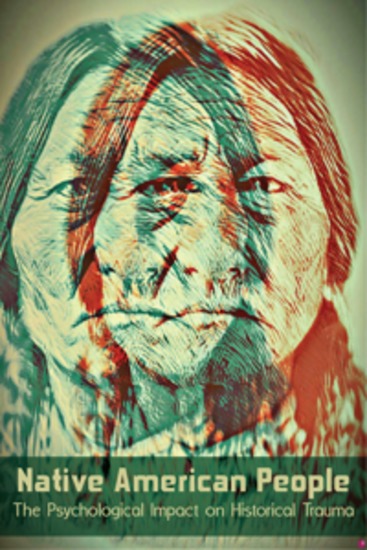
Native American People The Psychological Impact of Historical Trauma - cover

Native American People The Psychological Impact of Historical Trauma

Wilson Bellacoola

Maison d'édition: Wilson Bellacoola

  • 0
  • 0
  • 0

Synopsis

The Psychological Impact of Historical Trauma on Native American People. Native American historical trauma is similar to other massive generational group traumas. Past examples include the Jewish holocaust, the slavery of the African people in the United States, and the treatment of Japanese Americans in the U.S. during World War II. Understanding the history of Native Americans enables the design of culturally specific preventive and therapeutic interventions. Contrary to what is often taught in modern history books, Native Americans were a highly advanced culture deeply immersed in their environments. From the invasion by the Spanish in the 1400s to the scorched earth extermination policies of the United States in the 1800s, Native Americans endured attempted genocide, forced relocation and confinement to reservations, and forced assimilation. Historical trauma is generational and dwells deep in the souls of Native American individuals and communities across the United States. For any healing to occur, one must take a close look at the root cause of historical trauma for the Native American people. The focus of this book is to explore and develop ideas that will assist Native Americans in accessing which old ways are too biologically ingrained to abandon and what new ways must be adopted to come to terms with such a vastly different environment.It is essential to understand the environment in which Native American people live, know their history, and see how this history has shaped them. It is equally important to understand and respect their worldview, which describes the thought process of a people or a culture. Native Americans were displaced from their traditional lands, their sacred sites were excavated, and their sacred objects were placed in private collections and museums. Their remains were exhumed from traditional burial sites to make room for ranching and industry. Their artwork was never seen as separate from their culture. It was commercially reproduced and modified for Western tastes. Traditional ceremonies and stories were often depicted inaccurately in novels, movies, and on television. Their way of life was disrupted, and they were forced to accept religious institutions whose dogmas often conflicted with Native American values.A variety of terms have been used interchangeably to refer to America's indigenous populations — "Indians," "Native Americans," "American Indians," and" Native peoples." The problem of terminology began with Columbus. He was lost. The people he met were not Indians because he was not in India at the time. Still, these people have been called "Indians for six centuries." There are many different people and nations, each with its language. To justify the use of "Indians," which some scholars find offensive, I refer to Sherman Alexie's remark during a reading in Milwaukee, Wisconsin, in March 1993: "The white man tried to take our land, our sovereignty, and our languages. He gave us the word "Indian." Now he wants to take the word "Indian" away from us, too. Well, he can't have it." All these terms have been used interchangeably throughout this book to reflect best the subject being discussed.
Disponible depuis: 28/07/2025.


D'autres livres qui pourraient vous intéresser

  • failure project - cover

    failure project

    Yolanda Mercy

    • 0
    • 0
    • 0
    'Cause when you win, we all win. So you have to keep "winning". Even if you feel like you're losing losing yourself'
    Ade is a successful writer, or so it seems. She has everything she ever wanted: her career is flying, she's (kinda) moved out of her mum's house, and her situationship isn't as complicated as she expected. Her life should be perfect! But things don't always go to plan, as Ade is about to find out…
    failure project is a warm and witty one-person play exploring grief, the strings attached to success, and what it means to 'fail'.
    Written and performed by Yolanda Mercy, it premiered at Summerhall as part of the Edinburgh Festival Fringe in 2024, co-directed with Joseph Barnes-Phillips. It won the Solo Award at the Besties awarded by The Skinny and Fest magazine.
    Voir livre
  • Sometimes Therapy Isn’t Enough - cover

    Sometimes Therapy Isn’t Enough

    D. R. Nguyen

    • 0
    • 0
    • 0
    “Sometimes Therapy Isn’t Enough” finds the author coping with mental health struggles through poetry. The book is divided into four chapters taking the reader on a raw emotional journey through anxiety, addiction, depression, and grief. 
    “Some people are so broken  
    They mistake abuse  
    For love”
    Voir livre
  • Fanny - cover

    Fanny

    Calum Finlay

    • 0
    • 0
    • 0
    'You're not stupid for wanting things to change, Fanny – it's just that we have to play the music that gets handed to us.'
    Meet Fanny Mendelssohn. You'll probably know of her younger brother Felix, from nineteenth-century smash hits like 'The Wedding March'. He was such a huge star that Queen Victoria requested a private concert, during which she sang her favourite of his compositions, a song called 'Italien'.
    The only problem is, that particular piece was actually composed by Fanny, though it was published under her brother's name.
    When Fanny intercepts the letter inviting Felix to play for the queen, she decides to hide it away, don her brother's clothes, and take his place at the palace…
    Calum Finlay's play Fanny is a joyful and irreverent comedy celebrating music, family and – at last – the work of a composer overlooked because of her sex. It opened at the Watermill Theatre, Newbury, in 2024.
    Voir livre
  • Through Old Eyes - Poems by Uncle Wes Marne - cover

    Through Old Eyes - Poems by...

    Uncle Wes Marne

    • 0
    • 0
    • 0
    Published to commemorate the author’s 100th birthday, this wide-ranging and thoughtful collection reflects on history, colonisation, family, childhood, Aboriginal Dreaming, traditions and storytelling, working lives and people. 
    Sometimes wistful, melancholic, poignant, at times the author’s wry sense of fun and humour shines through. 
    When he arrived in Sydney in the 1960s, Bigambul man, Uncle Wes, was not allowed to tell his stories at schools. He set up a fire bucket in his backyard and invited families and children from the local Aboriginal community to come to sit around the fire and share his stories. It did not take long for the police to arrive and arrest him for hosting an unlawful gathering – he spent two days in lock-up for sharing his stories. 
    Uncle Wes is a living treasure of Aboriginal storytelling wisdom. Through his poems Uncle Wes invites the reader to join him by the fire as he generously shares his reflections and reminiscences on one hundred years. 
    'It is my pleasure to honour Uncle Wes for his work in retaining the age-old storytelling tradition of our people. It is important to maintain this tradition of our Elders sharing their knowledge and insight through story and verse. Thank you Uncle Wes, for sharing your poems with us as you celebrate your 100th year.' - Dr Anne Pattel-Gray: Head of the Australia First Nations Program, World Vision Australia 
    'Uncle Wes Marne has a unique ability to allow the reader to see through his experienced eyes. The power and wisdom of his words is now more than ever important for the future generations to understand the time and place they exist in.' - Ben Bowen: CEO, Indigenous Literacy Foundation
    Voir livre
  • 100 Great Catholic Poems - cover

    100 Great Catholic Poems

    Sally Read

    • 0
    • 0
    • 0
    Poetry is the language of Catholicism. From the songs of Scripture to the hymns of St. Thomas Aquinas, the Church has always used metaphor and image, meter and rhyme, and the music of language to illuminate and inculcate the faith.  Yet, when it comes to Catholic poetry itself, the song too often remains unsung. Many devout believers recoil from poetry, even when it is deeply Catholic. Many poetry lovers overlook Catholic poetry, even when it is truly great. And passionate readers are left with few resources from which to draw inspiration—even as the number of great Catholic poems continues to grow. This groundbreaking collection is designed to change that. Edited by acclaimed poet and author Sally Read, it includes a carefully curated collection of poetry with brief essays to introduce each selection; a detailed introduction and glossary of poetic terms; and a wide range of poetic voices—from giants like Dante and Shakespeare, to mystical saints like Hildegard of Bingen and John of the Cross, to modern masters like Gerard Manley Hopkins and Oscar Wilde, to contemporary female poets like Denise Levertov and Anne Porter. What emerges is truly universal: an unparalleled collection spanning twenty countries and twenty centuries. Whether Catholic or non-Catholic, a poetry skeptic or a poetry lover, readers will glean from these pages a deepened appreciation of the history of poetry, the life of the Church, and the powerful ways in which each strengthens the other. 
    Voir livre
  • Routes - cover

    Routes

    Rhiya Pau

    • 0
    • 0
    • 0
    At the core of this debut collection is a question – what is worth holding onto?
    Through poetic experiments that blend the academic and the artistic, Rhiya Pau queries complex characters and tender landscapes. Routes journeys from Ba's kitchen in Sonia Gardens to Independence hour in Delhi, across the pink shores of Nakuru, to meet a painter on Lee High Road.
    Celebrating fifty years since her community arrived in the UK, Pau chronicles the migratory histories of her ancestors and simultaneously lays bare the conflicts of identity that arise from being a member of the East African-Indian diaspora. In this multilingual discourse exhibiting vast formal range, Pau wrestles with language, narrative and memory, daring to navigate their collective fallibilities to architect her own identity.
    '[Routes]...holds up to the light the wisdom of the past, and asks what else is passed down along with it...a work of humane intelligence, formal experiment and linguistic verve' - Sarah Howe, Judge of Eric Gregory Awards 2022
    Voir livre
