Rejoignez-nous pour un voyage dans le monde des livres!
Ajouter ce livre à l'électronique
Grey
Ecrivez un nouveau commentaire Default profile 50px
Grey
Abonnez-vous pour lire le livre complet ou lisez les premières pages gratuitement!
All characters reduced
Scenes and Adventures in Affghanistan - cover

Scenes and Adventures in Affghanistan

William Taylor

Maison d'édition: DigiCat

  • 0
  • 0
  • 0

Synopsis

In "Scenes and Adventures in Affghanistan," William Taylor delivers a vivid and immersive account of his experiences during the tumultuous period of British intervention in Afghanistan. Richly detailed, the narrative combines a mix of travelogue and military history, allowing readers to engage with the landscapes and cultures that defined this critical geopolitical context. Taylor's literary style is marked by a direct yet evocative prose, offering both firsthand accounts and reflections that shed light on the complexities of imperial ambition and the profound impacts on local societies. Written in the mid-19th century, the book serves as a crucial text in understanding colonial narratives and the often romanticized view of imperial endeavors, juxtaposed against the harsh realities faced by both soldiers and civilians alike. William Taylor, a soldier and adventurer, was deeply influenced by his experiences in Afghanistan, where he served during a period characterized by conflict and cultural exchange. His background reflects a keen awareness of the geopolitical intricacies of the time, as well as a personal commitment to documenting the lives and landscapes encountered during his service. Taylor's perspectives are steeped in the ethos of Victorian exploration and the moral questions surrounding imperialism, which provide readers with valuable insight into the mindset of the era. This remarkable work is highly recommended for historians, students, and anyone fascinated by the complexities of colonial expansion. Taylor's engaging narrative not only captures the essence of his personal adventures but also invites a critical examination of the legacies of empire. Readers will find themselves drawn into a world that is both exotic and challenging, rendering "Scenes and Adventures in Affghanistan" a compelling addition to the canon of travel and military literature.
Disponible depuis: 16/09/2022.
Longueur d'impression: 85 pages.

D'autres livres qui pourraient vous intéresser

  • Cat Tales - A History - cover

    Cat Tales - A History

    Jerry D. Moore

    • 0
    • 0
    • 0
    Feared, revered, respected, and beloved, cats have left an indelible paw print on the histories and civilizations of humankind. Over the last two million years, cats and people have interacted in diverse and unexpected ways, but the predecessors of today's furry friends were predators, not pets. 
     
    Leading anthropologist Jerry Moore charts the cat's path from deadly enemy to improbable roommate. Moore journeys through our complicated history with these charismatic creatures. He travels along the Nile and across the Mediterranean, sailing on to South America, exploring pet cemeteries, cat mummies, and exquisite statuary across continents and centuries. 
     
    This book surveys our relationships with cats from the Paleolithic period to the present day, unlocking the mysteries of these remarkable creatures. While cats are now beloved members of families around the world, our attempts to bring cats in from the cold have not always had happy endings, as Moore explores through such famous feline fanciers as Joe Exotic, Siegfried Fischbacher, and Roy Horn. From incredible archaeological finds to cave paintings, and from classical statues to contemporary social media, Cat Tales surveys ancient and modern interactions between humans and cats, wild and domestic, to ask a simple question: who domesticated who?
    Voir livre
  • Ancient Origins of the Egyptian Empire - How the Greatest Monuments on Earth were Built under Mysterious Circumstances - cover

    Ancient Origins of the Egyptian...

    EZRA IVANOV

    • 0
    • 0
    • 0
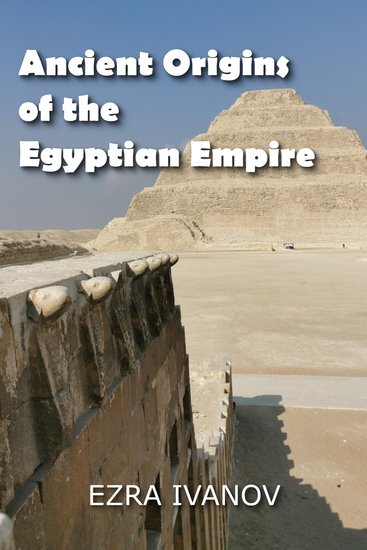
    It is nearly impossible to imagine Giza any different today with its desert backdrop and its majestic, sentinel-like pyramids that can't help but exude a sense of permanence. 
    Edfu's account, compiled from a series of now lost books attributed to the moon-god Thoth, allows us to reconstruct how the Giza plateau may have looked over 11,000 years ago. 
    Giza was built around a shallow lake, fed directly from the Nile if the texts were believed. This ecosystem is similar to what one might see today in equatorial Africa. If we find a time machine and travel back to this distant era, we would find a hot, humid atmosphere alive with lush green vegetation. 
    This hypothesis is not mere speculation, for it is known that the river used to flow closer to the plateau's edge in the past. In addition, evidence of a lake and dock dating back to Old Kingdom times has also been found beyond the plateau's western limits. 
    In the eyes of the Shining Ones, this would represent the primordial sea of chaos from which the first land appeared at the beginning of Time.
    Voir livre
  • Economic Impacts of Imperialism - How Empire Building Shaped Global Trade and Economics - cover

    Economic Impacts of Imperialism...

    Arlo Holders

    • 0
    • 0
    • 0
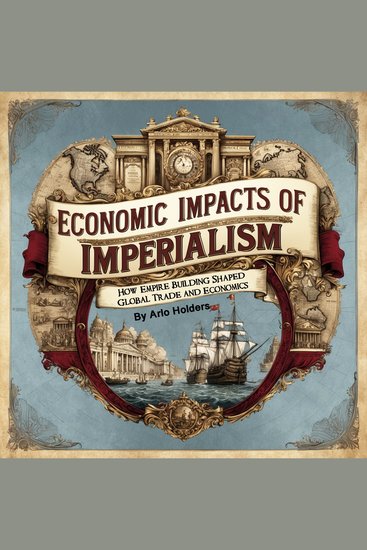
    Imperialism, as a driving force in global history, established the foundation for much of the modern world's economic and political systems. The roots of imperialism stretch back to ancient civilizations, where conquest and control of territories provided the resources and labor necessary for expansion and prosperity. Over time, the concept evolved, shaped by cultural ambitions, geopolitical competition, and economic incentives. By the late 15th century, the age of exploration began a new phase of empire building, marked by the European powers seeking wealth and influence beyond their borders. 
    At the heart of imperialism was the pursuit of economic gain. Wealth from foreign lands, particularly precious metals, spices, and other coveted resources, spurred the earliest imperial endeavors. These ventures not only enriched nations but also fueled rivalry among emerging powers. The drive for resources and markets intensified during the Renaissance and the early modern period, as advancements in navigation and maritime technology made long-distance expeditions feasible. Imperial powers sought to expand their influence by establishing colonies, which would serve as sources of raw materials and as markets for manufactured goods. 
    Cultural and ideological factors also played a role in shaping imperialism. The belief in the superiority of certain civilizations over others justified the conquest and subjugation of indigenous peoples. Religion was another motivator, with missionary efforts often accompanying territorial expansion. Christianity, in particular, became a tool for legitimizing imperial control, as colonizing powers framed their endeavors as missions to civilize and convert native populations. This intertwined economic exploitation with a sense of moral and cultural obligation, creating a complex dynamic between the colonizers and the colonized.
    Voir livre
  • Outshine - 8 Steps to Start Making It Happen - cover

    Outshine - 8 Steps to Start...

    Shemin Nurmohamed

    • 0
    • 0
    • 0
    Outshine tells you everything you need to know about becoming an effective female leader.
    Voir livre
  • Cosmic Order - Brockwood Park 1980 - Dialogue 10 - cover

    Cosmic Order - Brockwood Park...

    Jiddu Krishnamurti

    • 0
    • 0
    • 0
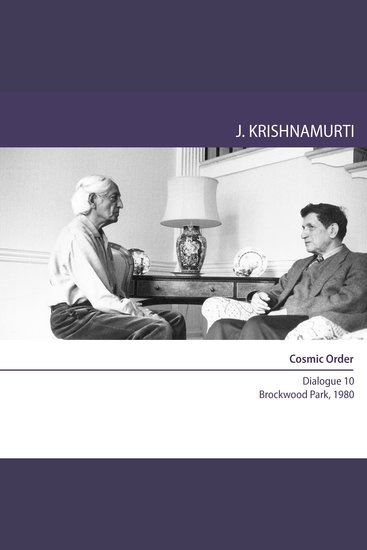
    Cosmic order - 7 June 1980  
    • Is there an order which is not man-made? 
    • Can the brain ever be free from the impositions, pressures, wounds, bruises, all 
    the trivialities of existence? 
    • Time is my whole existence. I take refuge in the past, which cannot be 
    changed. Why does the brain accept this way of living, and why doesn’t it break it down? 
    • As long as I have my roots in the past there cannot be order. 
    • If the universe is not of time, can the mind which has been entangled in time, 
    unravel itself and so be the universe?
    Voir livre
  • Scarab Symbolism of the Ancient World - The Scarabaues in Ancient Egypt Phoenicia Sardinia Etruria - cover

    Scarab Symbolism of the Ancient...

    Norah Romney

    • 0
    • 0
    • 0
    If you want to understand Ancient Egypt, you must demystify the concept of the Scarab and its subsequent symbolism. When we first meet the Scarab symbol in Egypt; itwe immediately see it was the symbol and tangible expression of an elevated religious idea, embracing that of future life, of the human soul, a resurrection of it, and most likely, a reward or scorning of it in the future life, based on its conduct in the terrestrial life. This concept cannot be underestimated. The ancient Egyptians were heavily involved in symbolism, which they fused into their Art; the Scarab symbolism was the most powerful of it all. 
    Scarab, in Latin, scarabaeus, forms the backbone of early ancient Egyptian religion. This symbol is specifically of the dung beetle (Scarabaeus sacer), which lays its eggs in dung balls fashioned through the rolling. This beetle was associated with the divine manifestation of the early morning sun, Khepri, whose Name was written with the scarab hieroglyph and who was believed to roll the disk of the morning sun over the eastern horizon at daybreak. Since the scarab hieroglyph, Kheper, refers variously to the ideas of existence, manifestation, development, growth, and effectiveness, the beetle itself was a favorite form used for amulets in all periods of Egyptian history.
    Voir livre