Rejoignez-nous pour un voyage dans le monde des livres!
Ajouter ce livre à l'électronique
Grey
Ecrivez un nouveau commentaire Default profile 50px
Grey
Abonnez-vous pour lire le livre complet ou lisez les premières pages gratuitement!
All characters reduced
The Phoenix and the Turtle - cover

The Phoenix and the Turtle

William Shakespeare

Maison d'édition: DigiCat

  • 0
  • 0
  • 0

Synopsis

In "The Phoenix and the Turtle," William Shakespeare presents a profound reflection on love, death, and the transcendent power of purity. This poem, consisting of a series of rich allegories, explores the symbolic union of the mythical Phoenix and the moralistic Turtle Dove, embodying the ideals of eternal love and fidelity. Composed in a lyrical and evocative style, the work holds a place within the context of the Renaissance, where humanist themes and classical references flourished, allowing Shakespeare to delve into philosophical and metaphysical inquiries related to the nature of beauty and truth in love amidst a changing social landscape. William Shakespeare (1564-1616), a towering figure of English literature, drew upon his extensive experiences in theater, poetry, and the cultural vibrant milieu of Elizabethan England. His fascination with the complexity of human emotions and relationships is evident throughout his oeuvre. "The Phoenix and the Turtle," written in 1601, is a remarkable testament to his ability to distill profound concepts into accessible verse, showcasing themes of idealism and spiritual union while reflecting the cultural tensions of his time. This exquisite poem is highly recommended for readers who seek to explore the depths of love and the intricacies of human connection. With its strong symbolic resonance and lyrical beauty, "The Phoenix and the Turtle" invites readers to reflect on their own experiences of love and loss, making it a timeless piece worthy of study and appreciation.
Disponible depuis: 15/09/2022.
Longueur d'impression: 101 pages.


D'autres livres qui pourraient vous intéresser

  • Three Sisters - cover

    Three Sisters

    Anton Chekhov

    • 0
    • 0
    • 0
    Three Sisters by Anton Chekhov is a poignant and deeply reflective masterpiece of modern drama that explores longing, resilience, and the quiet ache of unrealized dreams. First performed in 1901, this timeless play captures the emotional lives of individuals caught between aspiration and reality, illuminating the universal desire for purpose, love, and a better future.
    
    The story centers on the Prozorov sisters—Olga, Masha, and Irina—intelligent and sensitive women living in a provincial town after the death of their father. Raised in Moscow and filled with memories of a richer cultural life, they yearn to return to the city that symbolizes hope, fulfillment, and possibility. "To Moscow!" becomes their recurring refrain, a dream that sustains them even as circumstances conspire to keep them where they are.
    
    Surrounding the sisters is a circle of soldiers, family members, and acquaintances, each grappling with personal dissatisfaction and unspoken desires. Marriages strain under disappointment, love emerges in unexpected places, and ambitions fade beneath the weight of routine. Chekhov masterfully portrays these intersecting lives with subtlety and compassion, revealing how people endure emotional turmoil while maintaining outward composure.
    
    Rather than relying on dramatic spectacle, Three Sisters unfolds through nuanced dialogue and everyday interactions. Chekhov's brilliance lies in his attention to the ordinary moments that define existence—the conversations at the dinner table, the passing of seasons, the slow erosion of hope. Beneath the surface calm, powerful currents of longing and regret flow steadily, shaping the characters' inner worlds.
    
    The play reflects Chekhov's deep understanding of human psychology and his belief that life's most profound struggles often occur quietly. Themes of time, change, work, love, and perseverance resonate throughout the narrative. As years pass and dreams remain unfulfilled, the sisters confront the reality that happiness may not lie in distant places but in the strength to endure and find meaning despite disappointment.
    
    Both tender and bittersweet, Three Sisters stands as one of Chekhov's greatest achievements. Its emotional honesty, rich characterization, and understated depth have influenced generations of playwrights and continue to move audiences around the world. Through its exploration of hope and hardship, the play offers a timeless meditation on the human capacity to dream—even in the face of life's inevitable compromises.
    Voir livre
  • The Double - cover

    The Double

    Fyodor Dostoevsky

    • 0
    • 0
    • 0
    First published in 1846, The Double: A Petersburg Poem marks one of Fyodor Dostoevsky’s earliest and most daring explorations of the human psyche. Often overshadowed by his later masterpieces, The Double is nevertheless a crucial work in Dostoevsky’s literary evolution — a precursor to the psychological complexity and existential themes that would define Crime and Punishment, The Idiot, and Notes from Underground. 
    The novella tells the story of Yakov Petrovich Golyadkin, a low-ranking civil servant whose already fragile identity begins to unravel when he encounters his exact double — a man who is identical in appearance but possesses all the social charm and confidence Golyadkin lacks. What follows is a haunting descent into paranoia, self-alienation, and mental disintegration, all set against the bureaucratic backdrop of 19th-century St. Petersburg.
    Voir livre
  • Azul - cover

    Azul

    Rubén Darío

    • 0
    • 0
    • 0
    Azul is the groundbreaking work that inaugurated the Modernismo movement in Spanish-language literature and established Rubén Darío as one of the most influential poets of the late nineteenth century. First published in 1888, this luminous collection of prose and verse reshaped Hispanic letters with its musical language, refined symbolism, and bold artistic vision.
    
    Blending short stories and poems, Azul transports readers into a world of elegance, imagination, and sensory richness. Darío draws inspiration from French symbolism and Parnassian aesthetics, crafting texts filled with swans, princesses, exotic landscapes, and dreamlike settings. Yet beneath this shimmering surface lies a subtle critique of materialism and mediocrity in modern society. Through irony and delicate satire, Darío contrasts the beauty of art with the coarseness of bourgeois values.
    
    The color blue—suggestive of sky, sea, mystery, and the infinite—becomes a unifying symbol throughout the collection. It evokes transcendence, spirituality, and artistic aspiration. In Darío's hands, language itself becomes an instrument of transformation, capable of elevating the ordinary into the extraordinary. His rhythmic precision and innovative use of sound give the text a musical quality that marked a turning point in Spanish poetry.
    
    At once cosmopolitan and distinctly Latin American, Azul bridges continents and traditions. Darío infuses European influences with his own cultural sensibility, creating a voice that is both universal and rooted in the evolving identity of Spanish America. The collection captures a generation's desire for renewal—an aesthetic rebellion against rigid conventions and a search for beauty in an era of rapid change.
    
    The prose pieces in Azul reveal Darío's sharp narrative skill and keen social awareness, while the poems display lyrical grace and emotional intensity. Together, they form a cohesive artistic statement that celebrates imagination, challenges conformity, and affirms the transformative power of art.
    
    More than a literary milestone, Azul is a manifesto of creative freedom. Its innovative style and daring vision opened new possibilities for writers across the Spanish-speaking world and beyond. Over a century later, the collection continues to enchant readers with its elegance, musicality, and dreamlike atmosphere.
    
    A cornerstone of Modernismo and a timeless testament to poetic innovation, Azul remains an essential work for anyone seeking to understand the evolution of modern Hispanic literature and the enduring magic of language.
    Voir livre
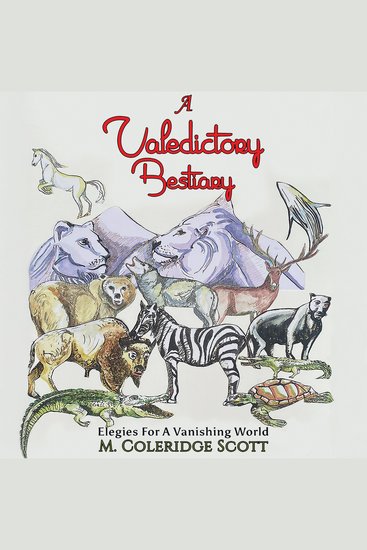
  • A Valedictory Bestiary - Elegies for a Vanishing World - cover

    A Valedictory Bestiary - Elegies...

    M. Coleridge Scott

    • 0
    • 0
    • 0
    This anthology of eleven stirring tales, composed in melodic rhyming couplets, sweeps readers into a realm where myth intertwines with romance across diverse landscapes: from the Peruvian Amazon to the plains of Africa, the vastness of the Pacific to the spiritual heights of Tibet. Each narrative celebrates the wild, noble beasts that champion the cause of their land: wolves liberating Athens, pumas safeguarding the Amazon, bears emancipating prisoners in wartime Germany, and more. 
    These creatures not only symbolize the spirit of their homelands but also the myths and history embedded within, now imperilled by relentless
     modernization.
     
    Scott’s weaves a poetic tapestry reminiscent of Coleridge’s ‘Ancient Mariner,’ Kipling’s ‘Just So Stories,’ and the adventurous spirit of Patrick Leigh Fermor, all while channelling Mary Pope Osborne’s fascination with myth. It’s a literary mosaic, unparalleled in ambition, which speaks eloquently to the urgency of preserving our world’s cultural and ecological richness. The stories, though they grapple with themes of loss and environmental decay, also ignite hope for spiritual rebirth and the triumph of nature’s indomitable heart.
    Voir livre
  • A Family Memory - Philosophical drama story - cover

    A Family Memory - Philosophical...

    Amr Mounir

    • 0
    • 0
    • 0
    On a train that travels far, she finds herself immersed in a whirlpool of memories… faces from the past, forgotten voices, and unhealed pain. Every stop brings back fragments of her painful past with her family. But are these just memories, or is the train itself carrying her to a confrontation she did not expect?
    Voir livre
  • Cellophane - Dramatic story - cover

    Cellophane - Dramatic story

    Amr Mounir

    • 0
    • 0
    • 0
    How can a man live if he loves a woman who does not reciprocate his feelings and marries him for his money? And how will he face the blame he feels when she goes through a health crisis that makes him think he is responsible?
    Voir livre