Rejoignez-nous pour un voyage dans le monde des livres!
Ajouter ce livre à l'électronique
Grey
Ecrivez un nouveau commentaire Default profile 50px
Grey
Abonnez-vous pour lire le livre complet ou lisez les premières pages gratuitement!
All characters reduced
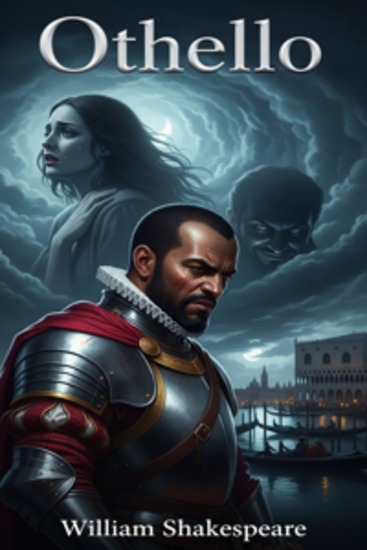
Othello - cover

Othello

William Shakespeare

Maison d'édition: Bu Classics Books

  • 0
  • 0
  • 0

Synopsis

Watch the systematic destruction of a noble general by a subordinate whose malice is as baseless as it is terrifying. The play traces the poisoning of a hero's mind, turning his deep love for his wife into a murderous jealousy through mere suggestion and circumstance. It is an intense, claustrophobic tragedy that examines the dangers of insecurity, the destructiveness of racism, and the fragility of trust. The villain, Iago, stands as one of the most chillingly effective manipulators in literary history.
Disponible depuis: 29/01/2026.
Longueur d'impression: 110 pages.

D'autres livres qui pourraient vous intéresser

  • The New Leviathans - Thoughts After Liberalism - cover

    The New Leviathans - Thoughts...

    John Gray

    • 0
    • 0
    • 0
    Ever since its publication in 1651, Thomas Hobbes's Leviathan has unsettled and challenged how we understand the world. Condemned and vilified by each new generation, his cold political vision continues to see through any number of human political and ethical vanities. 


    In his wonderfully stimulating book The New Leviathans, John Gray allows us to understand the world of the 2020s with all its contradictions, moral horrors, and disappointments. The collapse of the USSR ushered in an era of near apoplectic triumphalism in the West: a genuine belief that a rational, liberal, well-managed future now awaited humankind and that tyranny, nationalism, and unreason lay in the past. Since then, so many terrible events have occurred and so many poisonous ideas have flourished, and yet our liberal certainties treat them as aberrations that will somehow dissolve. Hobbes would not be so confident. 


    Filled with fascinating and challenging observations, The New Leviathans is a powerful meditation on historical and current folly. As a species we always seem to be struggling to face the reality of base and delusive human instincts. Might a more self-aware, realistic, and disabused ethics help us?
    Voir livre
  • The Making of Modern New Zealand - From Colonization to Sovereignty - cover

    The Making of Modern New Zealand...

    Lillian Brooks

    • 0
    • 0
    • 0
    Before the arrival of Europeans, New Zealand, or Aotearoa, was inhabited solely by the Māori people, who had arrived from Polynesia over a thousand years earlier. Their ancestors navigated vast distances across the Pacific Ocean, using their advanced knowledge of stars, winds, and ocean currents. They eventually settled in Aotearoa, forming distinct tribal communities known as iwi, each with its own territory, social structures, and traditions. 
    The Māori society was organized around iwi (tribes), hapū (sub-tribes), and whānau (families). Each iwi had a paramount chief, or rangatira, who was responsible for making decisions that affected the entire tribe. The rangatira was supported by a council of elders, or kaumatua, who provided guidance based on wisdom and experience. The hapū, made up of extended families, was the primary unit of Māori society, with a strong emphasis on kinship and collective responsibility. 
    Māori were deeply connected to the land, or whenua, and believed that their ancestors, the atua, or gods, imbued the earth, sea, and sky with sacred energy. This connection formed the foundation of Māori spiritual beliefs, which revolved around whakapapa (genealogy), mana (spiritual power or authority), and tapu (sacredness). Their spiritual worldview tied their identity to the land and natural resources, and they saw themselves as stewards, responsible for the care and preservation of the environment.
    Voir livre
  • You Can Understand Yourself Very Simply When You Are Quiet - Rajghat 1965 - School Talk Students 2 - cover

    You Can Understand Yourself Very...

    Jiddu Krishnamurti

    • 0
    • 0
    • 0
    You can understand yourself very simply when you are quiet - 4 December 1965  
    • When you are really quiet, alone with yourself, you begin to know yourself and 
    to see the intricacies of your mind. 
    • Q:Whydoesthemindgetdisturbedwhenitisinastateofrevoltandhowcanit 
    quieten down? 
    • Q: Is communication possible in all conditions? 
    • Q: When we say anything that is a bit alternative to what our elders think, we are stopped. There is great tension between us. Will you say what we should do about it? 
    • Q: What is humanity and when can a man be called a human being? 
    • Q: Is our way of life right? 
    • Q: You have said that we must have a quiet mind and at the same time you said 
    that disturbance is inevitable. 
    • Q: What is the importance of spirituality in the life of a human being? 
    • Q: How does evil come about?
    Voir livre
  • Bagavad Gita in Tamil - Complete All 18 Chapters - Life Lessons from Gita - cover

    Bagavad Gita in Tamil - Complete...

    Viyasar

    • 0
    • 0
    • 0
    The Bhagavad Gita is a 700-verse Hindu scripture embedded within the epic Mahabharata, depicting a dialogue between Arjuna and Krishna on the battlefield of Kurukshetra. Arjuna, facing his relatives in battle, experiences despair and a crisis of conscience. Krishna, his charioteer and an avatar of Vishnu, provides philosophical and spiritual guidance, addressing themes of duty (dharma), action (karma), devotion (bhakti), and knowledge (jnana). The Gita explores the nature of the self, the divine, and humanity's place in the world, offering paths to liberation and spiritual fulfillment. 
    Voir livre
  • Sissies 4 Book Bundle - Feminization Sissification - cover

    Sissies 4 Book Bundle -...

    Kinky Press

    • 0
    • 0
    • 0
    Three Shorts & One Novella of Feminizing Fun 
      
    PSA: These stories contain desperate men who feel forced into an undesirable situation. They’ll be dominated and humiliated by men and women alike, and gall darned if they don’t get off on... things... they never thought possible. 
      
    Sorority Sissy: 
    There are no rules against applying to a sorority – even if you're not a woman! 
      
    Her Bull’s Sissy: 
    John had been expecting his wife was cheating for some time, but he never would have imagined the big bull of a man he found her with that day. 
      
    Her Sissy: 
    Adam is caught fooling around with his girlfriend's best friend and has to make a choice. His girlfriend is willing to forgive him if he follows her every order and command. 
      
    His Boss’ Sissy: 
    Jack has found himself in a compromising position. 
      
    Which is worse? Your wife finding out you like taking it from behind more than you like giving it to her – or finding out your wife has maxed out the credit card your company gave you?
    Voir livre
  • After the Fires - Unlocking the Power of Letting Go - cover

    After the Fires - Unlocking the...

    Nozipho Tshabalala

    • 0
    • 0
    • 0
    Nozipho Tshabalala is a high-performing, excellence-driven, successful black woman. Being in control of everything in her life was crucial to her survival 
    and success. For the most part, it had always served her well – until it didn’t. In this captivating and deeply personal memoir, conversation strategist 
    Nozipho invites you into her world – one shaped by political violence, professional triumphs on global stages and the intimate battles with loss that 
    would test her most fundamental beliefs. Now in her 40s, she has realised that what she needed most to survive may not be what she needs to thrive. 
    After the Fires is a call to reclaim the narrative amid life’s unexpected turns. It honours the complexity of womanhood while celebrating the possibility of 
    becoming exactly who you were meant to be, even when that person looks nothing like what you imagined. With vulnerability and wisdom, Nozipho demonstrates how surrender becomes not an act of defeat but a pathway to freedom. Her story reminds us that sometimes our greatest strength lies not in holding tighter but in opening our hands to release what no longer serves us.
    Voir livre