Begleiten Sie uns auf eine literarische Weltreise!
Buch zum Bücherregal hinzufügen
Grey
Einen neuen Kommentar schreiben Default profile 50px
Grey
Jetzt das ganze Buch im Abo oder die ersten Seiten gratis lesen!
All characters reduced
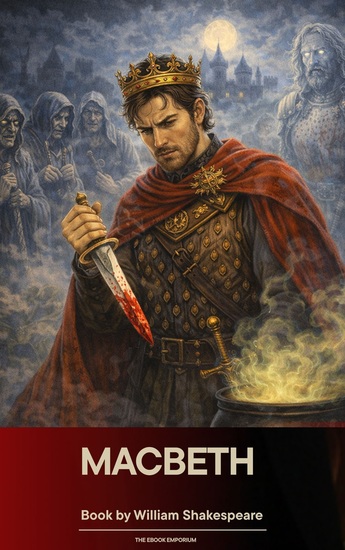
Macbeth - cover

Macbeth

William Shakespeare

Verlag: The Ebook Emporium

  • 0
  • 0
  • 0

Beschreibung

How far would you go to claim power?

Macbeth is one of William Shakespeare's most intense and haunting tragedies. Set in medieval Scotland, the play follows the rise and fall of Macbeth, a nobleman whose ambition is awakened by a prophecy—and driven to murder by desire for power and fear of losing it.

As Macbeth and Lady Macbeth descend into paranoia and madness, Shakespeare explores the corrosive effects of unchecked ambition, guilt, and moral corruption. Witches, visions, and dark symbolism create an atmosphere of relentless tension and psychological horror.

This gripping tragedy examines power, fate, conscience, and the price of betraying one's humanity.

Inside this eBook, you'll experience:

A fast-paced tragedy filled with suspense and violence

One of literature's most compelling portrayals of ambition

Supernatural elements that deepen psychological terror

A timeless warning about the cost of power

Widely studied and performed, Macbeth remains essential reading for students, theater lovers, and readers of classic drama.

Step into a world where ambition devours the soul. Buy now and experience Shakespeare's darkest tragedy.
Verfügbar seit: 22.01.2026.
Drucklänge: 131 Seiten.

Weitere Bücher, die Sie mögen werden

  • Bringing the Shovel Down - cover

    Bringing the Shovel Down

    Ross Gay

    • 0
    • 0
    • 0
    Bringing the Shovel Down maps the long and arduous process of being inculcated with the mythologies of state and power, the ramifications of that inculcation (largely, the loss of our humanity in the service of maintaining those mythologies), and finally, what it might mean, what it might provide us, if we were to transform those myths. The book, finally, has one underlying question: How might we better love one another?
    Zum Buch
  • George Bernard Shaw: CANDIDA - cover

    George Bernard Shaw: CANDIDA

    George Bernard Shaw

    • 0
    • 0
    • 0
    Morell is a Christian Socialist, popular in the Church of England, but Candida is responsible for much of his success. Candida returns home briefly from a trip to London with Eugene Marchbanks, a young poet who wants to rescue her from what he presumes to be her dull family life. Marchbanks is in love with Candida and believes she deserves something more than just complacency from her husband. He considers her divine, and his love eternal. In his view, it is quite improper and humiliating for Candida to have to attend to petty household chores. Morell believes Candida needs his care and protection, but the truth is quite the contrary. Ultimately, Candida must choose between the two gentlemen. She reasserts her preference for the "weaker of the two" who, after a momentary uncertainty, turns out to be her husband Morell. Note that the pronunciation of Candida is how Shaw himself preferred it be pronounced.
    Zum Buch
  • Five Senses - cover

    Five Senses

    Arthur Macy

    • 0
    • 0
    • 0
    Arthur Macy was a Nantucket boy of Quaker extraction. His name alone is evidence of this, for it is safe to say that a Macy, wherever found in the United States, is descended from that sturdy old Quaker who was one of those who bought Nantucket from the Indians, paid them fairly for it, treated them with justice, and lived on friendly terms with them. In many ways Arthur Macy showed that he was a Nantucketer and, at least by descent, a Quaker. He often used phrases peculiar to our island in the sea, and was given, in conversation at least, to similes which smacked of salt water. Almost the last time I saw him he said, "I'm coming round soon for a good long gam."Arthur Macy's view of life was certainly broad and generous, with a philosophic flavor. (from the Introduction (by William Alfred Hovey) to POEMS BY ARTHUR MACY (1905))
    Zum Buch
  • Henry VIII - cover

    Henry VIII

    William Shakespeare

    • 0
    • 0
    • 0
    This is Shakespeare's dutiful trubute to one of the most imposing and terrifying rulers in European history. The kingdom trembles as the giant monarch storms through his midlife crisis, disposing of the faithful Katharine of Aragon and starting a new life and, the king hopes, a line of succession with the captivating young Anne Bullen. Unlike his predecessors, Henry has no doubt about the security of his tenure on the throne, and dominates the royal court with absolute authority. The play has a surprising modern flavour: there is even a set of "Royal watchers" - the three gossipy gentlemen!
    Zum Buch
  • The Forerunner & The Madman - cover

    The Forerunner & The Madman

    Kahlil Gibran

    • 0
    • 0
    • 0
    Most famously known for his book The Prophet, the Lebanese poet Kahlil Gibran, who has been called "the single most important influence on Arabic poetry and literature during the first half of [the twentieth] century."Contained herein are two lesser known works. The Madman was the first book Kahlil published in English, and it's success was enough for The Forerunner to be released by the same publisher less than two years later.
    Zum Buch
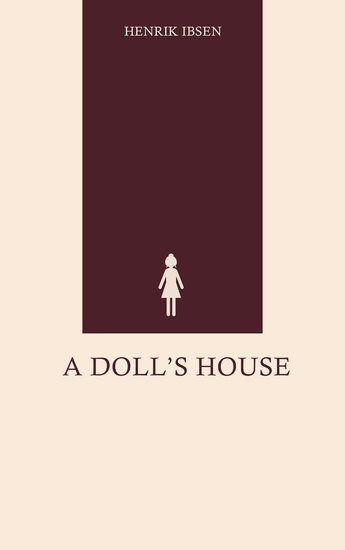
  • A Doll's House - cover

    A Doll's House

    Henrik Ibsen

    • 0
    • 0
    • 0
    A Doll's House by Henrik Ibsen is a groundbreaking work of modern drama that forever changed the course of theater and ignited global conversations about marriage, individuality, and women's rights. First performed in 1879, this bold and provocative play challenged the rigid social conventions of the nineteenth century and remains strikingly relevant today.
    
    Set in a seemingly comfortable middle-class home, the story centers on Nora Helmer, a cheerful and devoted wife who appears to live a happy life with her husband, Torvald. Their household seems warm and secure, especially as they prepare to celebrate the holidays. Yet beneath the surface of domestic harmony lies a web of secrets, sacrifices, and unspoken tensions.
    
    Years earlier, Nora made a desperate decision to save her husband's life—an act motivated by love but carried out in secrecy. When the truth threatens to emerge, the stability of her carefully constructed world begins to crumble. As pressure mounts, Nora is forced to confront not only the consequences of her actions but also the deeper realities of her marriage.
    
    Ibsen masterfully peels back the layers of domestic life to reveal a relationship built on illusion and control. Torvald's affectionate pet names and protective manner mask a patronizing attitude that treats Nora less as an equal partner and more as a cherished possession. The play's title itself serves as a powerful metaphor, suggesting that Nora has been living as a decorative figure in a carefully arranged household rather than as an autonomous individual.
    
    Through sharp dialogue and psychological depth, A Doll's House explores themes of identity, freedom, societal expectation, and the courage required to challenge tradition. Ibsen questions the moral double standards imposed on men and women and exposes the restrictive roles assigned within marriage. Nora's journey from naïveté to self-awareness unfolds with emotional intensity, culminating in one of the most famous and controversial endings in theatrical history.
    
    At the time of its debut, the play shocked audiences and sparked heated debate. Some condemned it as scandalous, while others hailed it as revolutionary. Today, it is widely regarded as one of the foundational works of modern drama and an early catalyst for feminist thought.
    
    Concise yet profoundly impactful, A Doll's House continues to resonate with readers and audiences across generations. Its exploration of personal awakening and the struggle for self-determination speaks to universal human concerns, ensuring its place as a timeless classic.
    
    Bold, intimate, and uncompromising, A Doll's House is not only a story about one woman's decision—it is a powerful examination of the structures that shape our lives and the bravery required to break free from them.
    Zum Buch