Begleiten Sie uns auf eine literarische Weltreise!
Buch zum Bücherregal hinzufügen
Grey
Einen neuen Kommentar schreiben Default profile 50px
Grey
Jetzt das ganze Buch im Abo oder die ersten Seiten gratis lesen!
All characters reduced
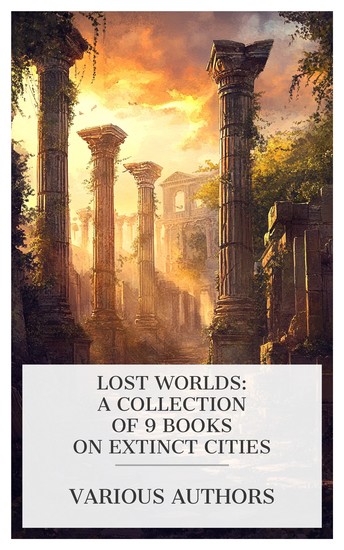
Lost Worlds: A Collection of 9 Books on Extinct Cities - Pompeii Its Life and Art Troy and Its Remains Mycenæ The History of Troilus and Cressida etc - cover

Lost Worlds: A Collection of 9 Books on Extinct Cities - Pompeii Its Life and Art Troy and Its Remains Mycenæ The History of Troilus and Cressida etc

William Shakespeare, Heinrich Schliemann, August Mau, Austen Henry Layard, Richard Caton, R. N. Hall, Gustave Flaubert, E. A. Wallis Budge

Verlag: e-artnow

  • 0
  • 0
  • 0

Beschreibung

In 'Lost Worlds: A Collection of 9 Books on Extinct Cities,' readers embark on a fascinating journey through the ruins of ancient civilizations, unveiling the stories buried beneath the sands of time. This anthology masterfully combines diverse literary styles, from the vivid imagination of William Shakespeare to the meticulous archaeological observations of Heinrich Schliemann and Austen Henry Layard. The collection sheds light on the enigmatic allure of vanished cities, capturing the spirit of exploration and discovery that unites these works. Standout pieces include narrative explorations of legendary locales, all of which contribute to a tapestry of cultural reflection and historical intrigue. The contributing authors, luminaries of their respective fields, offer profound insights into the intricacies of lost urban landscapes. Their collective expertise spans various historical, cultural, and literary movements, enriching the anthology with a kaleidoscope of perspectives. Sir E. A. Wallis Budge's work on Egyptian antiquities and Gustave Flaubert's evocative prose enhance the anthology's depth, while R. N. Hall and Richard Caton's findings reveal much about ancient societies and their undoings. 'Recommend Lost Worlds' to those eager for a multidimensional exploration of bygone eras, as it encapsulates a compelling discourse between literature and archaeology. This collection stands as an indispensable resource for readers interested in obtaining a comprehensive understanding of extinct civilizations, offering a wealth of insights and an invitation to reflect on the echoes of the past within the present. Engage with these diverse narratives for their educational merit and the intellectual journey they promise, cultivating a richer appreciation of humanity's complex history.
Verfügbar seit: 04.03.2025.
Drucklänge: 1300 Seiten.

Weitere Bücher, die Sie mögen werden

  • First In Last Out - An American Paratrooper in Vietnam with the 101st and Vietnamese Airborne - cover

    First In Last Out - An American...

    John D Howard

    • 0
    • 0
    • 0
    A Vietnam veteran recounts his experience through two tours of duty—early in the conflict and then in its final stages. Fresh out of West Point, John Howard arrived for his first tour in Vietnam in 1965, the first full year of escalation when U.S. troop levels increased dramatically, from 23,000 to 184,000. When Howard returned for a second tour in 1972, troop strength stood at 24,000 and would dwindle to a mere fifty the following year. He thus participated in the very early and very late stages of American military involvement in the Vietnam War.   Howard’s two tours—the first as a platoon commander and member of an elite counterguerrilla force, and the second as a senior advisor to the South Vietnamese—provide a fascinating lens through which to view not only one soldier’s experience in Vietnam, but also the country’s.
    Zum Buch
  • Wild Mushrooms - cover

    Wild Mushrooms

    David Kudler

    • 0
    • 0
    • 0
    When eternity comes to visitA Hojo commander is delighted when two pretty young shrine maidens enter his camp on the evening before a battle. Perhaps he shouldn’t have been.Risuko prequel story showing Mieko and Kuniko on a mission — at their sweetest and at their most deadly.
    Zum Buch
  • Frankenstein by Mary Shelley (Book Analysis) - Detailed Summary Analysis and Reading Guide - cover

    Frankenstein by Mary Shelley...

    Bright Summaries

    • 0
    • 0
    • 0
    Unlock the more straightforward side of Frankenstein with this concise and insightful summary and analysis!This engaging summary presents an analysis of Frankenstein by Mary Shelley, a horror novel that calls into question the origin of evil and the dangers and limits of science. It tells the story of Victor Frankenstein and his quest to solve the mystery of life which culminates in the creation of a monster. Frankenstein is known around the world, having been adapted into dozens of films, plays, television shows and even a ballet. While these adaptations have proved popular, the original novel is still an unmissable read for any avid literature fan. Find out everything you need to know about Frankenstein in a fraction of the time!This in-depth and informative reading guide brings you: • A complete plot summary • Character studies • Key themes and symbols • Questions for further reflectionWhy choose BrightSummaries.com?Available in print and digital format, our publications are designed to accompany you in your reading journey. The clear and concise style makes for easy understanding, providing the perfect opportunity to improve your literary knowledge in no time.See the very best of literature in a whole new light with BrightSummaries.com!
    Zum Buch
  • The Urban Experience - Exploring City Life and Culture - cover

    The Urban Experience - Exploring...

    Lyric Vale

    • 0
    • 0
    • 0
    Urban life is a dynamic tapestry woven from the threads of culture, innovation, and diversity. Cities, as epicenters of human activity, have always held a magnetic allure, drawing people in with the promise of opportunity, connectivity, and growth. From the ancient cities of Mesopotamia to the sprawling metropolises of today, urban centers have evolved into places where human ambition and creativity flourish. Understanding the essence of urban life requires a deep dive into the social, cultural, and economic forces that shape these vibrant hubs of civilization. 
    At their core, cities are defined by their density and diversity. They bring together individuals from all walks of life, creating a melting pot of cultures, languages, and traditions. This diversity fosters a unique cultural ecosystem where ideas intersect, and innovation thrives. The exchange of knowledge, whether through bustling markets, collaborative workplaces, or artistic endeavors, is one of the defining characteristics of urban living. Cities are not just physical spaces; they are living entities that embody the collective energy of their inhabitants. 
    Urban life is also deeply intertwined with the physical structure of the city. Streets, buildings, and public spaces are more than mere infrastructure—they serve as stages for human interaction and expression. Urban planning and architecture play crucial roles in shaping the experience of city life, influencing everything from how people move and interact to how they feel within their environment. Well-designed urban spaces can foster community, encourage sustainability, and enhance the overall quality of life for city dwellers.
    Zum Buch
  • Arthur Miller: A short biography - 5 Minutes: Short on time - long on info! - cover

    Arthur Miller: A short biography...

    5 Minutes, 5 Minute Biographies,...

    • 0
    • 0
    • 0
    Arthur Miller, American playwright of the 20th century: Life and work in a short biography! Everything you need to know, brief and concise. Infotainment, education and entertainment at its best!
    Zum Buch
  • Egyptian Mythology and Religion - Gods Legends and Rituals - cover

    Egyptian Mythology and Religion...

    Omar Khalil

    • 0
    • 0
    • 0
    Egyptian mythology is a vast and intricate belief system that shaped the religious and cultural identity of ancient Egypt for thousands of years. Rooted in a deep connection with nature, the cosmos, and the divine, these myths provided explanations for the creation of the world, the role of gods, and the afterlife. Unlike other mythologies, Egyptian beliefs were not static; they evolved over time, adapting to political changes and regional influences while maintaining core spiritual principles. 
    The origins of Egyptian mythology can be traced back to the early dynastic period, though many of its concepts likely predate written history. Ancient Egyptians believed that the universe emerged from a primordial chaos, giving rise to powerful deities who shaped the world. Myths were recorded on temple walls, tombs, and papyrus scrolls, serving both religious and educational purposes. These stories were not merely symbolic; they were deeply woven into daily life, influencing laws, traditions, and the duties of rulers. 
    The geography of Egypt played a crucial role in shaping its mythology. The Nile River, essential for agriculture and survival, became a central symbol of life and renewal, often associated with gods like Osiris and Hapi. The vast deserts surrounding Egypt were seen as chaotic and dangerous, embodying forces of disorder such as the god Set. The sun’s daily journey across the sky was one of the most significant celestial events, leading to the worship of Ra, the sun god, as a dominant figure in Egyptian religious thought.
    Zum Buch