Begleiten Sie uns auf eine literarische Weltreise!
Buch zum Bücherregal hinzufügen
Grey
Einen neuen Kommentar schreiben Default profile 50px
Grey
Jetzt das ganze Buch im Abo oder die ersten Seiten gratis lesen!
All characters reduced
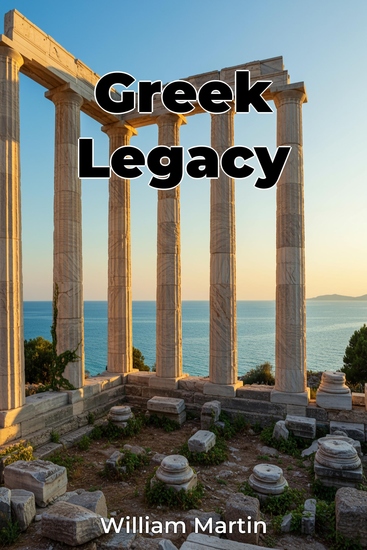
Greek Legacy - cover

Greek Legacy

William Martin

Übersetzer A Ai

Verlag: Publifye

  • 0
  • 0
  • 0

Beschreibung

Greek Legacy explores the enduring influence of ancient Greece on Western Civilization, focusing on philosophy, politics, and science. It argues that Greece provided both the initial spark and continuous inspiration for Western thought. The book examines how Greek innovations such as Athenian Democracy shaped modern governance and how figures like Euclid revolutionized mathematics.

 
The book progresses chronologically, beginning with the Bronze Age and continuing through the Roman period. It analyzes primary sources like Plato and Aristotle, along with archaeological findings, to understand Greek contributions. Intriguingly, Greek political systems evolved from monarchy to democracy, influencing modern governance, and their scientific advancements laid the groundwork for future discoveries.

 
Structured into three sections, the book covers the socio-political context, political innovations, and scientific achievements of ancient Greece. It reveals how key philosophical concepts emerged and how Greek advancements in astronomy and medicine continue to impact modern practices. This approach offers a holistic view of Greek influence, providing a deeper understanding of Western civilization's roots.
Verfügbar seit: 20.03.2025.
Drucklänge: 57 Seiten.
Weitere Bücher, die Sie mögen werden

  • The Women Behind the Few - The Women's Auxiliary Air Force and British Intelligence during the Second World War - cover

    The Women Behind the Few - The...

    Sarah-Louise Miller

    • 0
    • 0
    • 0
    The courageous pilots of the Royal Air Force who faced the Luftwaffe in the Battle of Britain, affectionately known as 'the Few', are rightly hailed as heroes. Recently, efforts have been made to recognise the thousands who supported RAF operations behind the scenes. And yet one group remains missing from the narrative: the Women's Auxiliary Air Force. WAAFs worked within the Dowding System, the world's most sophisticated air defence network. Throughout the Blitz, they used radar to aid Fighter and Bomber Commands in protecting Britain's civilians. WAAFs were also behind the discovery of the terrifying German V-weapons. Their work was critical ahead of the Normandy landings and they were present in their hundreds at Bletchley Park. In this thrilling book, Sarah-Louise Miller celebrates their wartime contribution to British military intelligence. Hidden behind the Few but vital to their success, WAAFs supplied the RAF with life-saving information. Here, for the first time, is their story.
    Zum Buch
  • Plato's 4 Great Dialogues - Euthyphro Apology of Socrates Crito and Aristophanes - Annotated - cover

    Plato's 4 Great Dialogues -...

    Plato

    • 0
    • 0
    • 0
    “The unexamined life is not worth living.” What makes someone die for their beliefs? Four Texts on Socrates explores one of history’s most influential thinkers through three of Plato’s dialogues—Euthyphro, Apology, and Crito—and Aristophanes’ satirical play The Clouds. 
    Each work reveals a different side of Socrates. In Euthyphro, he questions the nature of piety and morality. Apology presents his bold defense at trial, where he declares his pursuit of truth worth any cost. In Crito, he refuses to escape prison, choosing to die rather than betray justice. Finally, The Clouds offers a comic, critical portrayal of Socrates as an eccentric sophist, reflecting Athenian tensions toward his radical ideas. 
    Together these texts paint a portrait of a man who challenged authority, questioned tradition, and inspired generations to examine their own lives. Socrates’ humility—“I know that I know nothing”—and his courage in facing death remain deeply relevant. 
    This collection invites readers into timeless philosophical questions: What is justice? How should we live? What is truth worth? Engaging and provocative, these works challenge us, as Socrates did, to think for ourselves.
    Zum Buch
  • The Dad Rock That Made Me A Woman - cover

    The Dad Rock That Made Me A Woman

    Niko Stratis

    • 0
    • 0
    • 0
    A memoir-in-essays on transness, dad rock, and the music that saves us. 


    When Wilco's 2007 album Sky Blue Sky was infamously criticized as "dad rock," Niko Stratis was a twenty-five-year-old closeted trans woman working in her dad's glass shop in the Yukon Territory. As she sought escape from her hypermasculine environment, Stratis found an unlikely lifeline amid dad rock's emotionally open and honest music. Listening to dad rock, Stratis could access worlds beyond her own and imagine a path forward. 


    In taut, searing essays rendered in propulsive and unguarded prose, Stratis delves into the emotional core of bands like Wilco and The National, telling her story through the dad rock that accompanied her along the way. She found footing in Michael Stipe's allusions to queer longing, Radiohead's embrace of unknowability, and Bruce Springsteen's very trans desire to "change my clothes my hair my face"—and she found in artists like Neko Case and Sharon Van Etten that the label transcends gender. A love letter to the music that saves us and a tribute to dads like Stratis's own who embody the tenderness at the genre's heart, The Dad Rock That Made Me a Woman rejoices in music unafraid to bare its soul.
    Zum Buch
  • The Power of Social Networks - How Connections Influence Your Life and Society - cover

    The Power of Social Networks -...

    Fred Grandsen

    • 0
    • 0
    • 0
    Human connections are at the core of society, influencing the way people think, behave, and interact. Social networks, both physical and digital, shape individual experiences and collective structures, determining everything from personal relationships to global movements. Understanding the science behind these connections provides insight into why people form relationships, how they maintain them, and the effects these relationships have on their lives. 
    The study of social networks is grounded in sociology, psychology, and network science. It examines how individuals are linked to one another through different types of relationships, ranging from close family bonds to distant acquaintances. Each person exists within a web of connections that influences their opportunities, behaviors, and even emotions. These networks function based on two primary types of ties: strong ties and weak ties. Strong ties refer to close relationships, such as family and close friends, that provide emotional support and trust. Weak ties, on the other hand, consist of acquaintances and distant connections that play a crucial role in spreading new ideas, job opportunities, and information. 
    One of the key concepts in the science of human connections is social capital, which refers to the value embedded in relationships. Social capital can provide tangible benefits, such as career advancement, and intangible advantages, such as emotional well-being and a sense of belonging.
    Zum Buch
  • The Multicultural Mindset - Driving Business Growth in a Borderless Era - cover

    The Multicultural Mindset -...

    Joycelyn David

    • 0
    • 0
    • 0
    Joycelyn David, CEO of AV Communications and one of the 100 most influential Filipina women in the world, shares the essential blueprint for business leaders thriving in today's borderless marketplace. With over 20 years of expertise in multicultural marketing, David demonstrates how mastering your Multicultural Quotient (MQ)—the measurable essence of cultural intelligence—transforms good leaders into exceptional global changemakers.
    Zum Buch
  • Crécy and Agincourt: The History of the Hundred Years’ War’s Most Famous Battles - cover

    Crécy and Agincourt: The History...

    Editors Charles River

    • 0
    • 0
    • 0
    Although it ended over 550 years ago, the Hundred Years’ War still looms large in the historical consciousness of England and France, even if the name of the famous war is a misnomer. The war was more of a series of separate conflicts between the English and French monarchies, interspersed with periods of peace, and its reputation remains an odd one, in part because its origins were based on royal claims that dated back centuries. Furthermore, the English and French remained adversaries for nearly 400 years after it ended.  
    	That said, the war was transformative in many respects, and the impact it had on the geopolitical situation of Europe cannot be overstated. While some might think of the war as being a continuation of the feudal tradition of knights and peasants, the Hundred Years’ War revolutionized European warfare, and it truly helped to usher in the concept of nationalism on the continent. In England, it is remembered as a period of grandeur and success, even though the English lost the war and huge swathes of territory with it, while the French remember it as a strategic victory that ensured the continued independence of France and the denial of English hegemony. The legacy of the war has lived on ever since, helping determine how England became politically severed from the continent, how the knightly chivalric tradition slid into irrelevance, and how battlefield dominance can still leave a nation a loser in war.  
    Indeed, nothing characterized that dominance quite like the campaign that culminated with the Battle of Crécy, where the English used their diverse forces to maximum effect to defeat the French, a victory that allowed the English to eventually take and hold Calais. Agincourt was a hard-fought battle, and Henry V at one point ordered prisoners executed to avoid allowing them to be rescued. In the end the English won a decisive victory, taking 1,500 prisoners and marching on safely to Calais. 
    Zum Buch