
Begleiten Sie uns auf eine literarische Weltreise!
Buch zum Bücherregal hinzufügen
Grey
Einen neuen Kommentar schreiben Default profile 50px
Grey
Jetzt das ganze Buch im Abo oder die ersten Seiten gratis lesen!
All characters reduced
The Ethics of Belief - cover

The Ethics of Belief

William Kingdon Clifford

Verlag: DigiCat

  • 0
  • 0
  • 0

Beschreibung

In "The Ethics of Belief," William Kingdon Clifford presents a profound exploration of the moral implications surrounding the act of believing. The essay, originally published in 1877, adopts a rationalist approach, arguing that beliefs must be supported by evidence and that it is unethical to hold beliefs without sufficient justification. Clifford's signature literary style combines clarity of thought with rigorous logical argumentation, positioning his work in the context of Victorian rationalism and the burgeoning debate between faith and reason. Through his memorable assertion, "It is wrong always, everywhere, and for anyone, to believe anything upon insufficient evidence," he challenges the reader to scrutinize their belief systems critically and underscores broader ethical considerations of intellectual honesty and responsibility in society. William Kingdon Clifford, a prominent British philosopher, mathematician, and advocate for empiricism, was influenced by contemporaneous thinkers such as John Stuart Mill and Charles Darwin. His background in mathematics and philosophy shaped his rigorous analytical approach, focusing on the relationship between knowledge, belief, and ethics. Clifford's commitment to rational inquiry and social reform resonates throughout his work, reflecting the intellectual currents of an era grappling with rapid scientific advances. "The Ethics of Belief" is a compelling treatise for anyone seeking to understand the intersection of epistemology and morality. Its impact on subsequent philosophical discourse makes it essential reading for students of philosophy, ethics, and critical thinking. Clifford's accessible yet profound arguments invite readers to reflect critically on their own beliefs and the ethical implications of holding them, making this work a timeless contribution to the discourse on rational belief.
Verfügbar seit: 29.05.2022.
Drucklänge: 25 Seiten.

Weitere Bücher, die Sie mögen werden

  • Comic Book Punks - How a Generation of Brits Reinvented Pop Culture - cover

    Comic Book Punks - How a...

    Karl Stock

    • 0
    • 0
    • 0
    The influence of the comic book has never been greater, from movies to streaming and beyond, but the journey comics took from little-regarded kids' magazines to literary prize-winning books and global franchises turned on a highly unusual group of writers and artists. Few would have expected a small gathering of British comic book fans and creators in the early 'seventies to be a global cultural pivot-point, but this was the start of a disparate movement of punks, dropouts, and disaffected youths who reinvented a medium and became the imaginative heart of a global success story. 


    Based on years of interviews with a generation of leading writers, artists, and editors, Karl Stock reveals the true story of the wild times, passion, and determination that helped, hindered, and saw the reinvention of comics. 


    Stock brilliantly tells the story of the triumphs and disasters that rewrote the rulebook on what comics could be and who they should be for.
    Zum Buch
  • Evolution of Mesoamerica The: The History of Mesoamerican Culture from the Olmec to the Maya - cover

    Evolution of Mesoamerica The:...

    Editors Charles River

    • 0
    • 0
    • 0
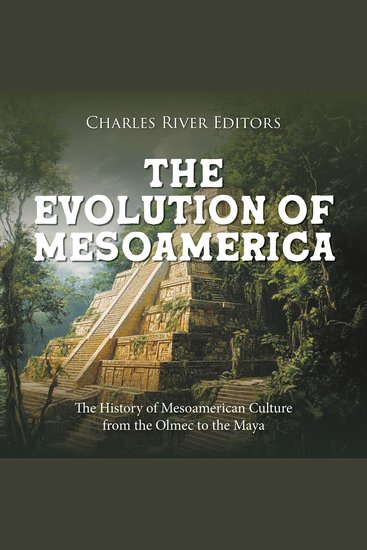
    The Olmec people are widely recognized as the first major civilization of Mexico and are thus generally regarded as the mother civilization of Mesoamerica, making them the people from which all subsequent Mesoamerican cultures derived. In fact, the term Olmec is thought to have originated with the Aztec people, as Olmec in their Nahuatl language means “the rubber people”, a reference to the inhabitants of the land from which they accessed rubber. By and large, the Olmec culture is perhaps best identifiable by their so-called colossal heads, mammoth basalt head-statues wearing helmet-like headdresses found throughout Olmec habitation sites. 
    	The Toltec are one of the most famous Mesoamerican groups in South America, but they are also the most controversial and mysterious. The Toltec have been identified as the group that established a strong state centered in Tula (in present-day Mexico), and the Aztec claimed the Toltec as their cultural predecessors, so much so that the word Toltec comes from the Aztec’s word Tōltēcatl, translated as artisan. The Aztec also kept track of the Toltec’s history, including keeping a list of important rulers and events, that suggest the peak of the Toltec occurred from about 900-1100 CE.  
    	In 2012 especially, there was a renewed focus on the Mayans, whose advanced calendar has led many to speculate the world will end on the same date the Mayan calendar ends. The focus on the “doomsday” scenario, however, has overshadowed the Mayans’ true contribution to astronomy, language, sports, and art.  
    	From the moment Spanish conquistador Hernan Cortes first found and confronted them, the Aztecs have fascinated the world, and they continue to hold a unique place both culturally and in pop culture. Nearly 500 years after the Spanish conquered their mighty empire, the Aztecs are often remembered today for their major capital, Tenochtitlan, as well as their human sacrifice rituals. 
    Zum Buch
  • Small Farm Republic - Why Conservatives Must Embrace Local Agriculture Reject Climate Alarmism and Lead an Environmental Revival - cover

    Small Farm Republic - Why...

    John Klar

    • 0
    • 0
    • 0
    From farmer, lawyer, and political activist John Klar comes a bold, solutions-based plan for Conservatives that gets beyond the fatuous pipe dreams and social-justice platitudes of the dominant, Liberal “Green” agenda—offering a healthy way forward for everyone.  
    While many on the Left have taken up the mantle of creating a “green” future through climate alarmism, spurious new energy sources, and technocratic control, many on the Right continue to deny imminent environmental threats while pushing for unbridled deregulation of our most destructive industrial forces. Neither approach promises a bright future.  
    In a time of soil degradation, runaway pollution, food insecurity, and declining human health, the stakes couldn’t be higher, and yet the dominant political voices too often overlook the last best hope for our planet—supporting small, regenerative farmers. In fact, politicians on all sides continue to sell out the interests of small farmers to the devastating power of Big Ag and failed “renewable energy” incentives.   
    It’s time for a new vision. It’s time for bold new agriculture policies that restore both ecosystems and rural communities.  
    In Small Farm Republic, John Klar, an agrarian conservative in the mold of Wendell Berry and Joel Salatin, offers an alternative that puts small farmers, regenerative agriculture, and personal liberty at the center of an environmental revival—a message that everyone on the political spectrum needs to hear.
    Zum Buch
  • In Transit - Being Non-Binary in a World of Dichotomies - cover

    In Transit - Being Non-Binary in...

    Dianna E. Anderson, Emily...

    • 0
    • 0
    • 0
    For decades, our cultural discourse around trans and gender-diverse people has been viewed through a medical lens, through diagnoses and symptoms set down in books by cisgender doctors, or through a political lens, through dangerous caricatures invented by politicians clinging to power. But those who claim non-binary gender identity deserve their own discourse, born out of the work of the transsexual movement, absorbed into the idea of transgender, and now, finally, emerging as its own category. 


    In tracing the history and theory of non-binary identity, and telling of their own coming out, non-binary writer Dianna E. Anderson answers questions about what being non-binary might mean, but also where non-binary people fit in the trans and queer communities. They offer a space for people to know, explore, and understand themselves in the context of a centuries-old understanding of gender nonconformity and to see beyond the strict roles our society has for men and women. 


    In Transit looks forward to a world where being who we are, whatever that looks like, isn't met with tension and long-winded explanations, but rather with acceptance and love. Being non-binary is about finding home in the in-between places.
    Zum Buch
  • The Friendship Bench - How Fourteen Grandmothers Inspired a Mental Health Revolution - cover

    The Friendship Bench - How...

    Dixon Chibanda

    • 0
    • 0
    • 0
    A simple, human solution for loneliness and depressionWhen Dr. Dixon Chibanda lost a patient to suicide, he began a soul-searching journey that eventually led to a mental healthcare revolution. As one of only six psychiatrists in all of Zimbabwe, a country traumatized by decades of conflict, Chibanda quickly realized that millions there were suffering from mental illness with no hope of receiving care. He saw that the only way to narrow this care gap was to leverage existing resources in the community, and one such resource was the compassion and understanding of grandmothers. With fourteen of these wise elders as partners, Chibanda pioneered the Friendship Bench program, a community-driven initiative addressing loneliness, depression, substance abuse, and suicide by fostering intergenerational connectedness. Since then, more than 500,000 people worldwide have sat on a park bench to share their personal stories with an empathetic grandmother.
     
    A primer on how human connection forms the bedrock of our resilience, The Friendship Bench gives readers the tools to facilitate transformative healing by reaching out to those who are struggling and isolated from the world around them. It’s a case study of how interventions supported by robust scientific evidence can be made accessible for all. Ultimately, it’s a celebration of the collective wisdom and knowledge of those rooted in their communities and their profound ability to foster belonging, purpose, and healing.
    Zum Buch
  • Genocide - A Detailed History of the Cambodian and Armenian Genocide - cover

    Genocide - A Detailed History of...

    Kelly Mass

    • 0
    • 0
    • 0
    In this book, we'll discuss two genocides that have cost the lives of millions but have often been overlooked by world historians. These are the following: 
    1 - It’s insane to think that mass murder didn’t stop at the end of World War II. Since the Holocaust, various genocides have taken place in different areas of the world. In this book, we’ll talk about something that has often been shoved under the rug, but was definitely a consequence of the Vietnam War, the bombings by the Americans, and a domino effect into an already fragile political country: The nation of Cambodia. 
    The Cambodian genocide was the methodical abuse and death of Cambodians by the Khmer Rouge, led by Pol Pot, the general secretary of the Communist Party of Kampuchea, who pushed Cambodia towards being an entirely self-dependent agrarian socialist state. Between 1975 and 1979, 1.5 to 2 million people were murdered, representing about a quarter of Cambodia's population in 1975. (c. 7.8 million). 
    2 - Yes, even before World War II, there was a genocide, and not too long before that, actually. We are talking about the Armenian deportations that killed between 1 and 2 million innocent civilians, an atrocity the Turkish government still doesn’t fully acknowledge. Rock bands like System of a Down have complained in their music about it, historians have turned pieces of evidences into large books, and when you talk to Armenians, they still remember what their ancestors told them about it. 
    The Ottoman Empire was collapsing, and in a cruel act of desperation and vengeance, they decided to take out their empirical frustrations on the Armenians and “take care of the Armenian problem.” Mass rapes, murder, deportation, theft, robberies, starvation, and mayhem was the consequence. It became one of the ugliest faces of the First World War in history.
    Zum Buch