Join us on a literary world trip!
Add this book to bookshelf
Grey
Write a new comment Default profile 50px
Grey
Subscribe to read the full book or read the first pages for free!
All characters reduced
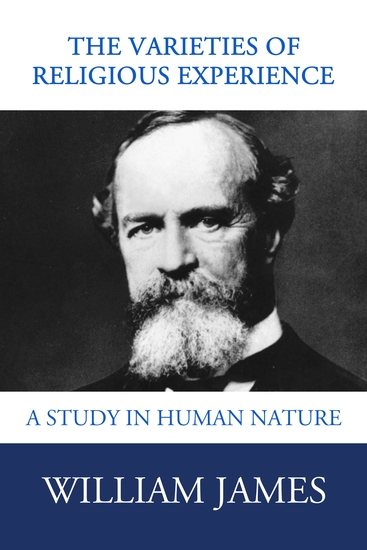
The Varieties of Religious Experience - cover

The Varieties of Religious Experience

William James

Publisher: CrossReach Publications

  • 0
  • 0
  • 0

Summary

In the matter of religions it is particularly easy to distinguish the two orders of question. Every religious phenomenon has its history and its derivation from natural antecedents. What is nowadays called the higher criticism of the Bible is only a study of the Bible from this existential point of view, neglected too much by the earlier church. Under just what biographic conditions did the sacred writers bring forth their various contributions to the holy volume? And what had they exactly in their several individual minds, when they delivered their utterances? These are manifestly questions of historical fact, and one does not see how the answer to them can decide offhand the still further question: of what use should such a volume, with its manner of coming into existence so defined, be to us as a guide to life and a revelation? To answer this other question we must have already in our mind some sort of a general theory as to what the peculiarities in a thing should be which give it value for purposes of revelation; and this theory itself would be what I just called a spiritual judgment. Combining it with our existential judgment, we might indeed deduce another spiritual judgment as to the Bible’s worth. Thus if our theory of revelation-value were to affirm that any book, to possess it, must have been composed automatically or not by the free caprice of the writer, or that it must exhibit no scientific and historic errors and express no local or personal passions, the Bible would probably fare ill at our hands. But if, on the other hand, our theory should allow that a book may well be a revelation in spite of errors and passions and deliberate human composition, if only it be a true record of the inner experiences of great-souled persons wrestling with the crises of their fate, then the verdict would be much more favorable. You see that the existential facts by themselves are insufficient for determining the value; and the best adepts of the higher criticism accordingly never confound the existential with the spiritual problem. With the same conclusions of fact before them, some take one view, and some another, of the Bible’s value as a revelation, according as their spiritual judgment as to the foundation of values differs.
Available since: 06/28/2022.
Print length: 710 pages.

Other books that might interest you

  • World War I and II for Kids: A Captivating Guide to the First and Second World War - cover

    World War I and II for Kids: A...

    Captivating History

    • 0
    • 0
    • 0
    Two manuscripts in one audiobook:World War 1 for Kids: A Captivating Guide to the First World WarWorld War 2 for Kids: A Captivating Guide to the Second World War 
    In the first part of this audiobook, you will discover:How it all started because of just one manWhy soldiers spent most of their time sitting around in wet, muddy ditchesThe new inventions that changed the face of war foreverHow dogs, horses, pigeons, and even goldfish helped in the warSoldiers—poets that didn’t know itWhy you could go to jail if you refused to fightBoy Scout and Girl Guide spies?The longest, biggest, and bloodiest battlesOnly twelve years old and going to war!How the "war to end all wars" may have actually caused the Second World War 
    In the second part of this audiobook, you will discover:Why were children in Britain sent to live hundreds of miles away with strangers?Could you budget and enjoy your favorite foods on wartime rations?Why the first atomic bomb was used and how it ended the war for good.How one fifteen-year-old girl’s diary won a Pulitzer Prize and has sold over 30 million copies.Why some people had no choice but to fight, even if they didn’t want to.Being a dictator wasn’t Adolf Hitler’s first choice of career. What do you think he first tried (and failed) to be?Why you couldn’t say “hamburger” in the United States during WWII.Could you make a great escape from a prison camp?Thirty years later—the soldiers who refused to believe the war was over!Girl power! How women helped the war effort. 
    Scroll up and click the “add to cart” button to learn more about World Wars!
    Show book
  • Crime and Punishment in the American Colonies: The History of the Legal Systems in North America Before the Revolutionary War - cover

    Crime and Punishment in the...

    Charles River Editors

    • 0
    • 0
    • 0
    Even though the colonists eventually broke free from Great Britain, plenty of British customs and practices affected the fledgling United States, particularly when it came to law. While the most notable ramifications can be found in the Fourth Amendment to the Constitution, which forbids illegal searches and seizures by the government, the extensive legal background from Britain impacted how American lawyers and courts operated as well, even as legal codes differed considerably from colony to colony because of their charters. The local codes had to broadly conform with the current laws in England, and the early equivalent of the Colonial Office examined colonial laws if someone sued. Laws found to be inconsistent with English practice were sometimes voided.  
    	On paper, the New England codes were extremely harsh, but in practice, they were often mildly enforced, if enforced at all. One law on the books was that a son could be executed if he cursed his parents, but no one was ever executed for it. Many crimes were offenses against public decorum, but there was a wide range of things considered misbehaviors. Punishments varied but tended to be either financial or public, with humiliation and shame being a large part of it.  
    	Conversely, while the New Englanders tended to base their codes on the Old Testament, in Pennsylvania, the Quaker establishment sought to reform criminals rather than punish them. Consequently, they probably had the least number of capital offenses of any place in the English-speaking world. Furthermore, over time, the list of what constituted crimes changed somewhat, as did the emphasis. The fast growth of populations brought large numbers of immigrants and indentured servants and a more complex society. Diversity increased, and the rise of slavery concentrated in (but was not limited to) the Southern colonies, bringing with it codes of law to control slaves and deal with offenses committed by them.
    Show book
  • Thermodynamics and Statistical Mechanics - Principles of Heat Energy and Statistical Systems - cover

    Thermodynamics and Statistical...

    Mark Hedges

    • 0
    • 0
    • 0
    Thermodynamics is the branch of physics that deals with heat, work, and energy transfer. It provides fundamental principles that govern the behavior of physical systems, from microscopic particles to large-scale industrial processes. Understanding thermodynamics is crucial for fields such as engineering, chemistry, and physics, as it helps explain how energy is conserved, transformed, and dissipated. 
    One of the fundamental aspects of thermodynamics is the concept of a thermodynamic system, which refers to a specific region of space or a set of substances that are being studied. Systems can be classified as open, closed, or isolated, depending on their ability to exchange energy and matter with their surroundings. An open system allows both energy and matter to flow in and out, while a closed system permits energy transfer but not matter exchange. An isolated system, in contrast, does not exchange either energy or matter with its surroundings. 
    Thermodynamic properties are categorized as extensive or intensive. Extensive properties, such as mass, volume, and total energy, depend on the amount of substance present. Intensive properties, like temperature, pressure, and density, do not depend on system size and are uniform throughout a system in equilibrium.
    Show book
  • Ottoman Empire and the World Around It The: Book Summary & Analysis - cover

    Ottoman Empire and the World...

    Briefly Summaries

    • 0
    • 0
    • 0
    This is a concise summary and analysis of The Ottoman Empire and the World Around It, by Suraiya Faroqhi.
     
    It is not the original book and is not affiliated with or endorsed by Suraiya Faroqhi.
     
    Ideal those seeking a quick and insightful overview.
     
    Explore the intricate relationships between the Ottoman Empire and its neighboring regions in this comprehensive examination of political, cultural, and economic interactions from the 16th to the 18th century. This book delves into how the empire navigated diplomacy, trade, and cultural exchange while maintaining its vast and diverse territories. With an emphasis on the interconnectedness of the Ottoman world and the broader global landscape, this work provides a nuanced understanding of one of history's most influential empires.
    Show book
  • Navigating the Age of Chaos - A Sense-Making Guide to a BANI World That Doesn't Make Sense - cover

    Navigating the Age of Chaos - A...

    Angela F. Williams, Bob...

    • 0
    • 0
    • 0
    The world we once described as volatile and uncertain has shifted into something far more chaotic: BANI, or brittle, anxious, nonlinear, and incomprehensible. In Navigating the Age of Chaos, Jamais Cascio, the originator of the visionary BANI framework, unpacks the tools and perspectives needed to navigate our increasingly turbulent era.Joined by coauthors Bob Johansen and Angela F. Williams, Cascio provides real-world examples, practical strategies, and rich insights to help leaders, organizations, and individuals not just survive but thrive in the chaos. This book will help listeners recognize, adapt to, and excel in a world changing with unprecedented speed and intensity.Breaking down the BANI framework, listeners will discover how to tackle each aspect of a BANI world:Brittle—Recognize fragility in systems and strategies to build resilience.Anxious—Address widespread anxiety with empathy and attentiveness.Nonlinear—Navigate unpredictable scenarios with adaptive, improvisational thinking.Incomprehensible—Find clarity in overwhelming complexity through webs of connection.Positive BANI—Reframe chaos into actionable opportunities for growth.
    Show book
  • The complete works of Aristotle - cover

    The complete works of Aristotle

    Anonymous

    • 0
    • 0
    • 0
    Explore the Foundations of Human Knowledge.
    
    Aristotle, known for centuries as "The Philosopher," was perhaps the most expansive mind of the ancient world. His writings didn't just discuss philosophy—they invented the very categories of thought we use today. This comprehensive collection brings together his vast body of work, offering a panoramic view of a mind that sought to categorize and understand every aspect of the universe.
    
    This collection covers the essential pillars of Aristotelian thought:
    
    The System of Logic: Discover the origins of formal reasoning and the "syllogism," the method of deduction that governed Western science for two thousand years.
    
    The Study of Ethics and Virtue: Explore the famous "Golden Mean" and the pursuit of human flourishing through character and balance.
    
    Political and Social Theory: An in-depth look at the nature of communities, the responsibilities of citizens, and the structure of a just society.
    
    Natural Science and Metaphysics: Inquiries into the physical world, the movement of the stars, and the fundamental nature of existence itself.
    
    The Art of Persuasion and Poetics: The definitive ancient guides on how to speak effectively and how great stories are structured.
    
    Whether you are interested in the laws of nature, the rules of logic, or the best way to live a virtuous life, this volume provides the complete roadmap. This edition is an essential cornerstone for any library of classic literature and a must-read for anyone seeking to understand the intellectual heritage of the modern world.
    
    Walk the path of the great thinkers. Buy "The Complete Works of Aristotle" today and own the foundation of Western thought.
    Show book