Begleiten Sie uns auf eine literarische Weltreise!
Buch zum Bücherregal hinzufügen
Grey
Einen neuen Kommentar schreiben Default profile 50px
Grey
Jetzt das ganze Buch im Abo oder die ersten Seiten gratis lesen!
All characters reduced
THE PRINCIPLES OF PSYCHOLOGY (Complete Edition In 2 Volumes) - Enriched edition - cover

THE PRINCIPLES OF PSYCHOLOGY (Complete Edition In 2 Volumes) - Enriched edition

William James

Verlag: Musaicum Books

  • 0
  • 0
  • 0

Beschreibung

William James' 'The Principles of Psychology' is a seminal work in the field of psychology, encompassing a wide range of topics from perception and consciousness to cognition and emotion. Written in a clear and engaging style, James delves into the complexities of the human mind, drawing on both philosophical and scientific insights to explore the workings of mental processes. The book is structured in two volumes, allowing for a comprehensive study of the subject matter, making it an essential read for anyone interested in psychology and the study of the mind. James' literary style is both intellectual and accessible, making the content both engaging and informative for readers. This work is a cornerstone in the development of modern psychology, influencing generations of scholars and researchers in the field. William James, a renowned American philosopher and psychologist, was a pioneer in the field of psychology. His varied background in philosophy, psychology, and physiology provided him with a unique perspective on the human mind and behavior. 'The Principles of Psychology' is a testament to his deep understanding of the subject matter and his ability to communicate complex ideas in a clear and engaging manner. I highly recommend this book to anyone interested in delving into the fascinating world of psychology and understanding the complexities of human thought and behavior.

In this enriched edition, we have carefully created added value for your reading experience:
- A succinct Introduction situates the work's timeless appeal and themes.
- The Synopsis outlines the central plot, highlighting key developments without spoiling critical twists.
- A detailed Historical Context immerses you in the era's events and influences that shaped the writing.
- An Author Biography reveals milestones in the author's life, illuminating the personal insights behind the text.
- A thorough Analysis dissects symbols, motifs, and character arcs to unearth underlying meanings.
- Reflection questions prompt you to engage personally with the work's messages, connecting them to modern life.
- Hand‐picked Memorable Quotes shine a spotlight on moments of literary brilliance.
- Interactive footnotes clarify unusual references, historical allusions, and archaic phrases for an effortless, more informed read.
Verfügbar seit: 02.11.2018.
Drucklänge: 1259 Seiten.

Weitere Bücher, die Sie mögen werden

  • Dragons: The History of Dragon Legends and Folk Tales around the World - cover

    Dragons: The History of Dragon...

    Editors Charles River

    • 0
    • 0
    • 0
    For millennia, people considered dragons to be real, and the vivid lore of dragons has touched societies from Central America to Europe, and from Egypt to China. The popularity of dragons can easily be assessed by the number of motion pictures that include them as an integral part of their narrative, from the friendly dragons of children’s cartoons to the monsters being bred underground to unleash their horrors on humanity. Indeed, some of humanity’s deepest cultural myths have included dragons, from the Greek and Georgian tale of Jason and the Argonauts to the stories from ancient China that influence modern New Year’s festivities. 
    The English word “dragon” comes from the Greek word “drakon,” which means “snake,” and while people today may have a hard time imagining a dragon as a simple snake, some scientists think that the international nature of the myth is based on the presence of snakes on nearly every continent. Oxford professor of medieval European literature Carolyne Larrington explained, “The anthropologist David E. Jones has suggested that the dragon myth takes its origins from an innate fear of snakes, genetically encoded in humans from the time of our earliest differentiation from other primates. It is true, of course, that it makes evolutionary sense to avoid dangerous animals of every kind, but it is less clear why people should invent stories about imaginary oversized serpents in particular. Nevertheless, there is a clear benefit to tales that warn children against straying into perilous marshy areas where the serpent might seize them, or against scrambling up treacherous mountain sides in search of monsters and treasure hoards.”
    Zum Buch
  • Sophocles - A Very Short Introduction - cover

    Sophocles - A Very Short...

    Edith Hall

    • 0
    • 0
    • 0
    This Very Short Introduction introduces the life, work, and influence of one of the greatest dramatists of all time, Sophocles the Athenian. 


    Placing his plays within their historical context, and explaining the conventions of ancient Greek tragic theatre, Edith Hall spotlights their distinctive features—tight plots, titanic personalities, lucid style, sympathetic women, exquisite poetry, and stagecraft. This analysis is followed by an account of how and why Sophoclean dramas have survived to be read and widely performed into the twenty-first century.
    Zum Buch
  • The Jews - 5000 Years and Counting - cover

    The Jews - 5000 Years and Counting

    Rob Kutner

    • 0
    • 0
    • 0
    "A delightful companion to the Torah, the Talmud, and every history book ever written about the Jewish people . . . a perfect book for anyone who has ever wondered how the heck the Jews got here and where the heck are we going and is it okay to laugh about it all? I'll follow Kutner to the answer." —Mayim Bialik, Actor, Author, Neuroscientist 


    A hilarious book for those with even the most basic level of Jewish knowledge, and perfect for those who want to know more. 


    The Jews: 5,000 Years and Counting is packed with Jew-facts, Jew-figures, and the original, never-before-seen documents from those who lived through Jewish history. Read the transcript of the Biblical Patriarchs' and Matriarchs' Group Therapy Session! Sneak a peek at Moses's Secret Diary, or check out the awkward "I'm dumping you" text chain from Spain to the Jews in 1492! Collect and trade Rabbi Action Cards! 


    Covering every major moment in Jewish history from the literal "Beginning" to Tuesday's rerun of Seinfeld, this book will make you laugh. It might inadvertently make you learn. If you're Jewish, it will unquestionably give you something to kvetch about.
    Zum Buch
  • Muisca Confederation - The Land of El Dorado and the Riches of the Andes - cover

    Muisca Confederation - The Land...

    Rolf Hedger

    • 0
    • 0
    • 0
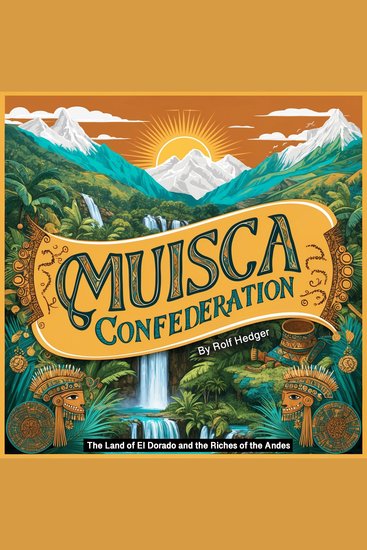
    The Muisca Confederation was one of the most sophisticated political entities in pre-Columbian South America, emerging in the highlands of present-day Colombia. The origins of this powerful society can be traced back to the earliest inhabitants of the Eastern Cordillera of the Andes, a region characterized by fertile valleys, cool mountain climates, and abundant natural resources. Over time, these early settlers developed complex social structures, agricultural techniques, and political institutions that would form the foundation of the Muisca Confederation.  
    The first groups to settle in the high-altitude plateaus of the Andean region arrived thousands of years ago, likely migrating from Central America or other parts of South America. These early inhabitants lived in small, semi-nomadic communities, relying on hunting, fishing, and rudimentary farming. As they adapted to their environment, they developed advanced agricultural methods, cultivating maize, potatoes, quinoa, and other crops suited to the high-altitude terrain. The fertile lands and steady supply of food allowed for population growth, leading to the establishment of permanent settlements. 
    As Muisca society evolved, it became increasingly hierarchical, with distinct roles emerging among its members. The transition from small, scattered villages to organized chiefdoms marked a significant turning point in their history. Power began to concentrate in the hands of local leaders, or caciques, who governed their respective communities. Over time, these leaders expanded their influence, forming alliances and asserting control over larger territories. The most powerful of these rulers eventually became the Zipa of Bacatá and the Zaque of Hunza, the two principal leaders who governed the northern and southern regions of the Muisca Confederation.
    Zum Buch
  • Clouds - The Comic Portrait of Socrates – Aristophanes’ Satirical Play on Sophistry Education and Athenian Society - cover

    Clouds - The Comic Portrait of...

    Aristophanes, Tim Zengerink

    • 0
    • 0
    • 0
    What if the greatest threat to society wasn’t ignorance—but cleverness without conscience? 
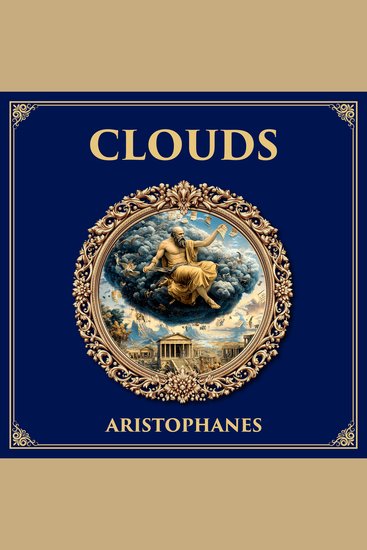
    Clouds by Aristophanes is a scathing comedic masterpiece that lampoons Socratic philosophy and the Athenian obsession with rhetorical trickery. This modern translation revives the wit, rhythm, and political punch of Aristophanes’ classic play, in which a debt-ridden father seeks to cheat his way to freedom by mastering the art of deceit—under the tutelage of a ridiculous, cloud-dwelling Socrates. 
    What you’ll discover inside: 
    •	A satirical comedy skewering philosophy, education, and generational conflict 
    •	A wildly irreverent portrait of Socrates and his absurd “Thinkery” 
    •	A sharp critique of sophistry, relativism, and rhetorical manipulation 
    •	A lively and accessible modern translation of Aristophanes’ classic 
    Join the riotous drama where logic tangles, thunder rumbles, and the line between wisdom and foolishness vanishes in the clouds.
    Zum Buch
  • Friars and Filipinos - cover

    Friars and Filipinos

    José Rizal

    • 0
    • 0
    • 0
    Friars and Filipinos is a critical and satirical essay in which José Rizal examines the deep-rooted influence of the Spanish colonial friars on Philippine society and governance. Written in response to an article by a Spanish writer, Rizal systematically critiques the hypocrisy, greed, and abuses of power committed by the religious orders, exposing how they manipulated both faith and politics to maintain control over the Filipino people. He contrasts their corruption with the dignity, intelligence, and potential of the Filipino native, advocating for justice, reform, and national consciousness. With clarity and passion, Rizal calls for an end to clerical dominance and the recognition of Filipino rights. This essay stands as a powerful indictment of colonial oppression and a vital piece of the intellectual foundation for Philippine nationalism.
    Zum Buch