Rejoignez-nous pour un voyage dans le monde des livres!
Ajouter ce livre à l'électronique
Grey
Ecrivez un nouveau commentaire Default profile 50px
Grey
Abonnez-vous pour lire le livre complet ou lisez les premières pages gratuitement!
All characters reduced
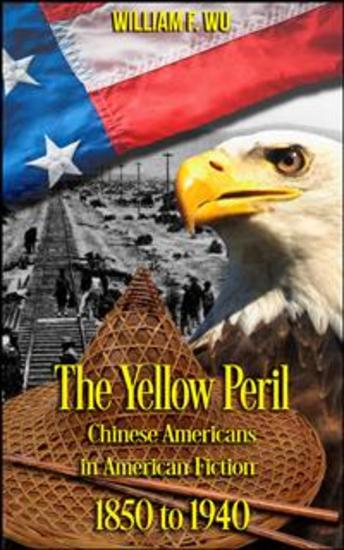
The Yellow Peril - Chinese Americans in American Fiction 1850 to 1940 - cover

The Yellow Peril - Chinese Americans in American Fiction 1850 to 1940

William F. Wu

Maison d'édition: Boruma Publishing

  • 0
  • 0
  • 0

Synopsis

This study examines the way Americans of Chinese descent were portrayed in American literature between 1850 and 1940. Their depictions are compared to historical events that were occurring at the time the works of literature were published. This edition has additions and corrections compared to the original hardback edition published in 1982.

~~~~~ Excerpt ~~~~~

My purpose in writing this work has been to explore the depiction of Chinese immigrants and their descendants in American fiction, from the mid-nineteenth century entry of the first Chinese immigrants in significant numbers, to the eve of World War II. I consider both the immigrant Chinese and the American-born generations that followed them to be Chinese Americans, but will sometimes identify the groups separately in recognition of the fact that the historical experience and treatment of the immigrants in fiction has been different from that of their descendants. The fiction treated in this study includes short stories and novels both by white Americans and Asian Americans.

I am defining the term Yellow Peril as the threat to the United States that some white American authors believed was posed by the people of East Asia. As a literary theme, the fear of this threat focuses on specific issues, including possible military invasion from Asia, perceived competition to the white labor force from Asian workers, the alleged moral degeneracy of Asian people, and the potential genetic mixing of Anglo-Saxons with Asians, who were considered a biologically inferior race by some intellectuals of the nineteenth century. The Chinese immigrants were the first target of this attention, since they were the first Asian immigrants to reach the United States in large numbers. This study will focus on American fiction about Chinese Americans in an attempt to analyze the growth and development of attitudes about them.

My thesis is that the Yellow Peril is the overwhelmingly dominant theme in American fiction about Chinese Americans in the years with which this study is concerned. It is expressed through the variety of images of the Chinese Americans that appear, especially in their relation to, and their role as part of, the United States. The historical causes and literary subject matter change, but the theme neither disappears nor abates.

Each work of fiction has been studied individually for the images it contains. Prior to the turn of the century, the Yellow Peril is perceived only as stemming from the Chinese. In the twentieth century, especially in the pulps, the Japanese joined the Chinese as a perceived menace to Europe and North America. The overall process of evaluation relies primarily on detailed analyses of the characters under consideration. This has been done with an awareness that the American public as a whole sometimes did not distinguish carefully among Asian ethnic groups, so that events involving one Asian ethnic group often affected the image of another. Some works are obscure and these have been quoted at greater length than more available ones.

Relatively few critical sources have been cited; this is due to a dearth of relevant studies. The less important works of fiction have naturally received little critical attention and, often, when such attention was concerned with pertinent stories, the authors had little or nothing to say about the depiction of Chinese Americans. This observation is intended only as an explanation, and not as a value judgement of earlier scholarship with different goals.
Disponible depuis: 02/06/2022.


D'autres livres qui pourraient vous intéresser

  • Dark Psychology and Manipulation - Learn how to use mind control cognitive science top secrets and how to use NLP and persuasion to get what you want (2022 Guide for Beginners) - cover

    Dark Psychology and Manipulation...

    Cecilia Smith

    • 0
    • 0
    • 0
    Do you find the concept of mind control intriguing? Do you want to learn about dark psychology techniques? Do you believe someone is attempting to manipulate your actions? 
    If this is the case, this Guide is for you! 
    Some of the information in the Book is as follows:Mind control and manipulationIs it always bad to manipulate?Techniques for mind controlSeven very effective covert emotional manipulation tacticsThe Implications of NLP TechniquesIn what ways is NLP employed in relationships?HypnosisHow brainwashing takes placeIn partnerships, using mind controlControlling one's thoughts at workHow to Recognize If You've Been Emotionally Manipulated 
    ...as well as much more! 
    Manipulation goes into the details and reveals the realm of dark psychology in order to provide fresh insight into human behavior. Dark psychology is a strong, pervasive, and essential strategy for gaining an edge in daily life. 
    Imagine being able to win practically any debate, persuade others to your point of view, or manipulate events to your benefit, all while ensuring that others do not have the same power over you. 
    Do you want to find out more? 
    Then scroll up, click "purchase now," and obtain your Book right now!
    Voir livre
  • Great Northern War The: The History of the Conflict that Made Russia the Dominant Empire in the Baltic - cover

    Great Northern War The: The...

    Editors Charles River

    • 0
    • 0
    • 0
    The Great Northern War, fought from 1700-1721, gets its name from the fact the war focused on the Baltic, but the battlefields extended into Germany and deep into Poland and Ukraine. Sweden was a military power with a small empire in the Baltic, while Russia was still a landlocked place, backward when compared to the rest of Europe, not very powerful, and highly xenophobic. The Poland-Lithuanian Commonwealth was still powerful, and the Cossacks were still free. Moreover, despite the fact the Ottoman Empire was weakened, it held sway in the Balkans and deep into Eastern Europe, and the Krim Tatars were still raiding into Ukraine, Russia, and Poland for slaves. The Great Northern War would involve the Ottomans and the Tatars as well. 
    	Given the length of the conflict, perhaps it’s not surprising that other Western European kingdoms ended up in the mix. Brandenburg-Prussia was involved in the later phases of the war - Frederick William was an elector of Brandenburg and had just been granted the right (by the Holy Roman Emperor) to call himself king in Prussia. He held both titles, but there was still a formal separation between Brandenburg and Prussia. Frederick William was strongly interested in acquiring some or all of Pomerania, a region on the Baltic coast, particularly in acquiring a port, which would eliminate paying Swedish tolls in Swedish-controlled ports. 
    	Ultimately, the most important aspect of the war is that it laid the foundations for the Russian Empire. By 1718, the Russians had conquered most of Finland, the port of Riga, and the Swedish city of Vyborg. These gains in the Baltic Sea strengthened the burgeoning Russian Empire and provided ports and access to the rich resources of Finland, including valuable meat and lumber. Peter also proved to be a rather benevolent conqueror, allowing these regions to maintain both their faith and culture.
    Voir livre
  • In the Search of Freedom - cover

    In the Search of Freedom

    Martin Luther King Jr.

    • 0
    • 0
    • 0
    A collection of Martin Luther King Jr's speeches, including his world famous "I Have a Dream".
    Voir livre
  • Suburban Policing - Cleveland Style - cover

    Suburban Policing - Cleveland Style

    Jim Brown

    • 0
    • 0
    • 0
    Suburban Policing: Cleveland Style is an unfiltered, behind-the-scenes journey through the eyes of a seasoned law enforcement officer who spent 25+ years as a Police Officer making his way through the ranks (Patrol Officer, Sergeant, Lieutenant, Detective Bureau Commander, SWAT Team Commander, etc.,)—which culminated in serving his final eleven (11) years as a municipal Police Chief. With raw honesty, sharp insight, and moments of unexpected humor, this book offers a gripping look at what it truly means to wear the badge in one of America’s most challenging suburban environments. From high-speed pursuits and SWAT operations to life-altering auto accidents and unpredictable disturbances, this isn’t just another cop story—it’s a boots-on-the-ground memoir of dedication, danger, and deeply personal encounters with both tragedy and triumph. Drawn from decades of real-life experiences, these stories reflect the grit, compassion, and unwavering resolve of those who serve and protect. For anyone curious about what police officers really face day to day—and how a lifetime in law enforcement shapes a person—this book offers an authentic, unforgettable perspective.
    Voir livre
  • Moors in Italy The: The History of the Muslims Who Moved from North Africa to Italy during the Middle Ages - cover

    Moors in Italy The: The History...

    Editors Charles River

    • 0
    • 0
    • 0
    The term Moor is a historical rather than an ethnic name. It is an invention of European Christians for the Islamic inhabitants of Maghreb (North Africa), Andalusia (Spain), Sicily and Malta, and was sometimes use to designate all Muslims. It is derived from Mauri, the Latin name for the Berbers who lived in the Roman province of Mauretania. 
    	The Berbers established several powerful and prosperous states on the south Mediterranean coast. They ruled Numidia – now part of Algeria – until conquered by the Carthaginians. After the fall of Carthage, the Berber kingdom of Mauretania –not to be confused with the country created by the French – dominated northwestern Africa before it was conquered by Rome in the 1st century BCE. Under Roman rule they made great contributions to civilization and were certainly not the wild, untamed tribesmen of popular imagination. Augustine, Bishop of Hippo regius in Numidia, was a Berber and one of the greatest philosophers and theologians not only of his own time but of all time. The list of religious leaders drawn from the Berbers includes Tertullian, Popes Victor I, Miltiades and Gelasius I and the heresiarch Arius. The playwright Terence was a Berber, as were several noted Roman governors and three emperors.  
    	As the Roman Empire in the West collapsed, the Berbers succumbed to the Vandals, a Germanic tribe from Europe, in the 5th century CE. However, the Eastern Roman Empire, centered in Constantinople rather than Rome, underwent something of a renewal, and the whole of the African coast from the Sinai Peninsula to the Straits of Gibraltar returned to Byzantine rule. With that, the Berbers were once again subject to a foreign power, but soon they would exchange their new masters for another, the Arabs, who would bring a new religion, Islam. Through Islam the Berbers would once again come into their own and influence the course of Mediterranean history as their ancient ancestors had done.
    Voir livre
  • Loyalty - The Faithful Allegiance - cover

    Loyalty - The Faithful Allegiance

    Esther Jameson

    • 0
    • 0
    • 0
    Loyalty is a concept that resonates deeply with human nature, transcending time, culture, and geography. It is often regarded as one of the highest virtues, forming the foundation of relationships, societies, and organizations. At its core, loyalty is an unwavering allegiance to a person, cause, or institution, and it involves a commitment that goes beyond mere obligation. It is about dedication, trust, and an emotional bond that fosters a sense of responsibility and attachment. 
    Defining loyalty can be complex because it manifests in various forms and is subject to different interpretations depending on the context. In personal relationships, loyalty can mean remaining faithful to a partner, supporting friends through tough times, or staying committed to family. In a broader societal context, it can refer to allegiance to a nation, loyalty to a set of values, or even devotion to an idea or belief system. Despite these differences, the essence of loyalty remains consistent: it is the willingness to stand by someone or something, even in difficult or challenging times. 
    One important aspect of loyalty is trust. Without trust, loyalty cannot truly exist. Trust is the foundation upon which loyalty is built, and it is what keeps the bond strong over time. Loyalty requires faith that the person or cause to which one is loyal will not betray that trust. This mutual trust creates a sense of security and dependability, making loyalty a powerful force that binds individuals together.
    Voir livre