Rejoignez-nous pour un voyage dans le monde des livres!
Ajouter ce livre à l'électronique
Grey
Ecrivez un nouveau commentaire Default profile 50px
Grey
Abonnez-vous pour lire le livre complet ou lisez les premières pages gratuitement!
All characters reduced
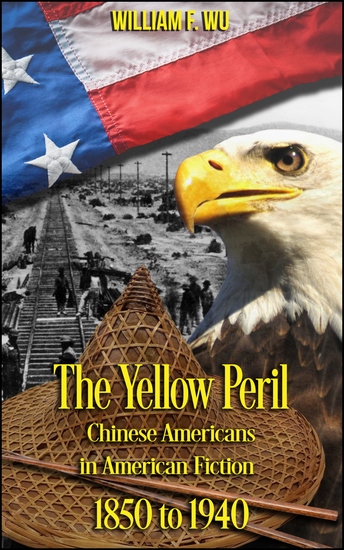
The Yellow Peril - Chinese Americans in American Fiction 1850 to 1940 - cover

The Yellow Peril - Chinese Americans in American Fiction 1850 to 1940

William F. Wu

Maison d'édition: Boruma Publishing

  • 0
  • 0
  • 0

Synopsis

This study examines the way Americans of Chinese descent were portrayed in American literature between 1850 and 1940. Their depictions are compared to historical events that were occurring at the time the works of literature were published. This edition has additions and corrections compared to the original hardback edition published in 1982.
 
~~~~~ Excerpt ~~~~~ 
 
My purpose in writing this work has been to explore the depiction of Chinese immigrants and their descendants in American fiction, from the mid-nineteenth century entry of the first Chinese immigrants in significant numbers, to the eve of World War II. I consider both the immigrant Chinese and the American-born generations that followed them to be Chinese Americans, but will sometimes identify the groups separately in recognition of the fact that the historical experience and treatment of the immigrants in fiction has been different from that of their descendants. The fiction treated in this study includes short stories and novels both by white Americans and Asian Americans.
 
I am defining the term Yellow Peril as the threat to the United States that some white American authors believed was posed by the people of East Asia. As a literary theme, the fear of this threat focuses on specific issues, including possible military invasion from Asia, perceived competition to the white labor force from Asian workers, the alleged moral degeneracy of Asian people, and the potential genetic mixing of Anglo-Saxons with Asians, who were considered a biologically inferior race by some intellectuals of the nineteenth century. The Chinese immigrants were the first target of this attention, since they were the first Asian immigrants to reach the United States in large numbers. This study will focus on American fiction about Chinese Americans in an attempt to analyze the growth and development of attitudes about them.
 
My thesis is that the Yellow Peril is the overwhelmingly dominant theme in American fiction about Chinese Americans in the years with which this study is concerned. It is expressed through the variety of images of the Chinese Americans that appear, especially in their relation to, and their role as part of, the United States. The historical causes and literary subject matter change, but the theme neither disappears nor abates.
 
Each work of fiction has been studied individually for the images it contains. Prior to the turn of the century, the Yellow Peril is perceived only as stemming from the Chinese. In the twentieth century, especially in the pulps, the Japanese joined the Chinese as a perceived menace to Europe and North America. The overall process of evaluation relies primarily on detailed analyses of the characters under consideration. This has been done with an awareness that the American public as a whole sometimes did not distinguish carefully among Asian ethnic groups, so that events involving one Asian ethnic group often affected the image of another. Some works are obscure and these have been quoted at greater length than more available ones.
 
Relatively few critical sources have been cited; this is due to a dearth of relevant studies. The less important works of fiction have naturally received little critical attention and, often, when such attention was concerned with pertinent stories, the authors had little or nothing to say about the depiction of Chinese Americans. This observation is intended only as an explanation, and not as a value judgement of earlier scholarship with different goals.
Disponible depuis: 02/06/2022.
Longueur d'impression: 206 pages.

D'autres livres qui pourraient vous intéresser

  • Advent of Early Modern Warfare The: The History of the Transition from Medieval Military Tactics to the Age of Gunpowder - cover

    Advent of Early Modern Warfare...

    Editors Charles River

    • 0
    • 0
    • 0
    In the time period between the fall of Rome and the spread of the Renaissance across the European continent, many of today’s European nations were formed, the Catholic Church rose to great prominence, some of history’s most famous wars occurred, and a social class system was instituted that lasted over 1,000 years. A lot of activity took place during a period frequently labeled derogatively as the “Dark Ages,” and while that period of time is mostly referred to as the “Middle Ages” instead of the Dark Ages today, it has still retained the stigma of being a sort of lost period of time in which Western civilization made no worthwhile progress.  
    	If anything, the one aspect of the Middle Ages that has been romanticized is medieval warfare. Indeed, the Middle Ages have long sparked people’s imaginations thanks to imagery of armored knights battling on horseback and armies of men trying to breach the walls of formidable castles. What is generally forgotten is that medieval warfare was constantly adapting to the times as leaders adopted new techniques and technology, and common infantry became increasingly important throughout the period. Starting around 1000 CE, there was a gradual consolidation of power in the region after the fragmentation of the Early Middle Ages, and it brought about the rise of more centralized states that could field large armies. The Normans, one of the first groups to do this, were notable for their discipline and organization, and it’s little surprise that they were the last foreigners to successfully invade Britain under William the Conqueror in the mid 11th century.  
    	Meanwhile, political and technological progress led to continuous change of tactics and equipment. Cavalry became ascendant, only to be later replaced by infantry as their weapons improved. By the end of the period, warfare was radically changing thanks to the rise of gunpowder weapons such as the handgun and the bombard. 
    Voir livre
  • Law The: Book Summary & Analysis - cover

    Law The: Book Summary & Analysis

    Briefly Summaries

    • 0
    • 0
    • 0
    This is a concise summary and analysis of The Law, by Frédéric Bastiat.
    It is not the original book and is not affiliated with or endorsed by Frédéric Bastiat.
    Ideal those seeking a quick and insightful overview.
     
    The Law is a thought-provoking treatise that delves into the principles of justice, liberty, and the role of government in society. Written during a time of political upheaval, this concise yet profound work critiques the misuse of law to infringe on individual freedoms and outlines the ideal relationship between the state and its citizens. Through sharp logic and moral clarity, it challenges readers to reconsider the purpose of law as a tool for safeguarding natural rights rather than an instrument of oppression. This classic text remains as relevant today as when it was first published, offering timeless insights into economics, governance, and human rights.
    Voir livre
  • Anand Sahib Da Guhaj - Saachi Live ton Sehaj Atte Anand teek - cover

    Anand Sahib Da Guhaj - Saachi...

    Ram Singh California

    • 0
    • 0
    • 0
    Book: Anand Sahib Da Guhaj 
    Author: Ram Singh California 
    Anand Sahib Da Guhaj offers a deep and insightful commentary on Guru Amar Das Ji’s Anand Sahib, revealing its spiritual essence and timeless wisdom. Ram Singh California explores the path to inner bliss and contentment, making the teachings of this sacred Sikh composition accessible and relevant for modern readers. A valuable guide for seekers and scholars of Sikh spirituality. 
    You can order it from Sikh Siyasat and get it delivered anywhere in the world.
    Voir livre
  • Hungarian Made Easy - Beginner - Volume 2 of 3 - cover

    Hungarian Made Easy - Beginner -...

    Lingo Wave

    • 0
    • 0
    • 0
    We broke our new series on learning Hungarian down into different learning stages. Start with the "Lower Beginner" books followed by the "Beginner" and "Upper Beginner" books. Next, progress to the "Intermediate" series, then test and reinforce your knowledge with the "Conversations" series. 
    This audiobook is divided into units.While it provides different learning patterns and accommodates various needs, this audiobook focuses on helping you improve your ability to understand, speak, and memorise Hungarian. 
    In Unit 1 you will hear Hungarian decoded with each syllable spoken very slowly and clearly with repetition. Immediately before each sentence is spoken, you will hear the translation, so you will always understand what is being said. 
    Unit 2 focuses solely on increasing your listening ability, which will improve your abilities to engage in dialogue with a native Hungarian speaker. This chapter requires you to listen very carefully to nuances in the language. 
    By Unit 3 you will already notice progress in your abilities to speak and understand Hungarian. The spoken translation is followed by two repetitions in Hungarian at a completely natural speed. While you are learning to process naturally spoken Hungarian, Units 3 and 4 will help you memorise new vocabulary and full sentences. 
    In Unit 5 you can test yourself on how much you have learned. If you are having difficulties, we suggest you revisit the listening, speaking, or memorisation section of Units 1, 2 3 or 4, according to what you need more help with. 
    Topics covered in this book: 
    1. Asking about family 
    2. Asking about relationship status 
    3. Expressing frequency 
    4. Talking about spare time activities and hobbies 
    5. Using quantifiers/determiners 
    6. Talking about preference 
    7. Talking about abilities 
    8. Talking about location of places 
    9. Describing appearance 
    10. Talking about personality 
    ...
    Voir livre
  • Feudal Japan - Warriors and Shoguns (3 in 1) - cover

    Feudal Japan - Warriors and...

    Rolf Hedger

    • 0
    • 0
    • 0
    IJourney through the dramatic evolution of Japan's feudal era in this comprehensive volume that chronicles three pivotal periods of Japanese history. From the cultural renaissance of the Muromachi Period to the chaotic warfare of the Sengoku Period, and finally to the enduring peace of the Tokugawa Shogunate, this meticulously researched work brings to life the warriors, lords, and cultural icons who shaped Japan's destiny. 
    The Muromachi Period (1336-1573) explores the rise of the Ashikaga shogunate and the unique blend of warrior culture with artistic achievement. Witness the flowering of Noh theater, ink painting, and the refined aesthetics of the "higashiyama culture" even as political power fragmented among regional warlords and Buddhist monasteries wielded military might. 
    The Sengoku Period (1467-1615) thrusts readers into Japan's turbulent "Age of Warring States," where legendary daimyo like Oda Nobunaga, Toyotomi Hideyoshi, and Tokugawa Ieyasu fought for supremacy. Experience the battlefield innovations, castle-building, and strategic alliances that transformed Japan's military landscape, while Portuguese firearms and Christian missionaries added new dimensions to the struggle. 
    The Tokugawa Shogunate (1603-1868) reveals how the Tokugawa clan established Japan's longest-lasting feudal government, creating an intricate social hierarchy and isolationist foreign policy that preserved peace for over 250 years. Discover how this period of stability led to the rise of the merchant class, the flourishing of ukiyo-e art, kabuki theater, and the vibrant urban culture of Edo (modern Tokyo). 
    Richly illustrated and accessibly written, this three-in-one volume provides both newcomers and history enthusiasts with a definitive guide to understanding how the interplay of war, culture, and governance shaped Japan's feudal society and continues to influence the nation today.
    Voir livre
  • SELF-REGULATION SKILLS - How To Control And Regulate The Learning Process - cover

    SELF-REGULATION SKILLS - How To...

    Brittany Forrester

    • 0
    • 0
    • 0
    Self-regulation can be defined in various ways. In the most basic sense, it involves controlling one's behavior, emotions, and thoughts to pursue long-term goals. More specifically, emotional self-regulation refers to managing disruptive emotions and impulses. In other words, to think before acting. It also reflects the ability to cheer yourself up after disappointments and work in a way consistent with your deepest values. 
    It's easy to see how a lack of self-regulation will cause problems in life. A child who yells or hits other children out of frustration will not be famous among peers and may face reprimands at school. An adult with poor self-regulation skills may lack self-confidence and self-esteem and have trouble handling stress and frustration. Often, this might be expressed in anger or anxiety. In more severe cases, it may be diagnosed as a mental disorder. 
    Self-regulation is also essential because it allows you to follow your deeply held values or social conscience and express yourself appropriately. If you value academic achievement, it will enable you to study instead of slack off before a test. 
    Many students do not possess the self-regulatory skills they need to become high academic performers.  
    Some students have found ways to regulate their learning and develop a system of control that shields them from motivational interference and conflict. Limiting distractions and using music to tune out distractions are students' most common self-regulatory strategies to manage motivational interference and conflict. Other students use athletics.
    Voir livre