Begleiten Sie uns auf eine literarische Weltreise!
Buch zum Bücherregal hinzufügen
Grey
Einen neuen Kommentar schreiben Default profile 50px
Grey
Jetzt das ganze Buch im Abo oder die ersten Seiten gratis lesen!
All characters reduced
Air Glows Nightly - cover

Air Glows Nightly

William F. Brown

Übersetzer A AI

Verlag: Publifye

  • 0
  • 0
  • 0

Beschreibung

Air Glows Nightly explores the fascinating science behind airglow, the faint, perpetual light emitted by Earth's upper atmosphere. This atmospheric chemiluminescence results from complex chemical reactions triggered by solar radiation. Studying airglow offers unique insights into atmospheric dynamics and space weather, as it acts as a continuous, global-scale monitor of atmospheric conditions.

 
The book examines the physics and chemical reactions that cause airglow, detailing how scientists observe and analyze this phenomenon. It highlights how spectroscopic measurements and satellite observations have revolutionized our understanding. For instance, airglow studies reveal how solar activity affects the excitation and de-excitation processes of atmospheric components like oxygen and nitrogen.

 
By understanding these processes, we can better validate atmospheric models and understand similar phenomena on other planets. The text progresses from basic concepts in physics and chemistry to observational techniques and applications, connecting airglow research to fields like astrophysics, environmental science, and remote sensing.

 
Air Glows Nightly distinguishes itself by offering a comprehensive yet accessible overview of airglow physics, incorporating recent findings and practical examples, making it a valuable resource for students, researchers, and anyone interested in atmospheric science and physics.
Verfügbar seit: 27.02.2025.
Drucklänge: 75 Seiten.


Weitere Bücher, die Sie mögen werden

  • The Rise of the US Environmental Health Movement - cover

    The Rise of the US Environmental...

    Kate Davies

    • 0
    • 0
    • 0
    “Tells the story of anger, disillusionment, and determination of Americans to develop a political movement to fight chemical pollution . . . timely.” —The Huffington PostThis book, named one of Booklist’s Top 10 books on sustainability in 2014, is the first to offer a comprehensive examination of the environmental health movement, which unlike many parts of the environmental movement, focuses on ways toxic chemicals and other hazardous agents in the environment effect human health and well-being. Born in 1978 when Lois Gibbs organized her neighbors to protest the health effects of a toxic waste dump in Love Canal, New York, the movement has spread across the United States and throughout the world. By placing human health at the center of its environmental argument, this movement has achieved many victories in community mobilization and legislative reform. In The Rise of the U.S. Environmental Health Movement, environmental health expert Kate Davies describes the movement’s historical, ideological, and cultural roots and analyzes its strategies and successes.“Kate Davies’ excellent book focuses on the role of health in the environmental health movement and encourages us to consider its origins and accomplishments . . . The Rise of the U.S. Environmental Health Movement looks both back and forward to challenge us to consider our current direction. In the future this book will provide readers with an important perspective on how the environmental health movement shaped our society.” —Toxipedia“A well-done history of America’s environmental health movement . . . offers readers valuable information on how grassroots organizing prevents harm from toxic exposures and leads to safe and healthy communities.” —Lois Marie Gibbs, Executive Director, Center for Health, Environment & Justice
    Zum Buch
  • The Fox Shrew and You - How Brains Evolved - cover

    The Fox Shrew and You - How...

    Rogier B. Mars

    • 0
    • 0
    • 0
    A leading neuroscientist describes the long evolutionary process that led to the human brain. 
    Our human brain is both unique and similar to that of other species. The only way we can trace its evolution is by comparing it to the brains of animals alive today. In this book, leading neuroscientist Rogier Mars offers an engaging account of the evolution of the brain by exploring the brains and cognitive capacities of animals from the humble sea squirt to the socially minded fox and the tiny shrew. 
    By examining the challenges that different animals and their ancestors faced, Mars shows that we can understand what drove the evolution of their brains. Early vertebrates became predators of the sea; mammals evolved a complex neocortex to deal with foraging for high-energy food; and social primates adapted to contend with a fast-changing environment in which groups of individuals team up to get food. Over the course of a long evolutionary road, the ancestors of present-day animals and their descendants continually adapted to challenges, modifying their brains again and again. For us humans, this process gradually led to a brain that is capable of so much, from inventing language to traveling into space. 
    Mars leads listeners across eras and species, showing us how we resemble our animal cousins, how we differ from them, and how animals in one branch of the evolutionary tree did the hard evolutionary work of becoming human.
    Zum Buch
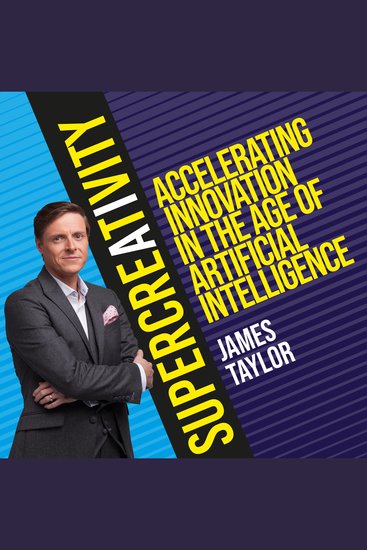
  • SuperCreativity - Accelerating Innovation in the Age of Artificial Intelligence - cover

    SuperCreativity - Accelerating...

    James Taylor

    • 0
    • 0
    • 0
    Creativity is no longer optional. It is fast becoming the defining human advantage. 
    As artificial intelligence reshapes every industry, one human capability is rising faster than all the others: creativity. 
    Yet most people either don’t believe they have creativity or never take the time to develop it. 
    In SuperCreativity, internationally recognised keynote speaker and AI expert James Taylor explains why the age of the lone genius is over, and why the future belongs to those who know how to collaborate creatively with other people and with artificial intelligence. 
    The Questions This Audiobook Helps You AnswerDo you feel creative inside, but struggle to turn that creativity into real work and results?Are you unsure how to stay creative and valuable when AI can generate ideas, text, and analysis in seconds?What does it actually take to improve creative collaboration with both other people and machines?Do you want to work with AI as a creative partner, not just a tool or co-pilot?Why do good ideas inside organisations so often stall before they turn into decisions, action, or impact? 
    It is a practical field guide for leaders, professionals, and teams who want to solve complex problems, drive innovation, generate better ideas, and remain relevant in an AI-augmented world. 
    Throughout the audiobook, listeners are introduced to proven tools and frameworks used in boardrooms, workshops, and innovation programmes around the world. These tools help turn ideas into action, build belief, and embed creativity into everyday work. 
    This audiobook is for:Business leaders, executives and managersEntrepreneurs and foundersProfessionals navigating AI and automation 
    Clear-eyed, practical, and grounded in real-world experience, SuperCreativity provides a framework for thinking better, working smarter, and leading with imagination in a period of rapid technological change. 
    The future is not written. 
    It is designed. 
    By people willing to think differently.
    Zum Buch
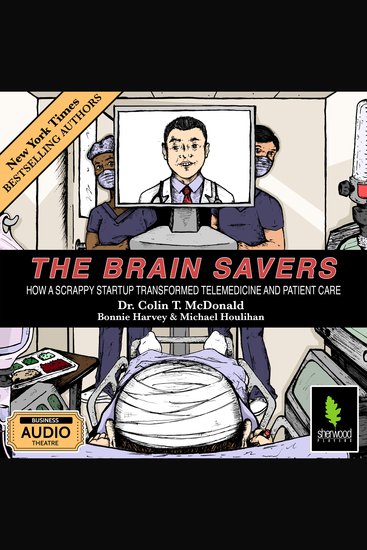
  • The Brain Savers - How a Scrappy Startup Transformed Telemedicine and Patient Care - cover

    The Brain Savers - How a Scrappy...

    Colin T. McDonald, Bonnie...

    • 0
    • 0
    • 0
    A FULL CAST PERFORMANCE, FEATURING HOLLYWOOD ACTORS, SOUND EFFECTS, AND AN ORIGINAL SCORE! 
    From the authors of the New York Times bestseller, The Barefoot Spirit, and the Audie Award finalist, genre-bending audiobook of the same name, comes a story of vision and invention, failure and setbacks, mistakes and lessons. Business Audio Theatre presents a Sherwood Players Production, The Brain Savers, the true story of how a scrappy startup used technology to put the humanity of patients first and ended up changing medicine forever. 
    Amid the internet boom of the mid-2000s, a band of entrepreneurs stood at the intersection of medicine, technology, and business. They saw a solution to the crucial problems of emergency care, which was too often handicapped by underfunding, overscheduled specialists, archaic practices, and onerous equipment. Through pioneering telemedicine and new inventions like the portable CT scanner, the founders of Specialists on Call (S.O.C.) did more than just make emergency care better, faster, and more humane; they brought health care, which is often described as the slowest industry in America to change, into the 21st Century.   
    This is Dr. Colin McDonald’s story of how S.O.C. came to be. After leaving a cushy teaching position at Harvard, it took years of pursuing a single objective, then changing on a dime, to create S.O.C. In the end, what he created was a system that saved lives—and continues to save lives today. 
    Some of these hard-learned lessons are complex, while others are so timeless they almost sound cliché (“trust your vision and your moral compass, change when you must, just keep going”), but they are far from cliché for the founders of S.O.C. Theirs is a story of people with imagination and drive who wanted to make the world better, who trusted their ideas and each other, and who, despite everything, kept on going!
    Zum Buch
  • Manifesto for the Revitalisation of Cities - A Solution to Portugal's Housing Crisis - cover

    Manifesto for the Revitalisation...

    Miguel Rebelo

    • 0
    • 0
    • 0
    The housing crisis in Portugal serves to illustrate a problem that has implications beyond the borders of the country, shedding light on challenges that are faced by major European and global cities. The rise in housing prices, driven by real estate speculation, the growth of tourism and the influx of foreign investment, has made it increasingly challenging for many in the population, especially the middle and lower classes, to access home ownership or renting. 
    The digitalisation of work has opened the possibility for highly qualified professionals to consider where they would like to live, regardless of the physical location of their job. Cities like Lisbon and Porto have become increasingly attractive destinations, offering a good quality of life combined with a range of professional opportunities. Nevertheless, this phenomenon has placed additional strain on the real estate market, leading to rising prices and the displacement of residents to the outskirts. 
    The housing policies that have been adopted thus far have not been as effective as might have been hoped, and in some cases may even have had the opposite effect. It seems that measures such as strict rent control, poorly targeted subsidies and the massive construction of new housing without proper urban and infrastructural planning have not solved the problem, and in some cases may have made it worse. Perhaps it would be beneficial to reconsider these approaches, acknowledging their shortcomings and adapting them to reflect the current situation. 
    It may be worth considering rehabilitating vacant buildings as a viable and sustainable solution. By restoring existing buildings, we can explore ways to increase the supply of affordable housing, revitalise run-down urban areas and preserve historical and cultural heritage to promote more inclusive and sustainable cities.
    Zum Buch
  • The Future Of Work and Why You Might not be Ready - cover

    The Future Of Work and Why You...

    Marcus Sterling

    • 0
    • 0
    • 0
    This audiobook is narrated by an AI Voice.   
    Prepare for the radical transformation of employment that artificial intelligence, automation, and technological disruption are bringing faster than anyone predicted. This urgent audiobook reveals the jobs that will disappear, the skills that will become obsolete, and the new opportunities emerging from economic upheaval. Learn why traditional career advice is dangerously outdated and how following conventional paths may lead to unemployment rather than security. The narrator examines automation trends across industries, from professional services to creative fields once considered safe from technological replacement. Discover which human capabilities machines cannot replicate and how to position yourself for the transformed economy already taking shape. Understand why education systems remain stuck preparing students for jobs that no longer exist while ignoring skills essential for future success. This audiobook provides honest assessment of coming disruption without false optimism or unnecessary doom, helping you make informed decisions about career, education, and financial planning. Learn from technology researchers, economists, and industry insiders about realistic timelines for workforce transformation and practical preparation strategies. Perfect for workers of all ages concerned about job security, parents guiding children toward careers, and anyone seeking genuine understanding of how work itself is fundamentally changing in ways that will affect everyone.
    Zum Buch