Rejoignez-nous pour un voyage dans le monde des livres!
Ajouter ce livre à l'électronique
Grey
Ecrivez un nouveau commentaire Default profile 50px
Grey
Abonnez-vous pour lire le livre complet ou lisez les premières pages gratuitement!
All characters reduced
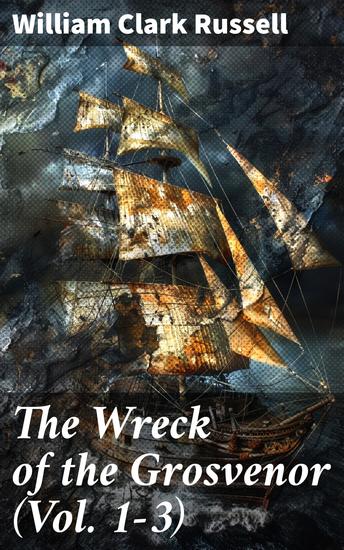
The Wreck of the Grosvenor (Vol 1-3) - Sea Adventure Novel (Complete Edition) - cover

The Wreck of the Grosvenor (Vol 1-3) - Sea Adventure Novel (Complete Edition)

William Clark Russell

Maison d'édition: Good Press

  • 0
  • 0
  • 0

Synopsis

The Wreck of the Grosvenor, a gripping maritime novel by William Clark Russell, unfolds the harrowing tale of a shipwreck and its consequences set against the vivid backdrop of the Victorian era's fascination with naval adventures. Russell employs a richly detailed narrative style, reminiscent of the romantic yet realistic portrayals of life at sea. Through vivid descriptions and engaging characterizations, he offers readers a glimpse into the psychological turmoil and social dynamics aboard the Grosvenor, creating a compelling tension that drives the plot forward. As themes of bravery, survival, and morality are explored, the novel situates itself within the broader context of 19th-century literature that grapples with human fragility in the face of nature's indifference. William Clark Russell, a renowned figure in maritime fiction and a sailor himself, skillfully harnesses his nautical experiences to breathe authenticity into his storytelling. Born in 1844, Russell'Äôs deep-seated passion for the sea and his firsthand experiences imbue the narrative with a palpable sense of realism. His exposure to the perils and romanticism of naval life undoubtedly inspired the intricate plot and multifaceted characters of The Wreck of the Grosvenor, making it a noteworthy contribution to the literary canon of the period. For readers drawn to tales of bravery and the enigmatic nature of the sea, The Wreck of the Grosvenor is an essential addition to their literary collection. Russell's adept storytelling, combined with the novel's exploration of human resilience and moral complexities, ensures that it resonates with both maritime enthusiasts and those who appreciate profound human narratives. This work, in its multifaceted approach, remains a timeless exploration of humanity'Äôs struggle against the elemental forces of nature.
Disponible depuis: 18/12/2023.
Longueur d'impression: 334 pages.
D'autres livres qui pourraient vous intéresser

  • David Swan - From their pens to your ears genius in every story - cover

    David Swan - From their pens to...

    Nathaniel Hawthorne

    • 0
    • 0
    • 0
    Nathaniel Hawthorne was born on 4th July 1804 in Salem, Massachusetts, a town synonymous with the earlier Salem Witch Trials. It was instrumental in Hawthorne’s later use of American Gothic and dark romanticism in his writing. 
    He was a mere four years old when his father died and his mother took him and his two sisters to live with her family and then on to their own home in Raymond, Maine. The young Hawthorne had a passion for fiction and poetry and voraciously read the works of Ann Radcliffe, Henry Fielding and Lord Byron.  
    He was sent to college at his maternal uncle’s insistence. During these years he met and befriended Henry Wadsworth Longfellow and future U S president Franklin Pierce. These friendships were lifelong and to have a crucial impact on his writings and career.  
    At college Hawthorne had made attempts at writing short stories and essays but without opportunities to publish. It was only in 1828 that he finally published his novel ‘Franshawe’ to little success and so he began work as editor for the American Magazine of Useful and Entertaining Knowledge.  
    Hawthorne’s short stories were first published in magazines but in 1837 were collected and published as ‘Twice-Told Tales’. A steady literary career still did not come his way and so he worked in a good position at Salem’s port and married the love of his life Sophia Peabody. They moved to live in ‘The Old Manse’ at Concord, Massachusetts.   
    Finally. in 1850 came spectacular literary and commercial success with ‘The Scarlet Letter’ followed by ‘The House of the Seven Gables’ the following year.  
    In 1852, Hawthorne published a biography of presidential candidate Franklin Pierce. After Pierce’s victory he was appointed consul in Liverpool, a position that offered prestige, money and fame. At the end of this appointment he returned several times to Europe before settling in Massachusetts and resuming writing and publication. 
    During the early 1860’s his health declined and on 19th May 1864 during a trip to Plymouth, New Hampshire. He was 59 and was buried in Sleepy Hollow Cemetery in Concord, Massachusetts.
    Voir livre
  • Requiem For An Athlete - cover

    Requiem For An Athlete

    Alfred C. Martino

    • 0
    • 0
    • 0
    Requiem For An Athlete is a somber tale of the unfulfilled expectations of a once-great athlete, seeing through tear-clouded eyes the trophies and medals of a life long gone. 
     
    Alfred C. Martino is the author of three highly-acclaimed young adult novels, "Perfected By Girls, "Over The End Line," and the Jr. Library Guild Selection and 'Best Books For Young Adults' nominee, "Pinned." Amateur wrestling and soccer have been a part of Alfred‘s life for over thirty-five years. In wrestling, he has competed on the midget, junior high, high school and collegiate levels, as well as coached Millburn’s youth program for nearly a decade. Mr. Martino was born and raised in Short Hills, NJ, and graduated from Millburn High School, where he was captain of school’s 1982 wrestling team. He is a graduate of Duke University and The Marshall School of Business at the University of Southern California. He currently lives in Jersey City.
    Voir livre
  • Betty Brown the St Giles Orange Girl - From their pens to your ears genius in every story - cover

    Betty Brown the St Giles Orange...

    Hannah More

    • 0
    • 0
    • 0
    Hannah More was born on February 2nd, 1745 at Fishponds in the parish of Stapleton, near Bristol. She was the fourth of five daughters. 
    The City of Bristol, at that time, was a centre for slave-trading and Hannah would, over time, become one of its staunchest critics.  
    She was keen to learn, possessed a sharp intellect and was assiduous in studying.  Hannah first wrote in 1762 with The Search after Happiness (by the mid-1780s some 10,000 copies had been sold). 
    In 1767 Hannah became engaged to William Turner.  After six years, with no wedding in sight, the engagement was broken off.  Turner then bestowed upon her an annual annuity of £200.  This was enough to meet her needs and set her free to pursue a literary career.   
    Her first play, The Inflexible Captive, was staged at Bath in 1775. The famous David Garrick himself produced her next play, Percy, in 1777 as well as writing both the Prologue and Epilogue for it.  It was a great success when performed at Covent Garden in December of that year.  
    Hannah turned to religious writing with Sacred Dramas in 1782; it rapidly ran through nineteen editions. These and the poems Bas-Bleu and Florio (1786) mark her gradual transition to a more serious and considered view of life. 
    Hannah contributed much to the newly-founded Abolition Society including, in February 1788, her publication of Slavery, a Poem recognised as one of the most important of the abolition period.   
    Her work now became more evangelical.  In the 1790s she wrote several Cheap Repository Tracts which covered moral, religious and political topics and were both for sale or distributed to literate poor people.  The most famous is, perhaps, The Shepherd of Salisbury Plain, describing a family of incredible frugality and contentment. Two million copies of these were circulated, in one year. 
    In 1789, she purchased a small house at Cowslip Green in Somerset. She was instrumental in setting up twelve schools in the area by 1800. 
    She continued to oppose slavery throughout her life, but at the time of the Abolition Bill of 1807, her health did not permit her to take as active a role in the movement as she had done in the late 1780s, although she maintained a correspondence with Wilberforce and others.  
    In July 1833, the Bill to abolish slavery throughout the British Empire passed in the House of Commons, followed by the House of Lords on August 1st. 
    Hannah More died on September 7th, 1833.
    Voir livre
  • The East Wing - cover

    The East Wing

    Saki Saki

    • 0
    • 0
    • 0
    "The East Wing" by Saki is a short story that unfolds during a house party beset by a fire in the middle of the night. The narrative centers around Mrs. Gramplain, the hostess, who faces a dire situation as flames engulf the east wing of her home, where her imaginary daughter, Eva, is believed to be trapped.
    Voir livre
  • The Gift of the Magi - cover

    The Gift of the Magi

    O. Henry

    • 0
    • 0
    • 0
    A well-known story of holiday generosity and true love, The Gift of the Magi has long been a Christmas classic.
     
    Husband and wife Jim and Della want to give each other beautiful gifts for the holiday, but they have very little money. On Christmas Eve, each of them makes a bold sacrifice to give the other something truly special.
     
    First published in 1905 in The New York Sunday World, O. Henry’s tale is just as relevant and touching now as ever.
    Voir livre
  • Forgotten Authors The - Volume 5 - The Brothers Grimm to William Dean Howells - cover

    Forgotten Authors The - Volume 5...

    The Brothers Grimm, Beatrice...

    • 0
    • 0
    • 0
    Throughout the long centuries of human history is the want, and the need, to share information, to exchange ideas and for that knowledge and experience, for curiosity and learning, to be the basis of a civil society. 
    In literature the ambition is much narrower.  In order to be known, to be popular, you had to be published.  And for that people had to know you existed and your ideas worth reading.  Obviously for most of humanity’s time people couldn’t read and texts couldn’t be published in any great number. 
    In the 15th Century Gutenberg’s printing press began the revolution to address the second and by the 19th century had gathered pace with startling speed and mass distribution.  Education for the many was brought in to help people understand more of their world and, with new skills, how to have a better place within it.  Now, if the powers that owned the presses and means of distribution agreed an audience would now be able to avail themselves of your ideas, your printed words.  
    Sadly, in the thirst for the new, the recent and the past fell from sight, relegated to dark corners and dusty shelves.   
    But the printed word is rarely without someone, somewhere busying themselves through piles of papers and books rediscovering what a good story is, whatever its age. 
    Sadly, in the thirst for the new, the recent and the past fell from sight, relegated to dark corners and dusty shelves.    
    But the printed word is rarely without someone, somewhere busying themselves through piles of papers and books rediscovering what a good story is, whatever its age. 
    In this volume we offer up a small selection of those talents whose time has now come again.
    Voir livre