Rejoignez-nous pour un voyage dans le monde des livres!
Ajouter ce livre à l'électronique
Grey
Ecrivez un nouveau commentaire Default profile 50px
Grey
Abonnez-vous pour lire le livre complet ou lisez les premières pages gratuitement!
All characters reduced
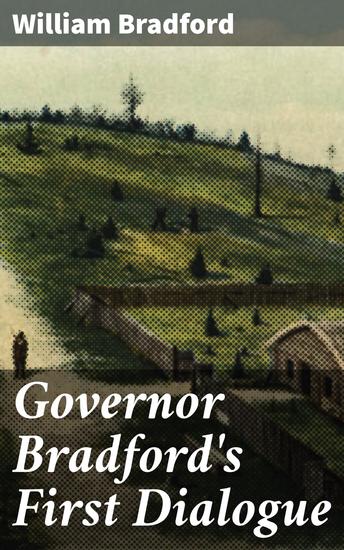
Governor Bradford's First Dialogue - A Firsthand Account of Plymouth Colony's Trials and Triumphs - cover

Governor Bradford's First Dialogue - A Firsthand Account of Plymouth Colony's Trials and Triumphs

William Bradford

Maison d'édition: Good Press

  • 0
  • 0
  • 0

Synopsis

In "Governor Bradford's First Dialogue," William Bradford presents a compelling narrative that captures the essence of early colonial life in America, framed through a series of dialogues that reveal the complexities of governance, community, and survival. The text is imbued with a reflective and didactic literary style, characteristic of Bradford's Puritan background, resonating with the theological underpinnings and socio-political concerns of the 17th century. As a primary historical source, it offers invaluable insights into the societal dynamics and philosophical debates that shaped the foundations of American society, making it essential for both historical and literary examinations of the period. William Bradford, a pivotal figure in American history, served as the governor of the Plymouth Colony and was a keen chronicler of its struggles and successes. His personal journey, laden with experiences of dislocation and resilience as a Separatist fleeing religious persecution in England, equipped him with the knowledge and perspective necessary to navigate the tumultuous landscape of New World colonization. His commitment to documenting his community's experiences not only reflects his leadership role but also his desire to preserve their story against the backdrop of a rapidly changing world. "Governor Bradford's First Dialogue" is an essential read for scholars and enthusiasts alike, offering a rare blend of personal narrative and community discourse. It invites readers to explore early American thought and the moral dilemmas faced by its leaders, making it a significant contribution to the ongoing discourse on colonial identity and governance. Engaging with this text will deepen your appreciation of the historical foundations that continue to influence contemporary American society.
Disponible depuis: 10/07/2023.
Longueur d'impression: 28 pages.

D'autres livres qui pourraient vous intéresser

  • Death Has Very Little Meaning - Ojai 1980 - Dialogue 7 - cover

    Death Has Very Little Meaning -...

    Jiddu Krishnamurti

    • 0
    • 0
    • 0
    Death has very little meaning - 17 April 1980 
    • Is there a totally different way of approaching the whole turmoil of life? 
    • As long as the centre is creating darkness, and thought is operating in that dark 
    ness, there must be disorder, there must be everything as society now is. To 
    move away from that you must have insight. 
    • Insight can only come about when there is a flash which abolishes not only the 
    darkness but the creator of darkness. 
    • Human beings have been acting according to one pattern, responding to 
    hatred by hatred and so on. There are those few, perhaps many, who did not. 
    Why has this division taken place? 
    • The man who is living in darkness can move away at any time to the other. That 
    is the point: at any time. 
    • What happens to a mind that has no conflict?
    Voir livre
  • Show Me The Place - Essays - cover

    Show Me The Place - Essays

    Hedley Twidle

    • 0
    • 0
    • 0
    Apocalyptic futures surround us. In films, books and in news feeds, we are subjected to a barrage of end-time possibilities. Award-winning writer Hedley Twidle, in quixotic mood, sets out to snatch utopia from the jaws of dystopia.
    
    Whether embarking on a bizarre quest to find Cecil Rhodes's missing nose (sliced off the bust of the Rhodes Memorial) or cycling the Scottish islands with a couple of squabbling anarchists; whether learning to surf (much too late) in the wild, freezing waters off the Cape Peninsula or navigating the fraught polities of a Buddhist retreat centre, the author explores forgotten utopias, intentional communities and islands of imagination with curiosity, hope and humour.
    
    Ranging from the science fiction of Ursula Le Guin to the 'living laboratory' of Auroville in south India, Show Me the Place investigates the deep human desire to imagine alternatives to what we take as normal or inevitable.
    Voir livre
  • William Powell and Myrna Loy: The Lives and Careers of One of Classical Hollywood’s Most Iconic Duos - cover

    William Powell and Myrna Loy:...

    Editors Charles River

    • 0
    • 0
    • 0
    It is something of a cliché to say that an actor’s life was like a movie he or she might have starred in, but in the case of Myrna Loy, the cliché is true. It is easy to picture her as a little girl, riding the range with her rancher father, sitting around the table and participating charmingly in family discussions of current events. It is not hard to imagine the camera panning to her first and then second visits to Hollywood, her backlot tour, and starry-eyed decision to become an actress. There would have to be some drama, which the story of her father’s untimely death would provide, along with some sort of deathbed promise made to him to care for the rest of the family. Her mother would be brave but resolute as she moved her young family to California. The lighting on set would brighten and the tempo of the background would pick up as she walked down the Los Angeles streets. Then, her big break would come. The camera would show her first comical meeting with William Powell and then a spinning scene of ticket after ticket being sold to their new picture, The Thin Man.  
    While older silent film stars like Charlie Chaplin and Buster Keaton reached the peak of Hollywood, some actors born near the beginning of the 20th century were ready to capitalize. Though actors like Humphrey Bogart and Cary Grant remain household names, and actresses like Greta Garbo are still widely remembered, few had careers that enjoyed the success of William Powell. In a career spanning several decades, Powell would receive three Oscar nominations for Best Actor for critically acclaimed movies, so it is somewhat ironic that he is mostly remembered today for his association with the more famous Myrna Loy. One thing that helped Powell’s career along in the old days when Hollywood would only cast white actors in major roles, no matter what the nationality of the character was supposed to be, were his dark good looks.
    Voir livre
  • Accidental Tyrant - The Life of Kim Il-Sung - cover

    Accidental Tyrant - The Life of...

    Fyodor Tertitskiy

    • 0
    • 0
    • 0
    Kim Il-sung was the enigmatic architect of North Korea. His life is an extraordinary tale of improbable success: once a barely educated guerrilla fighter, he rose to lead the nation at the young age of thirty-three. Against all odds, he established a horrifyingly stable dictatorial regime, one that still struggles to provide for its people, yet could obliterate Hollywood, Silicon Valley, and much of East Asia in nuclear strikes. 


    Based on extensive new sources in Korean, Russian, Chinese, and Japanese, Fyodor Tertitskiy tells the unlikely story of one of the twentieth century's most brutal but little-known dictators, from his early life in Japanese Korea to the lasting repercussions of his autocratic rule today. Tertitskiy showcases Kim's political prowess in gaining autonomy from the USSR; explores how his inept economic policy led to catastrophic famine; and highlights how he implemented a system of hereditary rule, paving the way for today's 'Supreme Leader', Kim Jong-un, to assume power and continue his grandfather's vision. 


    Accidental Tyrant serves as a stark cautionary tale, underscoring that the triumph of liberty is never guaranteed. Met with insufficient resistance, even the most unlikely leader can build a regime of repression and privation that long outlives its founder.
    Voir livre
  • Happiness - Unlocking the Secrets to a Fulfilling Life (2 Titles in 1) - cover

    Happiness - Unlocking the...

    Anna Bridges

    • 0
    • 0
    • 0
    This book contains the following titles: 
    The Joy Journey - Life is a journey, and along this journey, we often find ourselves searching for something that will bring us lasting contentment: happiness. Yet, happiness is not a destination to be reached, but a path to be walked. In a world that constantly demands more from us, it can be easy to overlook the power of small, intentional steps toward joy. We get caught up in the chase for success, the pursuit of external validation, or the quest to fix what we perceive as wrong in our lives. However, true happiness lies not in the perfect outcome, but in how we approach the journey itself. 
    The Wellness Mindset - The power of a wellness mindset lies in its ability to reshape how you perceive challenges and opportunities. Life is filled with uncertainties, setbacks, and stressors. However, when you approach these situations with resilience and optimism, you unlock the potential to grow and thrive. Instead of being paralyzed by obstacles, you learn to see them as steppingstones that contribute to personal growth. This shift in perspective not only enhances your emotional strength but also impacts your physical health. Studies have shown that individuals with a positive outlook are less likely to experience chronic illnesses and more likely to recover quickly when faced with adversity.
    Voir livre
  • Erwin Rommel and the Afrika Korps: The History of Nazi Germany’s Most Famous Commander and Army during World War II - cover

    Erwin Rommel and the Afrika...

    Editors Charles River

    • 0
    • 0
    • 0
    One of his biographers called him “a complex man: a born leader, a brilliant soldier, a devoted husband, a proud father; intelligent, instinctive, brave, compassionate, vain, egotistical, and arrogant.” As that description suggests, every account of Erwin Rommel’s life must address what appears to be its inherent contradictions. Fittingly, and in the same vein, he remains one of the best remembered generals of World War II and history at large, despite the fact he was on the losing side, and he was defeated at the most famous battle of his career, the decisive Battle of El Alamein. 
    With the Axis forces trying to push through Egypt towards the Suez Canal and the British Mandate of Palestine, American forces landed to their west in North Africa, which ultimately compelled Rommel to try to break through before the Allies could build up and overwhelm them with superior numbers. Given that the combined Allied forces under Bernard Montgomery already had an advantage in manpower, Montgomery also wanted to be aggressive, and the fighting would start in late October 1942 with an Allied attack. At Alamein, 195,000 troops in 11 divisions faced off against 50,000 Germans (four divisions) and 54,000 Italians (eight divisions), where they were able to use their superior numbers and weapons to defeat the Axis troops. Over the next few weeks, the Allies made steady progress and forced Rommel to conduct a fighting retreat to safety until his army linked up with another Axis army in Tunisia, but the fighting at the end of 1942 inevitably compelled all Axis forces to quit the theater, the first time since the beginning of the war that Africa was safe for the Allies. 
    After leaving North Africa, Rommel spent much of the later part of the war strengthening German defenses across the Atlantic in anticipation of an amphibious Allied landing, which would come in June 1944.
    Voir livre