Begleiten Sie uns auf eine literarische Weltreise!
Buch zum Bücherregal hinzufügen
Grey
Einen neuen Kommentar schreiben Default profile 50px
Grey
Jetzt das ganze Buch im Abo oder die ersten Seiten gratis lesen!
All characters reduced
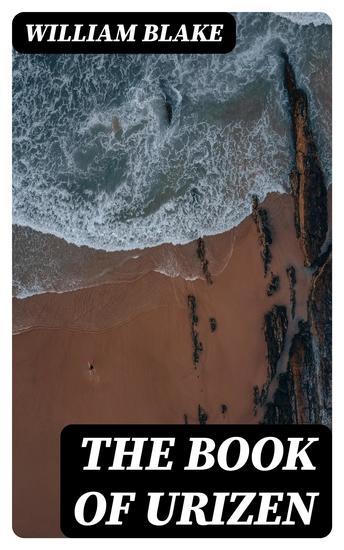
The Book of Urizen - With the Original Illustrations by William Blake - cover

The Book of Urizen - With the Original Illustrations by William Blake

William Blake

Verlag: DigiCat

  • 0
  • 0
  • 0

Beschreibung

William Blake's "The Book of Urizen" presents a profound exploration of cosmology and creation, captivating readers with its intricate blend of poetic language and visual artistry. Written in 1794, this work reflects Blake's characteristic visionary style, where he intertwines imaginative narrative with philosophical inquiry. Delving into the figure of Urizen, a representation of rationalism and patriarchal authority, the text critiques Enlightenment thought while simultaneously embracing the chaos and creativity inspired by the Romantic spirit. The fantastical illustrations accompanying the text enhance the themes of duality and conflict, establishing a rich interplay between word and image that is central to Blake's oeuvre. William Blake, an English poet, painter, and printmaker, was greatly influenced by the tumultuous socio-political landscape of 18th-century England. His deep-seated spirituality and opposition to institutionalized religion fueled his desire to explore the human condition through myth and symbolism. "The Book of Urizen" serves as a testament to Blake's inventive genius, mirroring his own spiritual struggles and philosophical contemplations, as he sought to transcend the confines of rationalism. This book is highly recommended for readers who are eager to engage with the symbolic complexities of literature and art. Blake's work invites a reflective consideration of creativity versus constraint, making it an essential read for students of Romanticism, literary philosophy, and those interested in the intersections of art and literature.
Verfügbar seit: 25.05.2022.
Drucklänge: 48 Seiten.

Weitere Bücher, die Sie mögen werden

  • Floodmeadow - cover

    Floodmeadow

    Toby Martinez de las Rivas

    • 0
    • 0
    • 0
    The Floodmeadow draws us into a seething pastoral where lightning threatens and thunder gathers, pylons and powerlines hum, and steel-framed gates sing out into the wind. In these incantatory pieces, everything is present at once. The landscape, teetering on apocalypse, is characterised by collision and disintegration. Among fragments of memory and history are meticulously journaled observations of the natural world: the moorhen who 'with exaggerated delicacy steps / free of the reedbeds'; the dragonfly that 'pushes itself through the armour / of its body' to be born.  The world is populated by archangels and wild gods, the roar of military aircraft, hunting dogs caught permanently suspended in the chase and a car that veers from the road into the floodwater in which the whole collection is saturated. Human relations are fleeting and vulnerable, appearing in the impression of a wedding or the recurring moments captured between a father and son, who make between them delicate balsawood constructions, which - as the poems do themselves - take flight in the turmoil, ecstatic one moment, plunged into darkness the next. This is a visionary collection that invokes other times, dimensions and soundscapes to tell out some word of beauty and abundance in the here and now.
    Zum Buch
  • A Rhyme A Dozen ― Summer - 12 Poets 12 Poems 1 Topic - cover

    A Rhyme A Dozen ― Summer - 12...

    William Shakespeare, Christina...

    • 0
    • 0
    • 0
    ‘A dime a dozen’ as known in America, is perhaps equal to the English ‘cheap as chips’ but whatever the lingua franca of your choice in this series we hereby submit ‘A Rhyme a Dozen’ as 12 poems on many given subjects that are a well-rounded gathering, maybe even an essential guide, from the knowing pens of classic poets and their beautifully spoken verse to the comfort of your ears. 
    1 - A Rhyme A Dozen - 12 Poems, 12 Poets, 1 Topic - Summer - An Introduction 
    2 - Shall I Compare Thee To A Summers Day (Sonnet 18) by William Shakespeare 
    3 - Summer Sun by Robert Louis Stevenson 
    4 - The Summer Rain by Henry David Thoreau 
    5 - Summer Song by Ella Wheeler Wilcox 
    6 - A Summer Evening Churchyard by Percy Bsysshe Shelley 
    7 - An Indian Summer Day on the Prairie by Vachel Lindsay 
    8 - A Summer Night by George William Russell 
    9 - Summer in the South by Paul Laurence Dunbar 
    10 - Summer by Kahlil Gibran 
    11 - Summer by Christina Rossetti 
    12 - Sonnet 13 -  Summer Fruit by Rainer Maria Rilke 
    13 - Tis the Last Rose of Summer by Thomas Moore
    Zum Buch
  • Shangri LaTitudes - cover

    Shangri LaTitudes

    Sean O'Caillane

    • 0
    • 0
    • 0
    The Shangri LaTitudes of the title are not some imaginary abodes in the clouds, above and beyond ordinary reality. These latitudes are the ones which lie where the paths of Truth and Beauty cross, forming quadrants where each sub-subject comingles to form fresh ruminations, not unlike those from Rumi, not unlike Four Quartets by Eliot, though using forms unfamiliar to either poet. There are four rooms in the human heart, each one its own experiential zone where passions move around, up down and around within the stream of consciousness, as well as stirring the subconsciousness. Perhaps the latter ruminations form the greater portion of the poems in this selection. This is a book of brief poems deliberately constructed for easy reading, brief pieces that can be picked up and put down within a few moments. One or two poems may take longer to digest, but hopefully the same intensity of feeling will be there, like a bonsai arriving at your coffee table, all trim, newly in flower.
    Zum Buch
  • Time For My Generation To DIE - cover

    Time For My Generation To DIE

    E.D. Evans

    • 0
    • 0
    • 0
    Imagine finding a dusty, water-stained journal in an abandoned subway station before realizing it was written 20 years in the future. No robot maids or air cars, just capital L, “Life,” through X-ray specs, and don’t hold the band-aid ripping or bemused outrage. There are a thousand novels herein. (Buddy Woodward) Time for My Generation to DIE from poet and balladeer E.D. Evans takes no prisoners. Evans uses her sparkling, prickly verse to pluck out mournful, bleak, and violent tableaus. Each of her poems—Ballad or not—Is deserving of a hard-strummed guitar and some harmonica across the bridge. This is distilled country and southwestern, sans redemption, sans chaser.(Sean McCollum) Here we will find necessary truths—Honest evidence of a transformative journey, amusing and disturbing, disarming with a hip, wry wit of personal insight. A reminder of poetry as event, where you will find your lips mouthing the vowels. A nod, and a wink never too far behind, Evans’ artistry holds your hand through the odyssey and the rhyme.(Henry Long) Pssssst! Hey, You, Yes… YOUR Generation (whichever that may be). Are you looking for:Saccharin love sonnets? Maudlin two-line musings? Droning co-opted hip hop lyrics? - You won't find that here. Do you desire:Trite overbaked sentiment? Foolish masturbatory banter? Inscrutable word salad? - You won't find that here. What you WILL find here is an epitaph, of sorts, laced with:Dark humor, Snide observations, Stark realism, Morbid landscapes, Gamblers and junkies & Punks and thugs. An epitaph for MY forgotten generation - Generation Jones - who:Relish obscure banalities, Prefer pencil on paper, Revel in audacious irony and Eschews ‘the good old days’. It’s no longer time for any of these things.It’s simply:… Time for my Generation to Die. E.D. Evans is a lifelong poet. Having spent time in both London and New York during Punk’s original heyday in the late ‘70s and early ‘80s...
    Zum Buch
  • A Streetcar Named Desire - cover

    A Streetcar Named Desire

    Tennessee Williams

    • 0
    • 0
    • 0
    Tennessee Williams’s Pulitzer Prize-winning masterpiece is one of the most enduring, explosive works in theater. Blanche DuBois, once a well-heeled Southern belle but now alcoholic and destitute, arrives in New Orleans to stay with her sister Stella and her brutish brother-in-law Stanley. And as Stanley terrorizes the fragile Blanche, reality slips slowly away from her. 


    Recorded at KCRW, Santa Monica in May 1998.


    Directed by Martin Jenkins
     
    Producing Director: Susan Albert Loewenberg


    An L.A. Theatre Works full-cast recording, starring:


    Amy Brenneman as Stella
     
    Fred Coffin as Steve and The Man
     
    Vincent D'Onofrio as Stanley
     
    Jamie Hanes as the Doctor
     
    Glenne Headly as Blanche
     
    Lyvingston Holmes as the Matron and others 
     
    Armando Molina as Pablo and the Sailor
     
    Rondi Reed as Eunice and others
     
    David Selby as Mitch
     
    Danny Strauss as the Young Man


    Stage Manager and Live Sound Effects: Tilo Ponder
     
    Recording Engineer: John McCarthy


    Music composed by John Robey, and performed by John Robey, Steve McDade and Jack Zaza.


    A co-production with the BBC and the CBC.
    Zum Buch
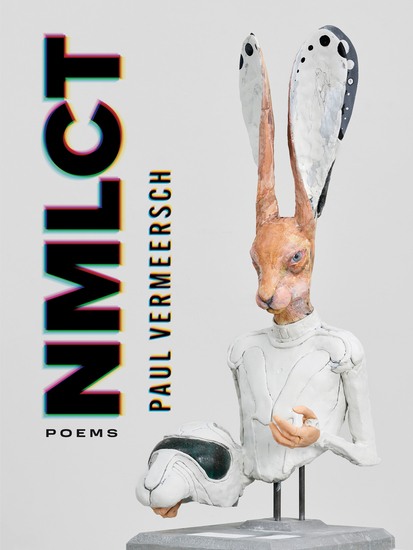
  • NMLCT - Poems - cover

    NMLCT - Poems

    Paul Vermeersch

    • 0
    • 0
    • 0
    Imagine The Matrix retold by the reanimated cyborg bodies of the Brothers Grimm.
    		 
    Fables and fairytales collide with virtual reality, artificial intelligence, and monstrous myths in a world where no one knows what to believe. In his eighth book of poems, Paul Vermeersch responds to the increasing difficulty of knowing what is real and what isn’t, what is our genuine experience and what is constructed for us by The Algorithm. In a “post-truth” society rife with simulations, misinformation, and computer-generated hallucinations, these poems explore the relationship between the synthetic and the authentic as they raise hope for the possibility of escape from MCHNCT (Machine City) to NMLCT (Animal City), where the promise of “real life” still exists.
    		 
    These poems — all precisely 16 lines long, identically formed as though mass-produced — are themselves artificial creations, products of the imagination, sometimes disorienting but always vivid. They hold up a mirror not only to nature, but also to its unnatural distortions and facsimiles. In NMLCT, Vermeersch gives us his answer to an existence in thrall to the artificial. But it also foretells a different future, one where the air and the grass and the trees, and all the life they engender, might always be genuine and sensed and safe.
    Zum Buch