Rejoignez-nous pour un voyage dans le monde des livres!
Ajouter ce livre à l'électronique
Grey
Ecrivez un nouveau commentaire Default profile 50px
Grey
Abonnez-vous pour lire le livre complet ou lisez les premières pages gratuitement!
All characters reduced
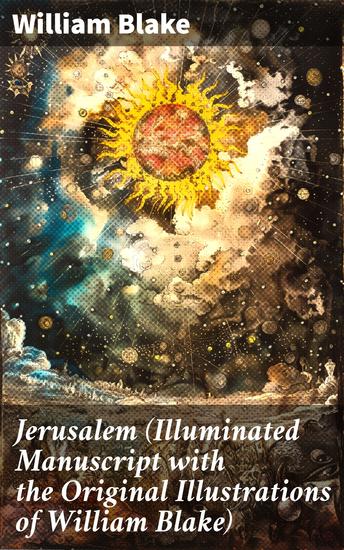
Jerusalem (Illuminated Manuscript with the Original Illustrations of William Blake) - Visions of Divine Light and Rebel Spirits - cover

Jerusalem (Illuminated Manuscript with the Original Illustrations of William Blake) - Visions of Divine Light and Rebel Spirits

William Blake

Maison d'édition: Good Press

  • 0
  • 0
  • 0

Synopsis

William Blake's "Jerusalem" is a profound exploration of the relationship between the material and spiritual realms, presented through his distinctive illuminated manuscript style. Written in the late 18th century and characterized by rich symbolism and visionary imagery, the text weaves together themes of redemption, social justice, and the quest for a transformative England. Blake's striking illustrations serve not merely as embellishments but as integral components that deepen the reader's understanding of the poem's intricate philosophical and theological underpinnings. The work reflects the fervent spirit of Romanticism, positioning itself against the backdrop of the Industrial Revolution and the socio-political upheaval of Blake's time. William Blake (1757-1827) was not only a poet but also a painter, engraver, and visionary philosopher, whose unyielding belief in the power of imagination profoundly influenced his artistic endeavors. A figure often ahead of his time, Blake's own experiences with social exclusion and spirituality undoubtedly shaped the themes present in "Jerusalem." His rejection of conventional norms allowed him to create a work that challenged societal structures and championed an idealized vision of human potential. "Jerusalem" is a compelling read for anyone interested in the intersections of art, poetry, and philosophy. Blake's fusion of text and imagery invites readers to forge a deeper connection with their own spiritual journeys while contemplating the urgent social issues of his day. A testament to the power of imagination and creativity, this work is essential for scholars, poets, and lovers of art alike.
Disponible depuis: 05/12/2023.
Longueur d'impression: 5 pages.

D'autres livres qui pourraient vous intéresser

  • Inferno - Dante Alighieri - cover

    Inferno - Dante Alighieri

    Dante Alighieri

    • 0
    • 0
    • 0
    Inferno (Italian for "Hell") is the first part of Dante Alighieri's 14th-century epic poem Divine Comedy.  
     
    Track List: 
     
    01	Bk 1, Inferno: Canto I - Canto V 
    02	Bk 1, Inferno: Canto VI - Canto X 
    03	Bk 1, Inferno: Canto XI - Canto XV 
    04	Bk 1, Inferno: Canto XVI - Canto XX 
    05	Bk 1, Inferno: Canto XXI - Canto XXV 
    06	Bk 1, Inferno: Canto XXVI - Canto XXX 
    07	Bk 1, Inferno: Canto XXXI - Canto XXXIV
    Voir livre
  • Voices of Poetry Volume 2 - cover

    Voices of Poetry Volume 2

    Edna St. Vincent Millay, Ezra...

    • 0
    • 0
    • 0
    Hear rare recordings from some of the world's most-respected poets reading their own works: Ezra Pound, Old Men With Beautiful Manners; William Butler Yeats, The Lake Isle Of Innisfree; Robert Graves, A Last Poem; Edna St. Vincent Millay, The Harp-Weaver; Richard Eberhart, The Groundhog; Philip Levine, Blasting from Heaven; Marianne Moore, The Mind is an Enchanting Thing; Stephen Spender, What I Expected; Vachel Lindsay, An Interpolation by Mr. Lindsay. 
    Recording obtained and published by Rick Sheridan. 
    ©2009 Rick Sheridan (P)2009 Rick Sheridan
    Voir livre
  • No Particular Order (NHB Modern Plays) - cover

    No Particular Order (NHB Modern...

    Joel Tan

    • 0
    • 0
    • 0
    A despot has come to power. The population is listless, submissive and scared.
    But beneath every violation of civil autonomy, there are real human beings; behind every act of resistance, there is an individual willing to risk everything. And these people aren't heroic or remarkable – they're just like us.
    Through the lives of bureaucrats, soldiers, ornithologists and tour guides, No Particular Order charts the fate of a single society, asking at every step of the way: is it empathy, or power, that endures?
    Joel Tan's startling and apocalyptic play No Particular Order was shortlisted for the Theatre503 International Playwriting Award, and opened at Theatre503, London, in May 2022, directed by Josh Roche.
    Voir livre
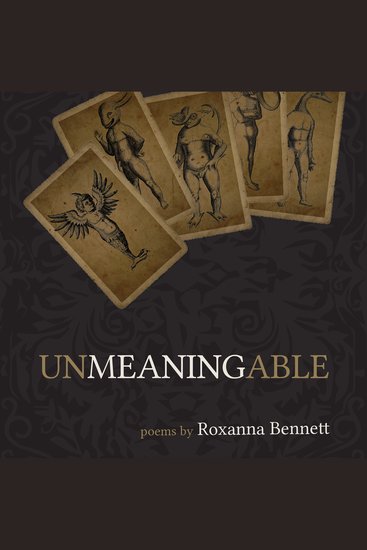
  • Unmeaningable - cover

    Unmeaningable

    Roxanna Bennett

    • 0
    • 0
    • 0
    Unmeaningable welcomes you to the freak show, where the monster on display is a culture that stigmatizes sickness and a system that shames the sufferer. Behold the wonder of the ages, a human mind in a human body, dissected and displayed for entertainment. Witness the ritual of surgical sacrifice! Observe the indignity of institutionalization! Be astounded by the indifference of ableism and ignorance! This uncanny collection of “crippled” sonnets features a thrilling display of cannibals, chimeras, and the crucial question: What meaning can be made of a life lived in pain and isolation?
    Voir livre
  • The Poetry of John Milton - Sparkling poems from the famed man behind Paradise Lost - cover

    The Poetry of John Milton -...

    John Milton

    • 0
    • 0
    • 0
    John Milton was born in Bread Street, London, on December 9th, 1608.  His early years were privately tutored before gaining a place at St Paul’s School and in 1625 he matriculated at Christ's College, Cambridge, earning a BA in 1629 and an MA in 1632. At Cambridge he had developed a reputation for poetic skill but also experienced alienation from his peers and university life as a whole.  
    The next 6 years were spent in private study. He read both ancient and modern works of theology, philosophy, history, politics, literature and science, in preparation for a poetical career.  Milton mastered Latin, Greek, Hebrew, French, Spanish, and Italian. To these he would add Old English (whilst researching his History of Britain) and also acquired more than a passing acquaintance in Dutch.  
    Although he was studying, some of his poetry from this time is remarkable; L’Allegro and Il Penseroso in 1631 and Lycidias in 1638. 
    In May 1638, Milton embarked upon a 15 month tour of France and Italy. These travels added a new and direct experience of artistic and religious traditions, especially Roman Catholicism.  He cut the journey short to return home during the summer of 1639 because of what he claimed were "sad tidings of civil war in England."  
    Once home, Milton wrote prose tracts against episcopacy, in the service of the Puritan and Parliamentary cause.  
    He married 16-year-old Mary Powell in June 1643 but she left him after only a few months during which he wrote and published several writings on divorce. Mary did return after 3 years and their life thereafter seemed harmonious.  Milton received a hostile response to the divorce tracts and drove him to write Areopagitica, his celebrated attack on pre-printing censorship.  
    With the parliamentary victory in the Civil War, Milton wrote The Tenure of Kings and Magistrates (1649) which defended popular government and implicitly sanctioned the regicide which led to his appointment as Secretary for Foreign Tongues by the Council of State.  
    On 24 February 1652 Milton published his Latin defense of the English People, Defensio Pro Populo Anglicano, also known as the First Defense. Milton's Latin prose and intellectual sweep, quickly gained him a European reputation.  
    Tragically his first wife, Mary, died on May 5th, 1652 following the birth of their fourth child.   The following year Milton had become totally blind, probably due to glaucoma.  He then had to dictate his verse and prose to helpers, one of whom was the poet Andrew Marvell. 
    He married again to Katherine Woodcock but she died in February 1658, less than four months after giving birth to a daughter, who also tragically died.  
    Though Cromwell’s death in 1658 caused the English Republic to collapse Milton stubbornly clung to his beliefs and in 1659 he published A Treatise of Civil Power, attacking the concept of a state-dominated church. Upon the Restoration in May 1660, Milton went into hiding for his life. An arrest warrant was issued and his writings burnt. He re-emerged after a general pardon was issued, but was nevertheless arrested and briefly imprisoned before influential friends, such as Marvell, now an MP, intervened 
    His third marriage was to Elizabeth Mynshull. Despite a 31-year age gap, the marriage seemed happy and Milton spent the remaining decade of his life living quietly in London, apart from a short spell in Chalfont St. Giles, during the Great Plague of London.  
    Milton was to now publish his greatest works, which had been gestating for many years.
    Voir livre
  • Emma - cover

    Emma

    Ava Pickett

    • 0
    • 0
    • 0
    Emma Woodhouse thinks she has it all figured out. Fresh from Oxford University and back in her hometown for the summer, she's ready to do what she does best: sort out everyone else's lives, whether they like it or not.
    Her closest friend Harriet is a total dating disaster, her father keeps disappearing on mysterious errands, and George Knightley refuses to stop pointing out the flaws in her flawless plans. But Emma knows best... right?
    Emma is Jane Austen's timeless classic of romance, friendship, and the tricky business of figuring out what truly makes us happy. Ava Pickett's irresistible adaptation joyously pulls the story into the twenty-first century, swapping drawing-room duets for dance-floor fillers. It premiered at Rose Theatre, Kingston upon Thames, in 2025, directed by Christopher Haydon.
    Voir livre