Begleiten Sie uns auf eine literarische Weltreise!
Buch zum Bücherregal hinzufügen
Grey
Einen neuen Kommentar schreiben Default profile 50px
Grey
Jetzt das ganze Buch im Abo oder die ersten Seiten gratis lesen!
All characters reduced
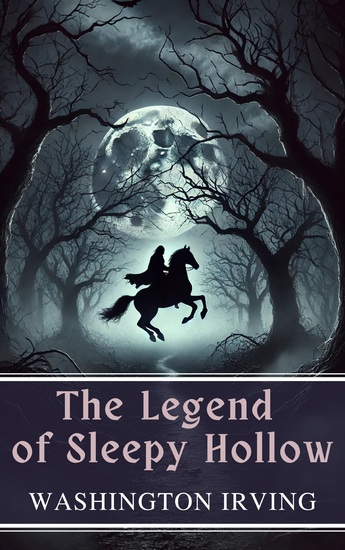
The Legend of Sleepy Hollow - A Gothic Classic of Mystery and Suspense - cover

The Legend of Sleepy Hollow - A Gothic Classic of Mystery and Suspense

Washington Irving, MyBooks Classics

Verlag: MyBooks Classics

  • 0
  • 0
  • 0

Beschreibung

Step into the eerie world of The Legend of Sleepy Hollow, where mystery and the supernatural collide in this timeless Gothic classic.

In a small, quiet village lives Ichabod Crane, a curious and superstitious schoolteacher who is drawn into the chilling legend of the Headless Horseman. Washington Irving's masterful tale is filled with suspense, humor, and vivid imagery that will transport you to the dark and mysterious heart of early American folklore.

As Ichabod competes for the affections of the lovely Katrina Van Tassel, his fate becomes entwined with a terrifying specter that haunts the night. Will he escape the clutches of the Headless Horseman, or will he become just another name in the ghostly legend?

This thrilling narrative has captivated readers for generations, offering a perfect mix of Gothic horror and timeless storytelling.

Praised for its atmospheric tension and enduring appeal, The Legend of Sleepy Hollow has inspired countless adaptations, from movies to TV shows. It remains a beloved classic that belongs on the shelf of every lover of dark fiction and folklore.

Don't miss out on this iconic piece of American literature. Buy The Legend of Sleepy Hollow today and dive into a world of ghosts, legends, and intrigue. Available for a limited time at a special price—click "Buy Now" and add this classic to your collection!
Verfügbar seit: 24.10.2024.
Drucklänge: 44 Seiten.

Weitere Bücher, die Sie mögen werden

  • The Swedish Famine of 1867-1869 - A Nordic Tragedy - cover

    The Swedish Famine of 1867-1869...

    Sarah Willards

    • 0
    • 0
    • 0
    In the years leading up to the Swedish Famine of 1867–1869, the Kingdom of Sweden stood at a crossroads between tradition and transformation. The mid-19th century was a period of great change, with emerging industrialization in urban areas clashing with the deep-rooted agrarian lifestyle that still defined the countryside. A vast majority of Swedes lived in rural regions, relying heavily on subsistence farming and small-scale agriculture. This dependence on crop yields, particularly barley, rye, and potatoes, made the rural population extremely vulnerable to climatic changes and poor harvests. 
    Despite some gradual modernization efforts, Sweden’s agricultural systems remained underdeveloped and highly sensitive to weather conditions. Farming techniques were largely traditional, and the infrastructure for food storage and distribution was limited. There was little to cushion communities in the event of failed crops. In a nation where most people lived off what they could grow or trade locally, a single bad season could spell hardship. Several parts of the country had endured minor food shortages in prior decades, but none on the scale that would soon descend upon the nation. 
    Adding to this vulnerability were the unusual weather patterns beginning to emerge in the mid-1860s. Winters grew colder and longer, and summers were often too short or too wet for successful harvesting. These anomalies were not yet fully understood at the time, and meteorological science was in its infancy. Farmers, used to working in rhythm with the natural seasons, found themselves unprepared for the climatic disruptions that lay ahead. The winter of 1867 would prove to be particularly devastating, marking the beginning of a three-year catastrophe.
    Zum Buch
  • Spiritual Centers in Man - cover

    Spiritual Centers in Man

    Manly P. Hall

    • 0
    • 0
    • 0
    In "Spiritual Centers in Man," Manly P. Hall maps the inner landscape - exploring the seven chakras and their connection to our consciousness, emotions, and potential. He suggests an "invisible hand" guides us towards spiritual growth, offering a unique perspective on self-discovery and human potential. Think "energy map" meets "inner journey" for a glimpse into this esoteric classic.
    Zum Buch
  • A Short History of European Law - The Last Two and a Half Millennia - cover

    A Short History of European Law...

    Tamar Herzog

    • 0
    • 0
    • 0
    A Short History of European Law brings to life 2,500 years of legal history, tying current norms to the circumstances of their conception. Tamar Herzog describes how successive legal systems built upon one another, from ancient times through the European Union. Roman law formed the backbone of each configuration, though the way it was used and reshaped varied dramatically from one century and place to the next. Only by considering Continental civil law and English common law together do we see how they drew from and enriched this shared tradition.
    Zum Buch
  • On Benefits - cover

    On Benefits

    Lucius Annaeus Seneca

    • 0
    • 0
    • 0
    The original Latin name of this important essay by Seneca, written around 60 CE, was De Beneficiis, which is why it is generally translated as ‘On Benefits’. However, it is more usefully titled ‘On Favours’, because this is what it is essentially about: the giving and receiving of favours, with all the implications of such transactions. Seneca is concerned with demonstrating that while such exchanges can be straightforward and beneficial to both parties, often there are pitfalls and hidden complications that, sooner or later, result in problems. Though some centuries later Shakespeare summed it up concisely with Polonius’s warning: ‘Neither a borrower nor a lender be,’ Seneca is well aware that in all levels and activities of society, benefits or favours play an undoubtedly crucial role. This was certainly true of Roman society, but little has changed since. Seneca deals with the subject in detail, considering the purposes of role of the giver, of which ‘kindness’, he says, is an important aspect – but not the only one by any means. Similarly, the role and attitude of the receiver, plays its part – and ‘gratitude’ is again only one response. Seneca’s background as a Stoic underpins his approach, so he warns against the inappropriate giving and receiving of benefits, which extend far beyond just material goods: it includes influence, wives, patronage and all manner of vice and immorality. In short, Seneca points out that the giving and receiving of favours can be, and often is a pernicious and dangerous affair, resulting in later disaster. Something to be exercised with caution.
    Zum Buch
  • Wu - The Chinese Empress Who Schemed Seduced and Murdered Her Way to Become a Living God - cover

    Wu - The Chinese Empress Who...

    Jonathan Clements

    • 0
    • 0
    • 0
    Empress Wu Zetian (624-705 AD) was the only woman to be the sovereign ruler of imperial China. A teenage concubine of the Tang Emperor Taizong, she seduced his son while the emperor lay dying. Recalled from a nunnery as part of an intricate court power-game, she caused the deaths of two lady rivals, before securing her enthronement as the Emperor Gaozong's consort. She ruled in the name of her husband and two eldest sons, presiding over the pinnacle of the Silk Road, before proclaiming herself the founder of a new dynasty. Worshipped as the Sage Mother of Mankind and reviled as the Treacherous Fox, she was deposed aged 79, after angry courtiers murdered her two young lovers. The subject of countless books, plays, and films, Empress Wu remains a feminist icon and a bugbear of Chinese conservatism. Jonathan Clements weighs the evidence of her life and legacy: so charismatic that she could rise from nothing to the height of medieval power, so hated that her own children left her tombstone blank.
    Zum Buch
  • Awakened Imagination and The Search - cover

    Awakened Imagination and The Search

    Neville Goddard

    • 0
    • 0
    • 0
    Awakened Imagination and The Search by Neville Goddard is a profound exploration of the creative power of human consciousness. In this influential work, Goddard delves into the concept that imagination is the ultimate reality and the key to transforming one's life. Awakened Imagination:In the first part of the book, Goddard emphasizes the pivotal role of imagination in shaping our experiences and realities. He presents the idea that by consciously directing and awakening our imagination, we can manifest our deepest desires and achieve personal transformation. Goddard provides practical techniques and exercises designed to harness the power of the imagination, encouraging readers to visualize their goals with vivid detail and emotional intensity. He argues that imagination, when used correctly, can transcend physical limitations and create a new reality. The Search:The second part, The Search, focuses on the journey of self-discovery and the quest for spiritual enlightenment. Goddard guides readers through the process of inner exploration, urging them to seek the divine within themselves. He draws on biblical references and metaphysical principles to illustrate the importance of faith, belief, and inner conviction in realizing one's true potential. The search for higher consciousness and understanding is portrayed as a deeply personal and transformative journey. Through compelling narratives and insightful teachings, Neville Goddard challenges readers to awaken their imagination and embark on a quest for self-realization. His work combines metaphysical insights with practical advice, making it a valuable resource for anyone interested in personal development and spiritual growth. Awakened Imagination and The Search remains a timeless and inspiring guide, encouraging readers to unlock their creative potential and discover the profound power within. This book is essential for those seeking to deepen their understanding of the mind's capabilities and the spiritual dimensions of existence.
    Zum Buch