Rejoignez-nous pour un voyage dans le monde des livres!
Ajouter ce livre à l'électronique
Grey
Ecrivez un nouveau commentaire Default profile 50px
Grey
Abonnez-vous pour lire le livre complet ou lisez les premières pages gratuitement!
All characters reduced
The Pirate - cover

The Pirate

Walter Scott

Maison d'édition: DigiCat

  • 0
  • 0
  • 0

Synopsis

In "The Pirate," Walter Scott crafts a captivating tale set against the rugged backdrop of the Scottish Isles, exploring themes of adventure, honor, and the tempestuous nature of loyalty. The narrative is woven with Scott's characteristic romanticism and poetic prose, presenting a blend of historical and fictional elements that reflect early 19th-century literary traditions. This novel encapsulates the turbulent lives of its characters, primarily focusing on the enigmatic figure of the pirate Captain Cleveland, whose moral complexity raises questions about heroism and villainy amidst societal turmoil. Walter Scott, a leading figure in the Scottish literary renaissance, drew on his own heritage and extensive knowledge of Scottish history to inform his writing. His immersion in the historical landscapes and cultural narratives of Scotland not only shaped his perspective but also the central conflicts in "The Pirate," where the clashing forces of loyalty and betrayal echo his belief in the power of history to inform contemporary morality. Readers who appreciate richly detailed settings and intricate character development will find "The Pirate" an enthralling exploration of the human spirit amidst chaos. Scott's deft storytelling invites readers into a world where the lines between lawfulness and outlawry blur, making this novel a compelling read for lovers of romantic literature and historical fiction.
Disponible depuis: 11/10/2022.
Longueur d'impression: 346 pages.

D'autres livres qui pourraient vous intéresser

  • On The Gull's Road - cover

    On The Gull's Road

    Willa Cather

    • 0
    • 0
    • 0
    "On the Gulls' Road" is a touching short story by Willa Cather, first published in McClure's in December 1908. A fellow painter visits the narrator, and is mesmerised by his painting of Alexandra Ebbling, a married woman, whom the narrator met on a ship from Genoa to New York City. On the ship, he and Mrs. Ebbling enjoyed many conversations about life, love, and personal experiences. The courtship goes on for the entire trip and grows stronger each day. The man is smitten by Mrs. Ebbling and cannot wait until the next time they meet. The man paints a picture of Mrs. Ebbling while they talk and enjoy the sunshine and the sea so he can always remember the woman. They tell each other things about their hopes and dreams. All the while Mrs. Ebbling knows that nothing can come of the affair. She is married and close to death. The man has high hopes for her to run away with him but she has to tell him that it can never happen. Mrs. Ebbling gives the man a gift that he is not to open until she tells him to. In the following winter, he is informed that she had died. Inside the gift she had given him, there is a letter from her thanking him for all the memories he gave her of a love that almost happened, along with a lock of her golden hair, a withered magnolia flower, and two pink sea shells. In the end, theirs was a love that stood the test of time, separation, and even death.
    Voir livre
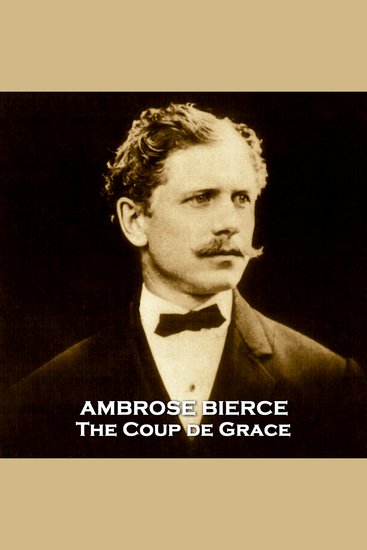
  • The Coup de Grace - From their pens to your ears genius in every story - cover

    The Coup de Grace - From their...

    Ambrose Bierce

    • 0
    • 0
    • 0
    Ambrose Gwinnett Bierce was born on 24th June 1842 at Horse Cave Creek in Meigs County, Ohio. His parents were poor but they introduced him to literature at an early age, instilling in him a deep appreciation of books, the written word and the elegance of language.  
    Growing up in Koscuisko County, Indiana poverty and religion were defining features of his childhood, and he would later describe his parents as “unwashed savages” and fanatically religious, showing him little affection but always quick to punish. He came to resent religion, and his introduction to literature appears to be their only positive effect. 
    At age 15 Bierce left home to become a printer’s devil, mixing ink and fetching type at The Northern Indian, a small Ohio paper. Falsely accused of theft he returned to his farm and spent time sending out work in the hopes of being published. 
    His Uncle Lucius advised he be sent to the Kentucky Military Institute. A year later he was commissioned as an Officer.  As the Civil War started Bierce enlisted in the 9th Indiana Infantry Regiment.  
    In April 1862 Bierce fought at the Battle of Shiloh, an experience which, though terrifying, became the source of several short stories. Two years later he sustained a serious head wound and was off duty for several months. He was discharged in early 1865.  
    A later expedition to inspect military outposts across the Great Plains took him all the way to San Francisco. He remained there to become involved with publishing and editing and to marry, Mary Ellen on Christmas Day 1871.  They had a child, Day, the following year.  
    In 1872 the family moved to England for 3 years where he wrote for Fun magazine. His son, Leigh, was born, and first book, ‘The Fiend’s Delight’, was published.  
    They returned to San Francisco and to work for a number of papers where he gained admiration for his crime reporting. In 1887 he began a column at the William Randolph Hearst’s San Francisco Examiner.  
    Bierce’s marriage fell apart when he discovered compromising letters to his wife from a secret admirer. The following year, 1889 his son Day committed suicide, depressed by romantic rejection. 
    In 1891 Bierce wrote and published the collection of 26 short stories which included ‘An Occurrence at Owl Creek Bridge’.  Success and further works including poetry followed.  
    Bierce with Hearst’s resources helped uncover a financial plot by a railroad to turn 130 million dollars of loans into a handout. Confronted by the railroad and asked to name his price Bierce answered “my price is $130 million dollars. If, when you are ready to pay, I happen to be out of town, you may hand it over to my friend, the Treasurer of the United States”.  
    He now began his first foray as a fabulist, publishing ‘Fantastic Fables’ in 1899.  But tragedy again struck two years later when his second son Leigh died of pneumonia relating to his alcoholism.  
    He continued to write short stories and poetry and also published ‘The Devil’s Dictionary’.  
    At the age of 71, in 1913 Bierce departed from Washington, D.C., for a tour of the battlefields where he had fought during the civil war. At the city of Chihuahua he wrote his last known communication, a letter to a friend. It’s closing words were “as to me, I leave here tomorrow for an unknown destination,” Ambrose Bierce then vanished without trace.
    Voir livre

  • Alexander's Den - cover

    Alexander's Den

    Dawn Blair

    • 0
    • 0
    • 0
    Thomis doesn’t want to be here.Alexander’s Den: a place very few people know about and even fewer actually venture into willingly. Everyone here has a story; some want to tell it, and some don’t.Alexander won’t give Thomis a warm homecoming, even though he has something Alexander might want. Will a special egg be enough to get his foot back in the door? Will Alexander want too much from him in this storyteller’s final days?Enter the lair of Alexander’s Den in this fantasy short story.
    Voir livre
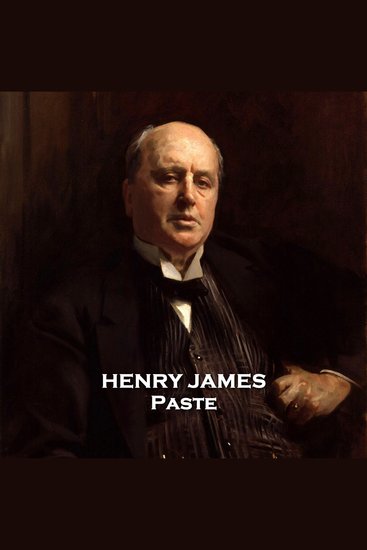
  • Paste - From their pens to your ears genius in every story - cover

    Paste - From their pens to your...

    Henry James

    • 0
    • 0
    • 0
    Henry James was born 15th April 1843 in New York City. 
    His youth was spent travelling with his family receiving what was an "extraordinarily haphazard and promiscuous" education as they journeyed through London, Paris, Geneva, Boulogne-sur-Mer and Newport, Rhode Island, according to the father's current interests and publishing ventures. James studied primarily with tutors and only briefly attended schools.    
    Undoubtedly the quality of his writing has ensured his name is enshrined in the American literary tradition.  
    James was a committed Anglophile and spent most of his adult life as an expatriate in Europe.  Many of his novels juxtapose the Old World with the New World. Classics such as ‘The Portrait of a Lady’, ‘Daisy Miller’ and ‘The Ambassadors’, display the entanglement between American and European cultures and mentalities. They highlight the differences between the two worlds through following the experiences of American expatriates in Europe.  
    A prolific author he was able to easily move across genres to create vivid and totally real worlds and situations and to offer sophisticated observations of human relations as well as realistic, social criticism.  
    As a critic James was unafraid to venture into reviews and essays of those other literary giants around him.  These together with his short stories and, of course, classic novels, make Henry James an author to be not only admired but read, and read often.  
    In 1915 Henry James became a British citizen. 
    On 28th February 1916, at the age of 72, Henry James died in Chelsea, London. 
    He was nominated for the Nobel Prize in Literature in 1911, 1912 and 1916. He never won.
    Voir livre
  • Christmas Mail-Order Brides - cover

    Christmas Mail-Order Brides

    Vickie McDonough, Carrie...

    • 0
    • 0
    • 0
    Marriage arrives by mail-order—and just in time for Christmas. 
     
    In these touching stories of faith and romance in the American West, three women seeking new beginnings find love in unexpected places. 
     
    A Trusting Heart by Carrie Turansky 
     
    When a Swedish immigrant travels west to marry a man she’s never met, she discovers that sometimes the wrong match leads to the right man. 
     
    The Prodigal Groom by Vickie McDonough 
     
    A bride-to-be's adventure takes an unexpected turn when stagecoach troubles land her in the arms of a handsome stranger. 
     
    Mrs. Mayberry Meets Her Match by Susan Page Davis 
     
    A dedicated matchmaker journeys west to right a past mistake, only to find that love has other plans. 
     
    From snow-capped mountains to dusty frontier towns, these tales weave together themes of redemption, divine providence, and the healing power of love. As stubborn hearts soften, old wounds mend, and faith lights the way to second chances. Can love take root in such rugged soil—or will the past keep it at bay?
    Voir livre
  • The Hounds of Fate - From their pens to your ears genius in every story - cover

    The Hounds of Fate - From their...

    Saki Saki

    • 0
    • 0
    • 0
    Hector Hugh Munro, more familiarly known by his pen-name ‘Saki’ was born in what was then Akyab in British Burma on 18th December 1870. His father was an Inspector General for the Indian Imperial Police, and his mother the daughter of a Rear Admiral. 
    When he was 2 his mother died and he and his siblings were sent back to England to be raised by their grandmother and paternal maiden aunts in a strict, puritanical household near Barnstaple, Devon. Educated by governesses Saki used many of these women as character models for his later writing. 
    At 17 his father retried and returned to England and then embarked on a series of European travels with Saki and his siblings. 
    After a short stint working in Burma with the Indian Imperial Police Saki decided to move to London to make a living as a writer. Initially he wrote as a journalist for a number of newspapers and magazines before attempting an historical study, ‘The Rise of the Russian Empire’, whose real value lay in directing him to writing short stories instead, the first of which, ‘Dogged’, he published in 1899. 
    From here it was a short stab of the pen to writing political satire before in 1902 he became the foreign correspondent for The Morning Post, first in the Balkans, then Russia, Paris and back to London in 1908, where 'the agreeable life of a man of letters with a brilliant reputation awaited him.'  
    Collections of his short stories full of witty, mischievous and often macabre stories that satirized Edwardian society and two novels now appeared in the years up to the Great War.  At its’ outbreak he was 43 but managed to join as an ordinary trooper. More than once he returned to the battlefield when officially too sick or injured.  
    On 14th November 1916 Hector Hugh Munro was sheltering in crater during the Battle of the Ancre, when he was shot and killed by a German sniper. According to several sources, his last words were "Put that bloody cigarette out!"
    Voir livre