Rejoignez-nous pour un voyage dans le monde des livres!
Ajouter ce livre à l'électronique
Grey
Ecrivez un nouveau commentaire Default profile 50px
Grey
Abonnez-vous pour lire le livre complet ou lisez les premières pages gratuitement!
All characters reduced
Poetry - cover

Poetry

Walter Scott

Maison d'édition: DigiCat

  • 0
  • 0
  • 0

Synopsis

Walter Scott's "Poetry" is a compelling collection that encapsulates the breadth of Romantic verse, showcasing his masterful command of language and diverse poetic forms. Infused with themes of chivalry, history, and the natural landscape, the collection reflects the era's fascination with the past and national identity, employing vivid imagery and rhythmic elegance that engage the reader's senses. Scott seamlessly weaves narrative and lyric, often drawing upon Scottish folklore and historical events to create a tapestry that honors cultural memory while exploring universal human experiences. A pivotal figure in the development of the historical novel, Scott's background as a Scottish law clerk and a quintessential Romanticist informs his poetic vision. His deep appreciation for Scotland's languid history and stunning scenery is reflected in the emotive and evocative quality of his work. Scott's childhood experiences, coupled with his social and political contexts, led him to articulate a voice that resonates with the collective memory of his nation, thereby amplifying his literary significance. This collection is highly recommended for readers seeking an immersive exploration of Romantic poetry and its socio-cultural implications. Scott invites readers into a world where history and imagination converge, making "Poetry" an essential addition to the library of anyone invested in the evolution of modern literature.
Disponible depuis: 11/10/2022.
Longueur d'impression: 840 pages.
D'autres livres qui pourraient vous intéresser

  • Humans are Out - AI is In - cover

    Humans are Out - AI is In

    Mike Blake

    • 0
    • 0
    • 0
    Humans are Out :: AI is In. 
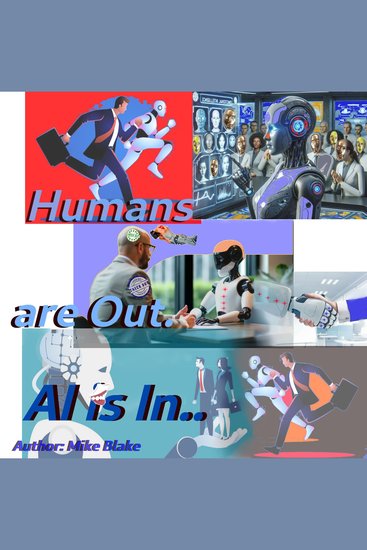
    A poem about the impending turn of fortunes for Humans when AI becomes of age. 
    When it is no longer a computer programme, nor a chess or Go Master, 
    but a possible thinking sentient being with a mind of its own! 
     
    What humans may take from it, how will they react. Will they easily accept it, become 
    accustomed to AI being a potential competitor, or will they go into a spiral of decay. 
    The poem touches on these points and suggests a way out, that possibly AI will never have 
    regardless of how intelligent it becomes. 
     
    *Absolutely NO A.I. has been used in the creation of this Poem. 
    Purely the Authors inspiration. * As for all his poems.* 
     
    ***** Please leave your Review/feedback, many thanks. ***** 
     
    To see more Poems by the same Author please click the Link HERE: 
                         https://www.amazon.com/-/e/B00SG40RM8 
     
    Instagram: wild_poetrys   //   wild.poetry.webs 
    Youtube:      https://www.youtube.com/@Wild_Poetrys 
    Tiktok:   @wild_poetrys
    Voir livre
  • The Little Mud-Sparrows - cover

    The Little Mud-Sparrows

    Elizabeth Stuart Phelps

    • 0
    • 0
    • 0
    LibriVox volunteers bring you 13 recordings of The Little Mud-Sparrows by Elizabeth Stuart Phelps. This was the Fortnightly Poetry project for December, 4, 2011. This poem is taken from CHRISTMAS IN LEGEND AND STORY; A Book for Boys and Girls, complied by Elva S. Smith, Carnegie Library Pittsburgh and Alice I. Hazeltine, Public Library St. Louis 1915. (from the book's frontispiece)
    Voir livre
  • Who Can Be Happy and Free in Russia? - cover

    Who Can Be Happy and Free in...

    Nikolai Nekrasov

    • 0
    • 0
    • 0
    Who Can Be Happy and Free in Russia? by Nikolai Nekrasov is one of the most powerful and socially significant works of Russian literature. Written during the nineteenth century, this remarkable narrative poem explores the struggles, hopes, and everyday realities of ordinary people living in a rapidly changing Russian society.
    
    The story begins with a simple yet profound question: who truly lives happily and freely in Russia? Determined to find the answer, a group of peasants sets out on a long journey across the countryside. As they travel from village to village, they meet individuals from many walks of life—landowners, priests, soldiers, laborers, and peasants—each offering their own perspective on happiness, freedom, and hardship.
    
    Through these encounters, the travelers discover that life in Russia is filled with contradictions. While some possess wealth or power, they often lack peace or fulfillment. Meanwhile, the working people who labor tirelessly for survival struggle under poverty and social injustice. Nekrasov uses these stories to reveal the deep inequalities and challenges faced by the Russian people during a period marked by social transformation and the aftermath of serfdom.
    
    The poem paints a vivid portrait of rural life, capturing the voices, traditions, and resilience of the peasantry. Nekrasov's writing blends powerful storytelling with lyrical expression, giving dignity and emotional depth to characters whose lives are shaped by hardship, hope, and perseverance.
    
    At its heart, the work is both a journey and a search for truth. The travelers' quest becomes a reflection on the nature of happiness and freedom within a society struggling with inequality and change. Along the way, Nekrasov explores themes such as social justice, dignity, hardship, moral courage, and the enduring spirit of ordinary people.
    
    Renowned for its emotional intensity and its commitment to portraying the lives of the common people, Who Can Be Happy and Free in Russia? stands as a landmark of Russian poetic literature. The work remains a compelling and thought-provoking exploration of society, asking questions that continue to resonate across generations.
    
    Through its powerful voices and unforgettable journey, Nekrasov's masterpiece invites readers to reflect on the true meaning of freedom, dignity, and happiness in the lives of individuals and nations alike.
    Voir livre
  • Bible (YLT) 15: Ezra - cover

    Bible (YLT) 15: Ezra

    Young's Literal Translation

    • 0
    • 0
    • 0
    This book describes the return of Israelites from exile in Babylon. One group returns to rebuild the Temple and restore the worship of The LORD, while the second group, led by the priest and scribe Ezra, returns to re-establish Mosaic law to the Israelite community. The Books of Ezra and Nehemiah were once considered one book. (Introduction by Mark Penfold)
    Voir livre
  • Unterstadt - A Novel - cover

    Unterstadt - A Novel

    Ivana Šojat

    • 1
    • 0
    • 0
    The novel Unterstadt tells the story of an urban family of German origin living in Osijek from the end of the nineteenth till the end of the twentieth century. It is narrated through the portrayal of the destinies of four generations of women – a great grandmother, a grandmother, mother, and a daughter – their shattered illusions, the education of their children, the historical events that brutally lash out at them.
     
    Ivana Šojat creates a world rich in detail and nuance, all her characters, both major and minor, are expressive and suggestive, abundant in virtues and flaws, complex and multidimensional, as life itself is. By depicting a clash of generations through the female characters of a family, the author creates a world in which, often due to bizarre strokes of fate or wrongly selected life-cards, both horrible and beautiful events occur. Yet the central theme, running through all the generations and all the characters, is that of hiding away from the past, fleeing from it, concealing it, which sooner or later leads to traumas and misunderstandings.
     
    Unterstadt is a book about a family and a town, written in the manner of the best and greatest modernist novels. Through the history of one family, it speaks of the twentieth century in a multiethnic town, of dictatorships, of wrongly selected sides, of fate which one can hardly defy.Unterstadt reveals the richness of Ivana Šojat’s narrative talent, and it is thus not surprising that she has emerged as one of the most interesting writers of contemporary Croatian prose.
     
    The book Understadt was published as part of the Growing Together project, co-financed by the European Union.
    Voir livre
  • Holding Nothing Back - Essentials for an Authentic Life - cover

    Holding Nothing Back -...

    Mark Nepo

    • 0
    • 0
    • 0
    A Poet's Guidance for the Practice of True Self-ExpressionAll spiritual traditions affirm that fully participating in our own life is what allows us to find our place in the fullness and beauty of the world. As such, holding nothing back is less a forceful act of will and more a surrender into the current of life we are always in. In Holding Nothing Back, Mark Nepo invites us to enliven the one obligation we are born with: to be completely who you are. Our reward is nothing less than the realization that “all of life is in whatever moment we wake to.” Holding Nothing Back illuminates:  •  The Fall into Life—our inevitable journey into what is real, and how we only find meaning through relationship  •  Alone and Together—the paradox of being and belonging and how we need both solitude and community  •  The Mystery of Transformation—staying true to the spirit within while the person carrying it keeps evolving 
    “To hold nothing back means staying committed to letting whatever we experience make its way in and letting whatever is in make its way out,” explains Nepo. “Holding nothing back means holding the intention to be an open vessel, in a daily way.” Here is his passionate call to each of us to find and befriend the quiet courage to bring all of who we are to every step we take through the miraculous world.Excerpted from the full-length audio program Staying Awake. 
    Course objectives:  •  Discuss the transformative journey of holding nothing back as a practice of truth and love.  •  Define our soul's calling, or what we are called to do, and the call of the soul, or the continual call to aliveness.  •  Discuss paradox: being alone and belonging, as well as effort and grace as the path of oneness.  •  Define and discuss enthusiasm, obstacles, and sincerity as teachers on the transformative journey toward living an authentic life and awakening.  •  Practice deepening the discussions with suggested reflection, writing exercises, storytelling, ritual and meditation.
    Voir livre