Rejoignez-nous pour un voyage dans le monde des livres!
Ajouter ce livre à l'électronique
Grey
Ecrivez un nouveau commentaire Default profile 50px
Grey
Abonnez-vous pour lire le livre complet ou lisez les premières pages gratuitement!
All characters reduced
Letters on Demonology and Witchcraft - cover

Letters on Demonology and Witchcraft

Walter Scott

Maison d'édition: DigiCat

  • 0
  • 0
  • 0

Synopsis

In 'Letters on Demonology and Witchcraft,' Walter Scott delves into the fascinating world of the supernatural as he explores the societal perceptions of witchcraft and demonology during the late 18th and early 19th centuries. Written in an engaging epistolary format, Scott's letters combine personal reflection with a scholarly examination of folklore, historical accounts, and legal documents surrounding witch hunts. The book not only elucidates the cultural anxieties of its time but also aims to reconcile popular superstition with rational thought, situating itself within the Enlightenment's quest to understand human nature through a critical lens. Walter Scott, a seminal figure in Scottish literature, was deeply influenced by the rich folklore of his homeland, as well as the tumultuous history of witchcraft trials that ravaged communities in Europe. His creative endeavors often sought to bridge the realms of fiction and history, making the topic of demonology a natural extension of his literary interests. Scott's own fascination with the human psyche and societal fears ultimately informed his exploration of these themes, resulting in a text that is as enlightening as it is captivating. I highly recommend 'Letters on Demonology and Witchcraft' to readers interested in the intersections of literature, history, and cultural studies. Scott's thought-provoking insights invite readers to reflect on the nature of belief and reason, making the book an essential read for anyone intrigued by the complex tapestry of human thought surrounding the mystical and the macabre.
Disponible depuis: 16/09/2022.
Longueur d'impression: 331 pages.


D'autres livres qui pourraient vous intéresser

  • Lessons from a Fledgling Democracy - cover

    Lessons from a Fledgling Democracy

    M.D. Mamphela Ramphele

    • 0
    • 0
    • 0
    How are the successes and failures of the fledgling South African democracy relevant to all democratic nations? Why a nation cannot truly thrive without full socio-economic equity. Why true freedom must also include freedom from an imprisoned mind. What is the importance of teaching a full, robust history of a nation?
    Voir livre
  • SHAKESPEARE IN METAPHORS - The Art of Hidden Meanings in his Words Insights & Interpretations for Shakespeare's Metaphors - cover

    SHAKESPEARE IN METAPHORS - The...

    Lázaro Droznes

    • 0
    • 0
    • 0
     “Shakespeare in Metaphors” delve deep into the heart of the Bard's most poignant and vivid metaphoric expressions.  
     Shakespeare's plays and sonnets are renowned not just for their timeless themes and complex characters, but also for their rich tapestry of metaphors that paint pictures beyond the ordinary.  
     This meticulously researched study explores how these metaphors, recurring throughout his works, become the signature strokes of Shakespeare's literary genius.  
     From the world as a stage to the tempests of the mind, journey through an exploration that decodes the layers of meaning and context behind each metaphor.  
     Whether you're a Shakespeare enthusiast, a student of literature, or someone simply entranced by the power of language, “Shakespeare in Metaphors” offers a fresh perspective on how Shakespeare's metaphoric mastery shapes his legacy. Dive in and rediscover the Bard in a light you've never seen before." 
     Download your copy now and delve into Shakespeare's vivid images and metaphors! < 
     
    Voir livre
  • Overdue - Reckoning with the Public Library - cover

    Overdue - Reckoning with the...

    Amanda Oliver

    • 0
    • 0
    • 0
    Who are libraries for, how have they evolved, and why do they fill so many roles in our society today? 


    Based on firsthand experiences from six years of professional work as a librarian in high-poverty neighborhoods of Washington, DC, as well as interviews and research, Overdue begins with Oliver's first day at an "unusual" branch: Northwest One. 


    Using her experience at this branch allows Oliver to highlight the national problems that have existed in libraries since they were founded: racism, segregation, and class inequalities. These age-old problems have evolved into police violence, the opioid epidemic, rampant houselessness, and lack of mental health care nationwide—all of which come to a head in public library spaces. 


    Can public librarians continue to play the many roles they are tasked with? Can American society sustain one of its most noble institutions? 


    Pushing against hundreds of years of stereotypes, romanticization, and discomfort with a call to reckoning, Overdue will change the way you think about libraries forever.
    Voir livre
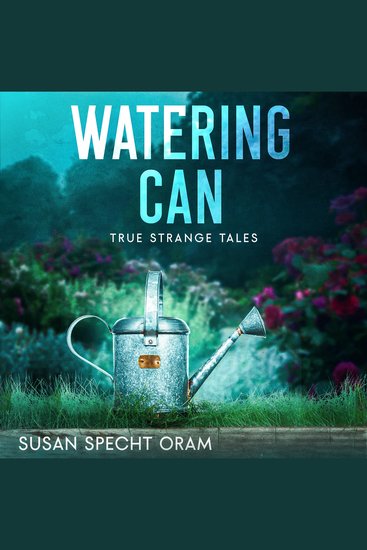
  • Watering Can - True strange tales - cover

    Watering Can - True strange tales

    Susan Specht Oram

    • 0
    • 0
    • 0
    Mystery-thriller author Susan Specht Oram shares strange but true tales in this seventh book in the Strangers on a Train series, including a weird mishap at a bowling alley, a father’s strange comment, an odd experience looking for the opera, a shocking incident at a street fair, a bizarre encounter with a cannon, a humiliating coming-of-age story and other captivating, complicated anecdotes. 
     
    This short collection of weird real-life situations might make you laugh and cry. Join her and share the surprising happenings of her life, with her humiliations and triumphs. Pick up your copy today!
    Voir livre
  • Milk - cover

    Milk

    Matthew Evans

    • 0
    • 0
    • 0
    A powerful, entertaining and, at times, eviscerating commentary on the most controversial of original superfoods. 
     
    Milk. It's in our coffee, on our cereal. We see it in processed form – yoghurt, butter, cheese, skimmed and lactose free. It's there in almond form, or made from oats or soy, and is as lauded as the 'perfect' food or lambasted as not fit for human consumption and a toxic planet killer, depending on who you trust. Which type you drink, whether you were raised on breastmilk, what you think of it, is affected by culture, biology and fashion. How you view it is driven by your gender and your politics, as well as your geography. 
     
    The miracle liquid has suffered an image problem. It has been used to keep people poor, to keep women subjugated, and to build corporate and medical careers. It's been blamed for climate change, the breakdown of human health, and an enabler of the industrial revolution. From perfect food to pariah, milk's role in life has often been debased. 
     
    Milk celebrates the majesty of this noble liquid, and delves into the pretenders to its throne, from formula to Mylk. It looks at the transformation of what a milk-producer eats into one of the most nutrient dense foods available, and how that can be transformed again into the butter, cheese and clotted cream that we know and love today. It's an exploration of the science, history and politics of what makes mammals different from every other life form on earth.
    Voir livre
  • Hitler's Spanish Legion - The Blue Division in Russia in WWII - cover

    Hitler's Spanish Legion - The...

    Gerald R Kleinfeld

    • 0
    • 0
    • 0
    A history of the 47,000 Spanish soldiers who volunteered to fight for Hitler in Russia during World War II. Although Spain claimed neutrality during World War II, 47,000 Spaniards volunteered to fight on behalf of the Third Reich. Known as the Blue Division, they battled the Soviets on the Eastern Front and played a key role in the pivotal siege of Leningrad. Set apart from the Wehrmacht by stark differences in culture, tactics, and command structure, these volunteers fought—many of them to the death—with courage and tenacity against strong opposition, extreme temperatures, and insufficient supplies for what they believed was their chance to secure Spain’s place in a new and changing Europe.
    Voir livre