Begleiten Sie uns auf eine literarische Weltreise!
Buch zum Bücherregal hinzufügen
Grey
Einen neuen Kommentar schreiben Default profile 50px
Grey
Jetzt das ganze Buch im Abo oder die ersten Seiten gratis lesen!
All characters reduced
Appreciations with an Essay on Style - cover

Appreciations with an Essay on Style

Walter Pater

Verlag: DigiCat

  • 0
  • 0
  • 0

Beschreibung

In "Appreciations, with an Essay on Style," Walter Pater delivers a masterful exploration of aesthetic philosophy through a collection of critical essays that scrutinize the intricate relationship between art and perception. With a literary style characterized by its lyrical beauty and rich, vivid imagery, Pater engages deeply with the works of luminaries such as Leonardo da Vinci, Michelangelo, and literature's modernists, foregrounding the aesthetic experience as a profound and subjective engagement with life itself. This work not only reflects the intellectual milieu of the late Victorian era—a period rife with artistic experimentation—but also endeavors to articulate a doctrine of aestheticism that champions beauty as both a guiding principle and a moral imperative in art. Walter Pater was a pivotal figure in the aesthetic movement, whose scholarly pursuits in literature and philosophy laid the groundwork for modern literary criticism. His early career in academia afforded him a unique vantage point to appreciate the nuances of artistic expression and its philosophical underpinnings. Influenced by his encounters with Romanticism, Pater's deep-seated belief in the significance of personal interpretation and the inherent value of beauty permeates his work, establishing him as a voice of radical thought in an era of rigid conventions. For those seeking insight into the convergence of art and aesthetics, "Appreciations" stands as an essential read. Pater's elegant prose invites readers to contemplate the essence of beauty, encouraging a richer understanding of artistic endeavor and its emotional resonance. This book is a treasure for scholars, artists, and anyone wishing to cultivate an appreciation for the delicate interplay between style and substance in the world of arts.
Verfügbar seit: 01.08.2022.
Drucklänge: 162 Seiten.
Weitere Bücher, die Sie mögen werden

  • Philebus - What Brings True Happiness? – Plato’s Dialogue on Pleasure Intelligence and the Good Life - cover

    Philebus - What Brings True...

    Plato, Tim Zengerink

    • 0
    • 0
    • 0
    What if the secret to happiness is not one truth—but a delicate balance of many? 
    In Philebus, Plato challenges us to consider whether pleasure or reason leads to a better life. Through a lively dialogue between Socrates, Philebus, and Protarchus, we explore questions about desire, truth, and the ultimate good. 
    This modern translation breathes new life into the classic conversation, making Plato’s deep philosophical insights clear and approachable. It’s not just a debate—it’s a blueprint for finding harmony between emotion and intellect. 
    What you'll discover inside: 
    •	A Timeless Debate on the Good Life – Pleasure vs. reason, and the balance in between 
    •	Socrates' Ethical Philosophy – Uncover Plato’s enduring vision of virtue and truth 
    •	A Modern, Accessible Translation – Carefully adapted for clarity and impact 
    •	A Journey into Fulfillment – Explore how proportion and harmony lead to lasting happiness 
    Discover Philebus—Plato’s philosophical guide to what it means to truly live well.
    Zum Buch
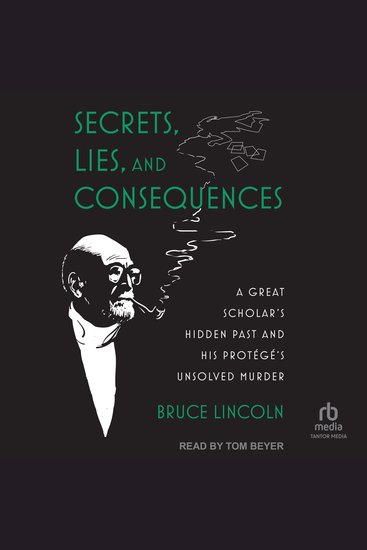
  • Secrets Lies and Consequences - A Great Scholar's Hidden Past and his Protégé's Unsolved Murder - cover

    Secrets Lies and Consequences -...

    Bruce Lincoln

    • 0
    • 0
    • 0
    In 1991, Ioan Culianu was on the precipice of a brilliant academic career. Culianu had fled his native Romania and established himself as a widely admired scholar at just forty-one years old. He was teaching at the University of Chicago Divinity School where he was seen as the heir apparent to his mentor, Mircea Eliade, a fellow Romanian expatriate and the founding father of the field of religious studies, who had died a few years earlier. When Culianu began to receive threatening messages, he asked a colleague to hold onto some papers for safekeeping. A week later someone fired a bullet into the back of his head, killing him instantly. The case was never solved, though the prevailing theory is that Culianu was targeted by the Romanian secret police as a result of critical articles he wrote after the fall of Nicolae Ceausescu. 


    What was in those papers and what connection might they have to Culianu's death? The papers eventually passed into the hands of Bruce Lincoln, and their story is at the heart of this book. The documents were English translations of articles that Eliade wrote in the 1930s, some of which voiced Eliade's support for the Iron Guard. Bruce Lincoln explores what the articles reveal about Eliade's past, his subsequent efforts to conceal that past, his complex relations with Culianu, and the possible motives for Culianu's shocking murder.
    Zum Buch
  • The Courage to Heal - cover

    The Courage to Heal

    Dontanyen Artis

    • 0
    • 0
    • 0
    In The Courage to Heal vulnerability fuels moral growth and personal development. Through candid narratives, explore how embracing vulnerability ignites profound self-discovery and fosters moral clarity on the path to empowerment.
    Zum Buch
  • D-Day: The Unheard Tapes - Powerful Eye-witness Accounts of The Battle for Normandy 1944 - cover

    D-Day: The Unheard Tapes -...

    Geraint Jones

    • 0
    • 0
    • 0
    This audiobook includes archived recordings from interviews taken with Second World War soldiers, as well as an Introduction and Epilogue read by the author. A powerful, immersive account published for the 80th anniversary of the D-Day landings and battle for Normandy, and tied into the groundbreaking BBC2 documentary series D-Day: The Unheard Tapes.D-Day was bloody, chaotic and frequently terrifying. Its outcome was far from certain. And at its epicentre were tens of thousands of young men, many seeing their first active service. It was a single day that changed millions of lives. A critical turning point of the Second World War.Using audio interviews from the archives of the Imperial War Museum and National World War II Museum, this immersive oral history describes what it was actually like to take part in the landings on 6 June 1944 and the weeks of ferocious fighting in Normandy that followed. British, American, Canadian and German veterans, as well as French civilians, speak of experiences they could never forget.Stories include the forward observer hiding alone on Omaha beach, thinking of his wife as he waits to bring down fire on the German defenders. The commando racing to Pegasus Bridge. The Typhoon pilot who is about to be shot by the SS when he is saved by a Luftwaffe officer. The injured tank driver who risks his life to save five other crews. The German soldier haunted by the fact he was forced to abandon his dying friend.In D-Day The Unheard Tapes Geraint Jones has skilfully brought the battle for Normandy to life in a vivid narrative that allows the voices of those who fought to shine through, authentic and unforgettable.
    Zum Buch
  • What's Your Enneatype? An Essential Guide to the Enneagram - Understanding the Nine Personality Types for Personal Growth and Strengthened Relationships - cover

    What's Your Enneatype? An...

    Liz Carver, Josh Green

    • 0
    • 0
    • 0
    Harness the power of the Enneagram to learn about yourself, maximize your strengths, and improve your relationships. Pronounced ENN-EE-UH-GRAM, stemming from the Greek words ennea (nine) and grammos (a written symbol), the Enneagram is a centuries-old categorization tool that classifies human personalities into nine interconnected personality types.  Through in-depth descriptions and discussion, learn how to assess how you think, feel, and experience life, so that you can correctly identify which of the nine types you are.  Type 1: The Improver/Reformer/Perfectionist (Life Strategy: “I must be perfect and do what is right.”)  Type 2: The Helper/Giver/Befriender (Life Strategy: “I must be helping, caring, and needed.”)  Type 3: The Achiever/Performer/Motivator (Life Strategy: “I must be impressive and look accomplished and successful.”)  Type 4: The Individualist/Romantic/Artist (Life Strategy: “I must be understood uniquely as I am.”)  Type 5: The Investigator/Observer/Theorist (Life Strategy: “I must be knowledgeable and equipped.”)  Type 6: The Loyalist/Skeptic/Guardian (Life Strategy: “I must be secure and safe.”)  Type 7: The Enthusiast/Optimist/Epicurean (Life Strategy: “I must be enjoying myself and avoiding pain.”)  Type 8: The Challenger/Protector/Advocate (Life Strategy: “I must be strong and outside the control of others.”)  Type 9: The Peacemaker/Mediator/Reconciler (Life Strategy: “I must maintain peace and calm.”)  Authors Liz Carver and Josh Green, creators of the hugely popular Instagram account @justmyenneatype, help you discover how knowing your type—and the types of those around you—can affect your daily life, your decisions, and your relationships with others, and how to use this wisdom to live life with more clarity, peace, and insight than you ever thought possible.  So what’s your enneatype? Find out today and get started on the journey to better understand your world, yourself, and your place within it.
    Zum Buch
  • Living Together - Inventing Moral Science - cover

    Living Together - Inventing...

    David Schmitz

    • 0
    • 0
    • 0
    Is moral philosophy more foundational than political theory? It is often assumed to be. David Schmidtz argues that the reverse is true: the question of how to live in a community is more fundamental than questions about how to live. This book questions whether we are getting to the foundations of human morality when we ignore contingent features of communities in which political animals live. 


    Schmidtz contends that theorizing about how to live together should take its cue from contemporary moral philosophy's attempts to go beyond formal theory, and ask which principles have a history of demonstrably being organizing principles of actual thriving communities at their best. Ideals emerging from such research should be a distillation of social scientific insight from observable histories of successful community building. What emerges from ongoing testing in the crucible of life experience will be path-dependent in detail even if not in general outline, partly because any way of life is a response to challenges that are themselves contingent, path dependent, and in flux. 


    Building on this view, Schmidtz argues that justice evolved as a device for grounding peace in the mutual recognition that everyone has their own life to live, and everyone has the right and the responsibility to decide for themselves what to want.
    Zum Buch