Unisciti a noi in un viaggio nel mondo dei libri!
Aggiungi questo libro allo scaffale
Grey
Scrivi un nuovo commento Default profile 50px
Grey
Iscriviti per leggere l'intero libro o leggi le prime pagine gratuitamente!
All characters reduced
The English Constitution - cover

The English Constitution

Walter Bagehot

Casa editrice: CLA 6

  • 0
  • 0
  • 0

Sinossi

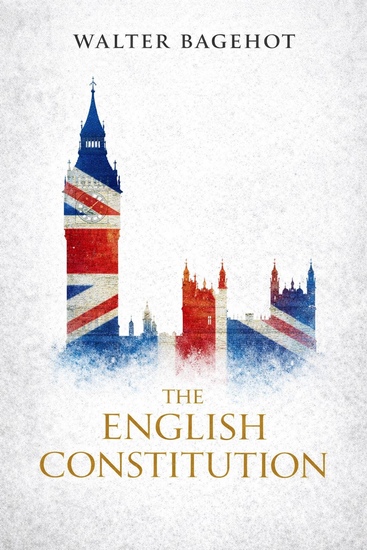
Originally published in 1867, The English Constitution by Walter Bagehot remains one of the most influential analyses of the British political system ever written.

Bagehot examines the functioning of the United Kingdom's constitutional monarchy, distinguishing between the "dignified" and "efficient" parts of government. With clarity and precision, he explains the roles of the Crown, Parliament, the Cabinet, and the House of Commons in shaping modern democracy.

Essential reading for students of political science, constitutional law, and British history, this enduring classic offers profound insight into parliamentary government and the evolution of democratic institutions.

A foundational work of constitutional theory and political analysis.
Disponibile da: 12/02/2026.
Lunghezza di stampa: 350 pagine.

Altri libri che potrebbero interessarti

  • Why Governments Get It Wrong - And How They Can Get It Right - cover

    Why Governments Get It Wrong -...

    Dennis C. Grube

    • 0
    • 0
    • 0
    'This humane, accessible and lucid work will enlighten any voter, and remind any would-be – or currently serving – politician of the pitfalls to avoid' - TLSBarely a week goes by without another government U-turn and with the cost of living crisis and rising mortgage rates we really need those in charge to get it right. In this timely book Cambridge Professor Dennis C. Grube explores the pitfalls, failures and successes of those in power around the world.'A must-read' - Sebastian Payne'Convincing' - David Lammy MPWe live in an era when we really need governments to be effective – the economy, our health and the future of the planet are at stake – but so often they can seem clueless, and their decisions leave us confused. With insight and wit, Grube explains how governments can improve their decision-making and by examining fascinating case studies he highlights the key factors that make for effective government. With the stakes higher than ever before, this original and important book is an essential read for any concerned citizen who wants to understand why governments make the wrong decisions and, crucially, what can be done about it.‘Highly original and very entertaining' - Gavin Esler'There is a real gap for this book' - Isabel Hardman
    Mostra libro
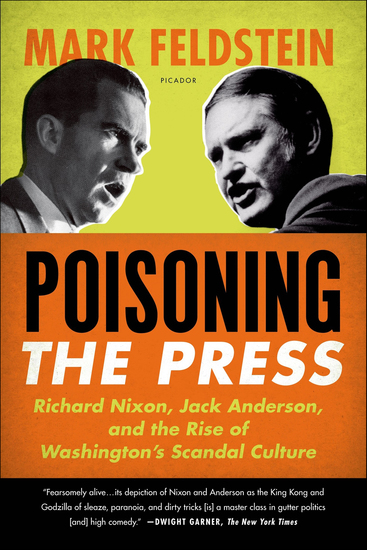
  • Poisoning the Press - Richard Nixon Jack Anderson and the Rise of Washington's Scandal Culture - cover

    Poisoning the Press - Richard...

    Mark Feldstein

    • 0
    • 0
    • 0
    It is March 1972, and the Nixon White House wants Jack Anderson dead. The syndicated columnist Jack Anderson, the most famous and feared investigative reporter in the nation, has exposed yet another of the President's dirty secrets. Nixon's operatives are ordered to "stop Anderson at all costs"—permanently. Across the street from the White House, they huddle in a hotel basement to conspire. Should they try "Aspirin Roulette" and break into Anderson's home to plant a poisoned pill in one of his medicine bottles? Could they smear LSD on the journalist's steering wheel, so that he would absorb it through his skin, lose control of his car, and crash? Or stage a routine-looking mugging, making Anderson appear to be one more fatal victim of Washington's notorious street crime?Poisoning the Press: Richard Nixon, Jack Anderson, and the Rise of Washington's Scandal Culture recounts not only the disturbing story of an unprecedented White House conspiracy to assassinate a journalist, but also the larger tale of the bitter quarter-century battle between the postwar era's most embattled politician and its most reviled newsman. The struggle between Nixon and Anderson included bribery, blackmail, forgery, spying, and burglary as well as the White House murder plot. Their vendetta symbolized and accelerated the growing conflict between the government and the press, a clash that would long outlive both men.Mark Feldstein traces the arc of this confrontation between a vindictive president and a flamboyant, crusading muckraker who rifled through garbage and swiped classified papers in pursuit of his prey—stoking the paranoia in Nixon that would ultimately lead to his ruin. The White House plot to poison Anderson, Feldstein argues, is a metaphor for the poisoned political atmosphere that would follow, and the toxic sensationalism that contaminates contemporary media discourse. Melding history and biography, Poisoning the Press unearths significant new information from more than two hundred interviews and thousands of declassified documents and tapes. This is a chronicle of political intrigue and the true price of power for politicians and journalists alike. The result—Washington's modern scandal culture—was Richard Nixon's ultimate revenge.
    Mostra libro
  • Logistics in Transition - Exploring Geopolitical Economic and Technological Trends - cover

    Logistics in Transition -...

    Carlo Secchi, Alessandro Gili

    • 0
    • 0
    • 0
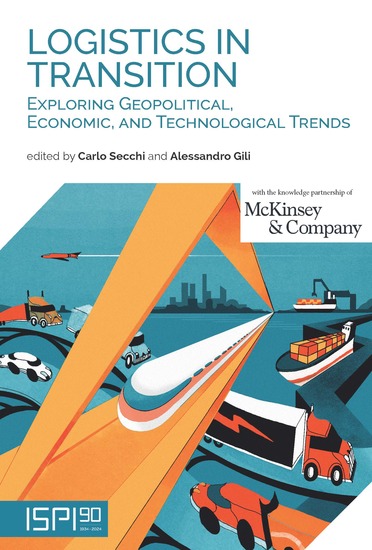
    International cooperation is essential for fostering global connectivity and building resilient logistics systems. Geopolitical shifts and climate change present significant challenges that could disrupt the efficient operation of these systems. In the face of global instability, diversification and redundancy in transportation systems and modes are vital, with supply security forming the backbone of the global economy's smooth functioning.
    How can the resilience of value chains be bolstered amidst geopolitical pressures while navigating these dual transitions? How can logistics adapt to and capitalize on the new wave of potentially protectionist industrial policies? What strategies can be employed to mitigate risks, particularly for Europe, Italy, and the businesses involved?
    Mostra libro
  • Where Tyranny Begins - The Justice Department the FBI and the War on Democracy - cover

    Where Tyranny Begins - The...

    David Rohde

    • 0
    • 0
    • 0
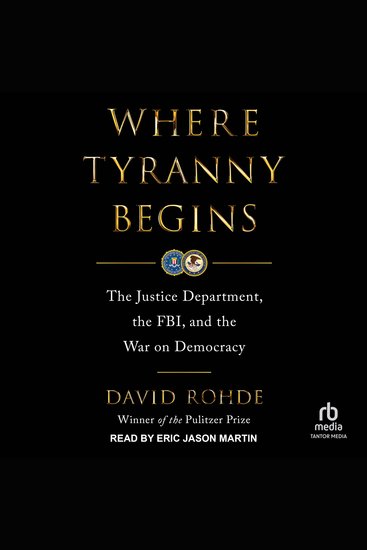
    Over the course of his presidency, Donald Trump intimidated, silenced, and bent to his will Justice Department and FBI officials. He sowed public doubt in both agencies so successfully that when he tried to overturn the results of the 2020 election, he paid little political cost and, despite an unprecedented array of criminal indictments, easily won the Republican nomination for the 2024 presidential election. 


    In Where Tyranny Begins, Pulitzer Prize–winning journalist David Rohde investigates the strategies Trump systematically used to turn the country's two most powerful law-enforcement agencies into his personal political weapons. Rohde also reveals how, during the Biden years, Justice Department non-partisan 1970s norms that Attorney General Merrick Garland reinforced inadvertently helped Trump, and could fail to deliver a trial and legal accountability by Election Day 2024. 


    Where Tyranny Begins exposes how ill-suited both the DOJ and FBI are to serve as checks on abuses of presidential power. A round of historic reforms equivalent to the post-Watergate reforms that stabilized American democracy in the 1970s are immediately needed. A five-word warning coined by the English philosopher John Locke in 1689 captures the stakes in 2024: "Where-ever law ends, tyranny begins."
    Mostra libro
  • Reluctant Conquest - American Wealth Power and Science in the Arctic - cover

    Reluctant Conquest - American...

    Kathryn C. Lavelle

    • 0
    • 0
    • 0
    What drives American foreign relations in the Arctic? It is difficult to give a unified answer to this question because most histories of the region are divided between the Atlantic and Pacific coasts, Asian and European strategic interests, or federal government and Indigenous peoples' concerns, making it difficult to understand the connections among the environmental challenges, scientific understandings, strategic calculations, and governance relationships. Most Americans do not think of their country as an Arctic power, yet it is a region where the United States has had important ties throughout its history.In this sweeping study, from the founding of the country through the acquisition of Alaska to the present, Kathryn C. Lavelle considers American relations across the circumpolar North, incorporating discussions of economics, national security, and science that are conventionally separated. Lavelle argues that it is impossible to understand United States policy without a knowledge of American political development and of how scientific understandings have grown alongside studies of climate and other environmental issues. This history has important implications for future American policy regarding traditional national security and political economy, in addition to climate change and environmental cooperation.
    Mostra libro
  • American Epic - Reading the US Constitution - cover

    American Epic - Reading the US...

    Garrett Epps

    • 0
    • 0
    • 0
    In 1987, E. L. Doctorow celebrated the Constitution's bicentennial by reading it. "It is five thousand words long but reads like fifty thousand," he said. Distinguished legal scholar Garrett Epps disagrees. It's about 7,500 words. And Doctorow "missed a good deal of high rhetoric, many literary tropes, and even a trace of, if not wit, at least irony," he writes. 


    In American Epic, Epps takes us through a complete reading of the Constitution to achieve an appreciation of its power and a holistic understanding of what it says. In this book he seeks not to provide a definitive interpretation, but to listen to the language and ponder its meaning. He draws on four modes of reading: scriptural, legal, lyric, and epic. The Constitution's first three words, for example, sound spiritual—but Epps finds them to be more aspirational than prayer-like. He turns the Second Amendment into a poem to illuminate its ambiguity. He notices oddities and omissions. The Constitution lays out rules for presidential appointment of officers, for example, but not removal. Should the Senate approve each firing? Can it withdraw its "advice and consent" and force a resignation? And he challenges himself, as seen in his surprising discussion of the Defense of Marriage Act (DOMA) in light of Article 4, which orders states to give "full faith and credit" to the acts of other states.
    Mostra libro