Rejoignez-nous pour un voyage dans le monde des livres!
Ajouter ce livre à l'électronique
Grey
Ecrivez un nouveau commentaire Default profile 50px
Grey
Abonnez-vous pour lire le livre complet ou lisez les premières pages gratuitement!
All characters reduced
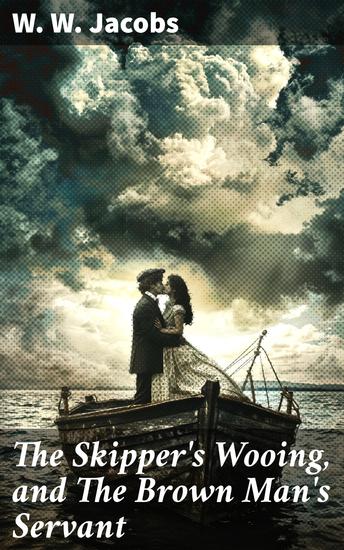
The Skipper's Wooing and The Brown Man's Servant - Love Class and Society in 19th Century England: Tales of Working-class Struggles and Triumphs - cover

The Skipper's Wooing and The Brown Man's Servant - Love Class and Society in 19th Century England: Tales of Working-class Struggles and Triumphs

W. W. Jacobs

Maison d'édition: Good Press

  • 0
  • 0
  • 0

Synopsis

In "The Skipper's Wooing, and The Brown Man's Servant," W. W. Jacobs masterfully weaves a tapestry of maritime life and the complexities of human relationships set against the backdrop of the late Victorian era. The book artfully combines elements of humor and pathos, illustrating the challenges faced by seafaring men as they negotiate love and loyalty amidst the unpredictable whims of the sea. Jacobs employs a rich colloquial style, giving voice to his characters through vibrant dialects, which enhances the authenticity of their experiences. This collection not only showcases Jacobs's storytelling prowess but also serves as a reflection on class, culture, and the evolving nature of British society during a time of colonial expansion and change. W. W. Jacobs, an English author renowned for his short stories and novels, often drew inspiration from his own experiences in the maritime industry. Born in 1863 in Wapping, London, Jacobs's exposure to seafaring culture profoundly influenced his writing. His familiarity with sailors and life on the Thames informs the characters and settings in this particular collection, allowing him to explore themes of human folly and resilience with both humor and a nuanced understanding of life'Äôs struggles. I highly recommend "The Skipper's Wooing, and The Brown Man's Servant" to anyone interested in exploring the interplay between humor and human emotion through the lens of early 20th-century maritime life. Jacobs's keen observations and engaging narrative style make this book a delightful read, perfect for those who appreciate character-driven stories laced with wit and wisdom.
Disponible depuis: 22/08/2023.
Longueur d'impression: 103 pages.

D'autres livres qui pourraient vous intéresser

  • Rappaccini’s Daughter and Other Stories - cover

    Rappaccini’s Daughter and Other...

    Nathaniel Hawthorne

    • 0
    • 0
    • 0
    Step into a world of mystery, intrigue, and dark enchantment with this captivating collection by Nathaniel Hawthorne. Immerse yourself in timeless tales that have inspired everything from songs to Batman villains. Let me entice you with the allure of each story: 
     
    “The Great Carbuncle”: Venture into the wilderness in search of a legendary gem that glows with otherworldly brilliance. Will its discovery bring fortune or peril? 
     
    “The Great Stone Face”: Uncover the enigma of a colossal rock formation that eerily resembles a noble countenance. Is it a mere geological wonder, or does it hold a deeper secret? 
     
    “Dr. Heidegger’s Experiment”: Join the eccentric Dr. Heidegger as he conducts a peculiar scientific trial. Aging, rejuvenation, and moral dilemmas collide in this thought-provoking narrative. 
     
    “Rappaccini’s Daughter”: Enter the lush and locked gardens of Dr. Rappaccini, where beauty and danger intertwine. Beatrice, his captivating daughter, is both a blessing and a curse. Her fate is entwined with forbidden knowledge and forbidden love.
    Voir livre
  • Burning Daylight (Part 1) - cover

    Burning Daylight (Part 1)

    Jack London

    • 0
    • 0
    • 0
    Burning Daylight, Part 1:
    Burning Daylight takes place in the Yukon Territory in 1893. The main character, Elam Harnish, nicknamed "Burning Daylight" was the most successful entrepreneur of the Alaskan Gold Rush. The story of the main character was partially based upon the life of Oakland entrepreneur "Borax" Smith. Bringing his fortunes to the States he is cheated out of it by a crowd of money kings, and recovers it only at the muzzle of his gun. Embarking on a new life in California, he makes another fortune by underhanded means . . . only to find his corrupt life suddenly turned around by the love of a woman.
    Voir livre
  • Fly-Leaf in a Life A (Unabridged) - cover

    Fly-Leaf in a Life A (Unabridged)

    Charles Dickens

    • 0
    • 0
    • 0
    Charles Dickens was a writer and social critic who created some of the world's best-known fictional characters and is regarded as the greatest novelist of the Victorian era. His works enjoyed unprecedented popularity during his lifetime, and by the twentieth century critics and scholars had recognised him as a literary genius. His novels and short stories enjoy lasting popularity.
    A FLY-LEAF IN A LIFE: Once upon a time (no matter when), I was engaged in a pursuit (no matter what), which could be transacted by myself alone; in which I could have no help; which imposed a constant strain on the attention, memory, observation, and physical powers.
    Voir livre
  • Lord Peter Wimsey Collection The: Books 1-5 - cover

    Lord Peter Wimsey Collection...

    Dorothy L. Sayers

    • 0
    • 0
    • 0
    Explore the brilliant and captivating mysteries of Lord Peter Wimsey, one of literature's most iconic detectives, in this collection of Dorothy L. Sayers' first five novels. With wit, intellect, and a flair for solving crimes, Wimsey navigates through high society and dark secrets in these classic tales.Included in this Collection:Book 1 - Whose Body? Track 1-13Lord Peter Wimsey investigates the appearance of a naked body in a bathtub, while a prominent financier goes missing. With his sharp mind and keen observational skills, Wimsey untangles a web of deception to uncover the truth behind these perplexing events.Book 2 - Clouds of Witness. Track 14-33When Lord Peter's brother, the Duke of Denver, is accused of murder, Wimsey steps in to prove his innocence. Set against the backdrop of English aristocracy, this case delves into family secrets and unexpected twists.Book 3 - Unnatural Death. Track 34-57A seemingly natural death sparks Wimsey's suspicion, leading to an investigation of greed and foul play. With sharp deductions, Wimsey exposes the dark motives behind a quiet murder in a rural setting.Book 4- Lord Peter Views the Body. Track 58-73A collection of short stories featuring Lord Peter Wimsey solving a variety of intricate cases, from missing heirlooms to puzzling murders. Each tale showcases Wimsey's wit and ingenuity.Book 5 - The Unpleasantness at the Bellona Club. Track 74-97Lord Peter is called upon to investigate the mysterious death of General Fentiman at his club. As Wimsey uncovers long-hidden family rivalries, the case turns into a complex and thrilling pursuit of justice.
    Voir livre
  • Buddenbrooks - The Decline of a Family - cover

    Buddenbrooks - The Decline of a...

    Thomas Mann

    • 0
    • 0
    • 0
    Buddenbrooks is a 1901 novel by Thomas Mann, chronicling the decline of a wealthy north German merchant family over the course of four generations, incidentally portraying the manner of life and mores of the Hanseatic bourgeoisie in the years from 1835 to 1877. Mann drew deeply from the history of his own family, the Mann family of Lübeck, and their milieu.
    It was Mann's first novel, published when he was twenty-six years old. With the publication of the second edition in 1903, Buddenbrooks became a major literary success. Its English translation by Helen Tracy Lowe-Porter was published in 1924. The work led to a Nobel Prize in Literature for Mann in 1929; although the Nobel award generally recognises an author's body of work, the Swedish Academy's citation for Mann identified "his great novel Buddenbrooks" as the principal reason for his prize.
    Mann began writing the book in October 1897, when he was twenty-two years old. The novel was completed three years later, in July 1900, and published in 1901. His objective was to write a novel on the conflicts between businessman and artist's worlds, presented as a family saga, continuing in the realist tradition of such 19th-century works as Stendhal's Le Rouge et le Noir (1830; The Red and the Black). Buddenbrooks is his most enduringly popular novel, especially in Germany, where it has been cherished for its intimate portrait of 19th-century German bourgeois life.
    Before Buddenbrooks Mann had written only short stories, which had been collected under the title Der kleine Herr Friedemann (1898, Little Herr Friedemann). They portrayed spiritually challenged figures who struggle to find happiness in (or at the margins of) bourgeois society. Similar themes appear in the Buddenbrooks, but in a fully developed style that already reflects the mastery of narrative, subtle irony of tone, and rich character descriptions of Mann's mature fiction.
    The exploration of decadence in the novel reflects the influence of Schopenhauer's The World as Will and Representation (1818, 1844) on the young Mann. The Buddenbrooks of successive generations experience a gradual decline of their finances and family ideals, finding happiness increasingly elusive as values change and old hierarchies are challenged by Germany's rapid industrialisation. The characters who subordinate their personal happiness to the welfare of the family firm encounter reverses, as do those who do not.
    The city where the Buddenbrooks live shares so many street names and other details with Mann's native town of Lübeck that the identification is unmistakable, although the novel makes no mention of the name. The young author was condemned for writing a scandalous, defamatory roman à clef about (supposedly) recognisable personages. Mann defended the right of a writer to use material from his own experience.
    The years covered in the novel were marked by major political and military developments that reshaped Germany, such as the Revolutions of 1848, the Austro-Prussian War, and the establishment of the German Empire. Historic events nevertheless generally remain in the background, having no direct bearing on the lives of the characters.
    Voir livre
  • A Thousand Deaths - From their pens to your ears genius in every story - cover

    A Thousand Deaths - From their...

    Jack London

    • 0
    • 0
    • 0
    John Griffith Chaney was born on January 12th, 1876 in San Francisco.   
    His father, William Chaney, was living with Flora Wellman when she became pregnant.  Chaney insisted she have an abortion.  Flora's response was to turn a gun on herself.  Although her wounds were not severe the trauma made her temporarily deranged. 
    In late 1876 his mother married John London and the young child was brought to live with them as they moved around the Bay area, eventually settling in Oakland where now, calling himself Jack, he completed grade school. 
    Jack worked hard at several jobs, sometimes 12-18 hours a day, but his dream was university.  He studied hard and borrowed the money to enrol in the summer of 1896 at the University of California in Berkeley. 
    In 1897, at 21, Jack searched out newspaper accounts of his mother's suicide attempt and for the name of his biological father. He wrote to Chaney, then living in Chicago, who claimed he could not be Jack’s father because he was impotent and casually asserted that London's mother had relations with other men.  Jack, devastated by the response, quit Berkeley and went to the Klondike. Other accounts suggest that his dire finances presented Jack with the excuse he needed to leave. 
    In the Klondike Jack began to gather material for his writing but also accumulated many health problems, including scurvy, which together with hip and leg problems he would carry for the rest of his life. 
    During the late 1890's Jack was regularly publishing short stories and by the turn of the century full blown novels. 
    By 1904 Jack had married, fathered two children and was now in the process of divorcing.  A stint as a reporter on the Russo-Japanese war of 1904 was equal amounts trouble and experience. But that experience was always put to good use in a continuing and remarkable output of work. 
    In 1905 he married Charmian Kittredge who at last was a soul and companion who brought him some semblance of peace despite his advancing alcoholism and his incurable wanderlust. 
    Twelve years later Jack had amassed both wealth and a literary reputation through such classics as ‘The Call of the Wild’, ‘White Fang’ and many others. He had a reputation as a social activist and was a tireless friend of the workers.   
    Jack London died suffering from dysentery, late-stage alcoholism and uremia, aged only 40, on November 22nd 1916 at his property in Glen Elen in California.
    Voir livre