


Bab Ballads and Savoy Songs
W. S. Gilbert
Maison d'édition: Project Gutenberg
Synopsis
Veuillez nous excuser, nous ne disposons pas de synopsis de ce livre. Entrez le lire à 24symbols.com
Disponible depuis: 15/03/2005.

Maison d'édition: Project Gutenberg
Veuillez nous excuser, nous ne disposons pas de synopsis de ce livre. Entrez le lire à 24symbols.com

This collection of short stories and poems ranges from mysterious fires that spring up from the earth to ghostly spirits roaming in a long-forgotten home to true love that is found and lost way too soon.
There are tales of gods who have gone mad and those who have forgotten what it feels like to create and love with empathy. There are encounters that seem like normal everyday situations, but they are anything but normal. Dispersed throughout are poems that tie together the ideas of worlds within worlds and galaxies within a grain of sand.
Voir livre
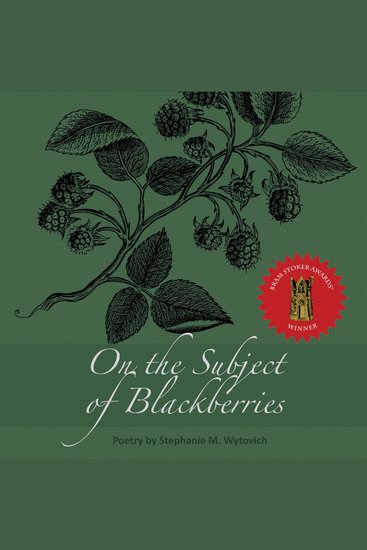
Winner of the Bram Stoker Award for Superior Achievement in Poetry
Welcome to the garden. Here we poison our fruits, pierce ourselves with thorns, and transform under the light of the full moon. Mad and unhinged, we fall through rabbit holes, walk willingly into fairy rings, and dance in the song of witchcraft, two snakes around our ankles, the juice of berries on our tongues.
Inspired by Shirley Jackson’s We Have Always Lived in the Castle, these poems are meditations on female rage, postpartum depression, compulsion, and intrusive thoughts. They pull from periods of sleep deprivation, soul exhaustion, and nightmarish delusions, and each is left untitled, a nod to the stream-of-conscious mind of a new mother.
Using found poetry and under the influence of bibliomancy, Wytovich harnesses the occult power of her imagery and words and aligns it with a new, more vulnerable, darkness. These pieces are not only visions of the madwoman in the attic, but ghostly visitations that explore the raw mental torture women sometimes experience after giving birth.
This collection heals as much as it scars, and is an honest look at how trauma seeps into the soil of our bodies. Her poems are imagined horrors, fictional fears, and all the unspoken murmurs of a mind lost between reality and dream. What she leaves in her wake is nothing short of horror—the children lost, the garden dead, the women feral, ready to pounce.
Voir livre

‘A dime a dozen’ as known in America, is perhaps equal to the English ‘cheap as chips’ but whatever the lingua franca of your choice in this series we hereby submit ‘A Rhyme a Dozen’ as 12 poems on many given subjects that are a well-rounded gathering, maybe even an essential guide, from the knowing pens of classic poets and their beautifully spoken verse to the comfort of your ears.

1 - A Rhyme A Dozen - 12 Poems, 12 Poets, 1 Topic - Travel - An Introduction
2 - Departure by Edna St Vincent Millay
3 - I Go on Dreaming of Paths by Antonio Machado
4 - Travel by Robert Louis Stevenson
5 - I Travell'd Among Unknown Men by William Wordsworth
6 - In the Train and At Versailles by Dante Gabriel Rossetti
7 - The Night Journey by Rupert Brooke
8 - The Golden Journey to Samarkand by James Elroy Flecker
9 - Mandalay by Rudyard Kipling
10 - I Write of That Journey by Mirabai
11 - Sailing Beyond Seas by Jean Ingelow
12 - Song of the Open Road by Walt Whitman
13 - The Journey by Tagore
Voir livre
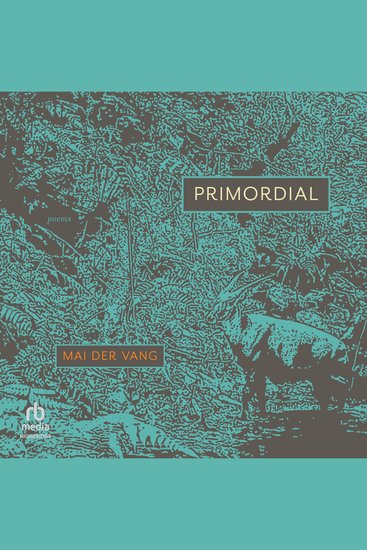
Mai Der Vang's poetry—lyrically insistent and visually compelling—constitutes a groundbreaking investigation into the collective trauma and resilience experienced by Hmong people and communities, the ongoing cultural and environmental repercussions of the war in Vietnam, the lives of refugees afterward, and the postmemory carried by their descendants. Primordial is a crucial turn to the ecological and generational impact of violence, a powerful and rousing meditation on climate, origin, and fate.


With profound and attentive care, Vang addresses the plight of the saola, an extremely rare and critically endangered animal native to the Annamite Mountains in Laos and Vietnam. Remarkably, the saola has only been known to the outside world since 1992, and sightings are so rare that it has now been more than a decade since the last known image of one was captured in a camera trap photo in 2013.


Primordial examines the saola's relationship to Hmong refugee identity and cosmology and a shared sense of exile, precarity, privacy, and survival. Can a war-torn landscape and memory provide sanctuary, and what are the consequences for our climate, our origins, our ability to belong to a homeland? Written during a difficult pregnancy and postpartum period, Vang's poems are urgent stays against extinction.
Voir livre

Wear Me.
A poem about relationships that are tanking, reaching burnout, esp. caused by War The need to resolve and trust to rekindle for longevity.
Keep bruising with life together, rather than the inevitable breakup.
***** Please leave your Review/feedback, many thanks. *****
Instagram: wild.poetry.webs / wild_poetrys
TikTok: @wild_poetrys
Website: www.wild-poetry.com
Facebook: https://www.facebook.com/New.Poets.Corner
WOW https://www.facebook.com/wow.fact
Voir livre

Alexander Woollcott called Lewis Carroll, author of Alice's Adventures in Wonderland, "the man who wrote the most enchanting nonsense in the English language." Besides his many stories, Lewis Carroll wrote nonsensical poems. Eleven of his poems appear here, the most famous of which being Jabberwocky, The Walrus and the Carpenter, and The Hunting of the Snark. Narrator Griffin Rogers recorded Jabberwocky as a Christmas present for his son before spending the next several years recording additional nonsense whenever he was able to find an unlocked window and sneak into a recording studio. (If that sounds like a lot of nonsense to you, you will love this audiobook - and so will your children.)Voir livre





