Rejoignez-nous pour un voyage dans le monde des livres!
Ajouter ce livre à l'électronique
Grey
Ecrivez un nouveau commentaire Default profile 50px
Grey
Abonnez-vous pour lire le livre complet ou lisez les premières pages gratuitement!
All characters reduced
The Status of the Jews in Egypt - The Fifth Arthur Davis Memorial Lecture - cover

The Status of the Jews in Egypt - The Fifth Arthur Davis Memorial Lecture

W. M. Flinders Petrie

Maison d'édition: DigiCat

  • 0
  • 0
  • 0

Synopsis

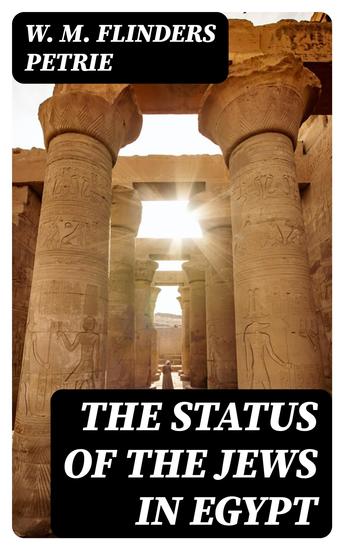
In "The Status of the Jews in Egypt," W. M. Flinders Petrie meticulously examines the historical, social, and economic circumstances of Jewish communities in ancient Egypt. With a keen eye for detail, Petrie employs a blend of archaeological evidence, textual analysis, and historical context, positioning his work within the broader framework of Jewish diaspora studies. His literary style is characterized by clarity and rigor, reflecting a commitment to scholarly integrity while engaging with previous academic discourses on the subject. Through comprehensive analysis, Petrie sheds light on the complexities of cultural identity and integration faced by Jews in a diverse and often contentious society. W. M. Flinders Petrie, a pioneering archaeologist and Egyptologist, devoted his life to unearthing the rich tapestry of ancient civilizations. His extensive travels and excavations throughout Egypt provided him with unique insights into the intercultural dynamics of the time. Petrie's deep engagement with the artifacts and texts related to Jewish existence and influence in Egypt is underpinned by his commitment to understanding how ancient peoples navigated their identities and social statuses. This essential read is highly recommended for scholars, historians, and general readers interested in Jewish history, ancient Egypt, and the intricate web of cultural expressions. Petrie's thorough and thoughtful approach not only expands existing knowledge but also invites critical reflection on the complex interrelations of diverse communities throughout history.
Disponible depuis: 16/09/2022.
Longueur d'impression: 17 pages.

D'autres livres qui pourraient vous intéresser

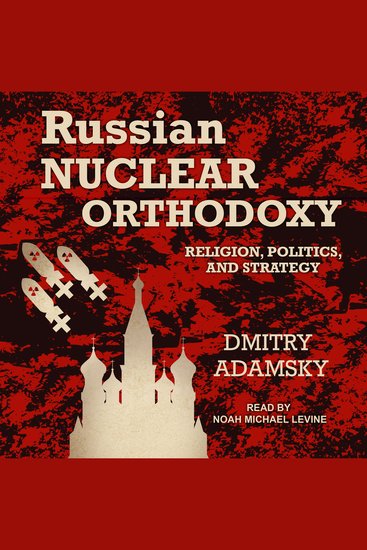
  • Russian Nuclear Orthodoxy - Religion Politics and Strategy - cover

    Russian Nuclear Orthodoxy -...

    Dmitry Adamsky

    • 0
    • 0
    • 0
    A nuclear priesthood has arisen in Russia. From portable churches to the consecration of weapons systems, the Russian Orthodox Church has been integrated into every facet of the armed forces to become a vital part of Russian national security, politics, and identity. This extraordinary intertwining of church and military is nowhere more visible than in the nuclear weapons community, where the priesthood has penetrated all levels of command and the Church has positioned itself as a guardian of the state's nuclear potential. Russian Nuclear Orthodoxy considers how, since the Soviet collapse in 1991, the Church has worked its way into the nuclear forces, the most significant wing of one of the world's most powerful military organizations. 


    Dmitry Adamsky describes how the Orthodox faith has merged with Russian national identity as the Church continues to expand its influence on foreign and domestic politics. The Church both legitimizes and influences Moscow's assertive national security strategy in the twenty-first century. This book sheds light on the role of faith in modern militaries and highlights the implications of this phenomenon for international security. Ultimately, Russian Nuclear Orthodoxy interrogates the implications of the confluence of religion and security for other members of the nuclear club, beyond Russia.
    Voir livre
  • Public Opinion - cover

    Public Opinion

    Walter Lippmann

    • 0
    • 0
    • 0
    Walter Lippmann's Public Opinion (1922) argues humans can't fully grasp complex issues. We rely on simplified ideas (stereotypes) and media portrayals ("pseudo-environments") to form opinions. He suggests experts, not the public, should guide society due to these limitations. Though controversial, it remains a crucial text in understanding public opinion, media influence, and the challenges of democracy.
    Voir livre
  • Mysticism and Logic - cover

    Mysticism and Logic

    Bertrand Russell

    • 0
    • 0
    • 0
    "Mysticism and Logic" is a collection of essays by Bertrand Russell that explores the relationship between mysticism and logic. Russell examines the nature of religious experience, arguing that mystical experiences are not beyond the reach of rational inquiry. He also discusses the nature of language and how it shapes our understanding of the world. The book is divided into two parts, with the first part focusing on mysticism and the second part on logic. Russell's writing is clear and accessible, making complex philosophical ideas easy to understand for readers. Overall, "Mysticism and Logic" is an engaging exploration of the intersection of two seemingly disparate fields of study. Read in English, unabridged.
    Voir livre
  • Egyptian Mythology and Religion - Gods Legends and Rituals - cover

    Egyptian Mythology and Religion...

    Omar Khalil

    • 0
    • 0
    • 0
    Egyptian mythology is a vast and intricate belief system that shaped the religious and cultural identity of ancient Egypt for thousands of years. Rooted in a deep connection with nature, the cosmos, and the divine, these myths provided explanations for the creation of the world, the role of gods, and the afterlife. Unlike other mythologies, Egyptian beliefs were not static; they evolved over time, adapting to political changes and regional influences while maintaining core spiritual principles. 
    The origins of Egyptian mythology can be traced back to the early dynastic period, though many of its concepts likely predate written history. Ancient Egyptians believed that the universe emerged from a primordial chaos, giving rise to powerful deities who shaped the world. Myths were recorded on temple walls, tombs, and papyrus scrolls, serving both religious and educational purposes. These stories were not merely symbolic; they were deeply woven into daily life, influencing laws, traditions, and the duties of rulers. 
    The geography of Egypt played a crucial role in shaping its mythology. The Nile River, essential for agriculture and survival, became a central symbol of life and renewal, often associated with gods like Osiris and Hapi. The vast deserts surrounding Egypt were seen as chaotic and dangerous, embodying forces of disorder such as the god Set. The sun’s daily journey across the sky was one of the most significant celestial events, leading to the worship of Ra, the sun god, as a dominant figure in Egyptian religious thought.
    Voir livre
  • Summary of Bret Baier and Catherine Whitney’s Three Days in Moscow - cover

    Summary of Bret Baier and...

    Falcon Press

    • 0
    • 0
    • 0
    Buy now to get the main key ideas from Bret Baier and Catherine Whitney’s Three Days in Moscow 
      
    In Three Days in Moscow (2018), Bret Baier of Fox News and his co-writer Catherine Whitney tell a story of patriotism, courage, and ambition, about a man who went to the full extent for the sake of his nation, without ever compromising democracy. 
    This political biography focuses on President Ronald Reagan’s agenda during his final years in office, before the fall of the Soviet Union. It chronicles major stages that marked his two-term presidency, especially his visit to the USSR for the Moscow summit with Soviet President Mikhail Gorbachev. Both leaders showed how long-term enemies could break through historical grievances for the common interest of their nations, as a new, post-Soviet era finally started to unfold. Reagan felt he only had three days to make his appeal and convince the Russian people of the importance of democracy; he had been awaiting this moment for the majority of his life.
    Voir livre
  • Popular Works Volume 1 - The Vocation of the Scholar The Nature of the Scholar and The Vocation of Man - cover

    Popular Works Volume 1 - The...

    Johann Gottleib Fitche

    • 0
    • 0
    • 0
    History placed Johann Gottlieb Fichte (1762-1814) between two giants of German philosophy – Immanuel Kant (1724-1804) and Georg Hegel (1770-1831) – so it was not surprising that his light may have dimmed as the 19th century developed. It didn’t help that he also was regarded as one of the proponents of German nationalism, a legacy that spilled over into the darker times of the 20th century.  
    However, his singular character and his role in developing, (following Kant), transcendental idealism has resulted in a re-evaluation in recent years. His views on ethics, a practical approach towards the matter of free will, and the value he placed on culture, the intellect and the self, informed his output. 
    The three works in this collection, Volume 1, offer a steady insight into Fichte’s thought and personality. Many of his key works emerged in the form of lectures rather than books, and as such are eminently accessible: Fichte was certainly a popular speaker. When at the University of Jena (1794-1799) he drew large audiences for the five lectures which comprise The Vocation of the Scholar (1794). The main principles of the Enlightenment are examined here, in terms of culture, education, morality. As he writes in his Preface: ‘That the Ideal cannot be manifested in the Actual world, we know as well as they do, perhaps better. All we maintain is, that the Actual must be judged by the Ideal, and modified in accordance with it by those who feel themselves capable of such a task.’ 
    In 1799, he was dismissed from his post at Jena following accusations of atheism, and the last two works in this collection appeared while he was at the University of Berlin. The Nature of the Scholar and its Manifestations dates from 1806 and comprises 10 lectures which develop ideas initially presented in The Vocation of the Scholar. The final work here, The Vocation of Man, appeared in book form rather than as a series of lectures and is regarded as one of his most important. In it, Fichte sets out to examine ‘the true purpose of man’.  
    It is divided into three sections, Doubt, Knowledge, Faith. He addresses issues of free will and cause and effect, natural existence and perceived reality; and, finally, the ‘guiding’ matter of faith and God.
    Voir livre