Rejoignez-nous pour un voyage dans le monde des livres!
Ajouter ce livre à l'électronique
Grey
Ecrivez un nouveau commentaire Default profile 50px
Grey
Abonnez-vous pour lire le livre complet ou lisez les premières pages gratuitement!
All characters reduced
The History of McLean County Illinois - cover

The History of McLean County Illinois

W. LeBaron Jr.

Maison d'édition: DigiCat

  • 0
  • 0
  • 0

Synopsis

In "The History of McLean County, Illinois," W. LeBaron Jr. meticulously chronicles the rich tapestry of life in this Midwestern region. Employing a narrative style that balances rigorous historical analysis with engaging storytelling, LeBaron delves into the socio-economic, political, and cultural evolutions that have shaped McLean County since its inception. Drawing upon a wealth of primary sources and oral histories, the book not only documents significant events but also illuminates the everyday lives of its residents, providing a holistic view of the county's development throughout the years. LeBaron's scholarly approach situates McLean County's history within broader national trends, making it a valuable resource for understanding local implications of wider historical movements. W. LeBaron Jr., an esteemed historian and longtime resident of Illinois, brings both personal investment and academic rigor to his work. His deep-rooted connections to the area, coupled with his extensive background in local history, inform his nuanced perspectives on the evolution of communities within McLean County. LeBaron's commitment to preserving the narratives of the past is evident, as he weaves in the voices of ordinary citizens alongside prominent figures shaping the region's identity. This book is an essential read for historians, students, and anyone interested in the intricate narratives of American local history. LeBaron's insightful reflections and comprehensive research offer a foundational understanding of McLean County and its role in the broader American narrative, making it indispensable for both casual readers and specialists alike.
Disponible depuis: 28/11/2022.
Longueur d'impression: 110 pages.

D'autres livres qui pourraient vous intéresser

  • FBI’s Most Controversial Operations The: The History of the Federal Bureau of Investigation’s Notorious Activities in the 20th Century - cover

    FBI’s Most Controversial...

    Editors Charles River

    • 0
    • 0
    • 0
    No single figure in 20th century American history inspires such opposing opinions as J. Edgar Hoover, the iconic first Director of the Federal Bureau of Investigation. In his time, he was arguably the most powerful non-elected figure in the federal government. Serving under eight presidents (and outliving two of them), he remains the longest-serving head of a major government office, and Hoover died as he began: a civil servant, having been appointed by the Attorney General and serving at the pleasure of the president. That said, no civil servant had ever accrued to themselves the power and public attention that Hoover did. 
    To many Americans in mid-20th century, Hoover seemed like a real American hero. In a country suffering from the Great Depression and the crime wave of the early 1930s, Hoover was the symbol of law and order as his “G-Men” used the newest in scientific crime solving methods to bring gangsters like John Dillinger, Pretty Boy Floyd, and Baby Face Nelson to justice. During World War II, the FBI helped protect a country at war from German and Japanese spies and saboteurs. In the 1950s, at the dawn of the Cold War, Americans saw the FBI leading the charge against Soviet spies and domestic communists who seemed to be undermining the institutions of the country. Many boys across the country wanted to be G-Men, helping Mr. Hoover ferret out anyone who would harm the United States. 
    Few things have colored Hoover’s reputation quite like COINTELPRO, which has become the FBI’s most notorious operation, one that still has lasting ramifications. From 1956-1971, the FBI waged a secret war in America through a series of projects against groups believed to be potentially subversive, including various people and organizations involved in women’s rights, civil rights, Native American rights, anti-war groups, and even groups that supported animal rights.
    Voir livre
  • Untangling Critical Race Theory - What Christians Need to Know and Why It Matters - cover

    Untangling Critical Race Theory...

    Ed Uszynski

    • 0
    • 0
    • 0
    What is Critical Race Theory? 


    It may be one of the most widely referenced issues of the day, but it's also one of the least understood. In its translation from the academic world to the general public, Critical Race Theory (CRT) has inaccurately become a catch-all term for anything related to race. But what does it actually mean, and how should Christians engage it? 


    Ed Uszynski—whose PhD in American culture studies navigated readings in Marxism, Critical Theory, and Critical Race Theory—carefully unpacks what critical race theorists seek to accomplish and what Christians can learn from them. Uszynski generously explores CRT's roots, context, and central tenets, revealing how its insights are used and distorted but also how they might benefit the church. With responsible answers to legitimate concerns, Uszynski goes beyond the surface to provide a reliable path of just discernment and cultural engagement.
    Voir livre
  • Bacon Shakespere and the Rosicrucians - cover

    Bacon Shakespere and the...

    Manly Palmer Hall

    • 0
    • 0
    • 0
    The present consideration of the Bacon--Shakspere--Rosicrucian controversy is undertaken not for the vain purpose of digging up dead men's bones but rather in the hope that a critical analysis will aid in the rediscovery of that knowledge lost to the world since the oracles were silenced. It was W. F. C. Wigston who called the Bard of Avon "phantom Captain Shakespeare, the Rosicrucian mask." This constitutes one of the most significant statements relating to the Bacon-Shakspere controversy.
    Voir livre
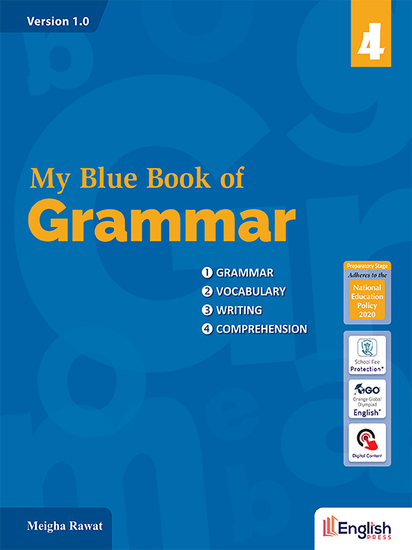
  • My Blue Book of Grammar for Class 4 - cover

    My Blue Book of Grammar for Class 4

    Meigha Rawat

    • 0
    • 0
    • 0
    A Grammar Series That Uses the Functional Approach
    
    KEY FEATURES 
    - Functional approach to grammar teaching, using exemplars to illustrate the usage before defining the structure and rules
    - Vocabulary taught through language-in-use to build the learners’ vocabulary through use rather than memorisation of rules
    - Contemporary topics to inculcate 21-century skills amongst learners
    - Use of literature to help learners understand how grammar is used in text
    - A comprehension section comprising texts from different genres so that learners may relate grammar to different types of works produced in English
    - Phonics in Grades 1 and 2 to teach the very basis of language
    - Uniquely stylised illustrations
    - Activities such as puzzles, crosswords, word grids and games to aid the facilitator in using the concept of ‘flipped classroom’
    - Periodic tests to help the learners self-assess the acquisition of concepts
    - Digital component to cater to a technology-driven classroom
    
    DESCRIPTION: 
    My Blue Book of Grammar is a course that has been conceptualized and designed keeping in mind the increasingly dynamic role of the English language in today’s world. Especially in our country, where English serves as the lingua franca, a grammar course has to offer not only an exposition of the pedagogy but also the exhibition of the utility of that pedagogy. The aim of a grammar series should be to encourage the development of competency amongst learners, even though their proficiency levels may vary. While the level of exposure to English of all learners may be different, a grammar series should aid in the development of a certain level of confidence amongst the learners, with the end result being that they are able to converse without hesitation in English. 
    
    WHAT WILL YOU LEARN
    - Understand grammar concepts
    - Learn how to use different vocabulary concepts taught through language-in-use 
    - Learn 21-century skills 
    - Develop deeper understanding of and appreciation for literature
    - Have clearer pronunciation through a better understanding of phonics
    
    WHO THIS BOOK IS FOR: 
    School students of Grades 4
    
    TABLE OF CONTENTS
    GRAMMAR
    1. Subject and Predicate 
    2. Gerunds 
    3. Subject–Verb Agreement 
    4. Pronouns
    5. Past Continuous Form
    6. Prepositions 
    7. Future Continuous Form 
    8. Adjectives
    9. Conjunctions 
    10. Adverbs of Frequency 
    11. Punctuations and Use of Capitals 
    Test Paper 1 
    VOCABULARY
    12. Alphabetising Using the Third Letter of the Word 
    13. Suffix: -able 
    14. Suffixes: Using -able and -ible
    15. Prefixes: pre- and mis- 
    16. The Difference between will and be going to 
    17. The Difference between must and have got to
    18. Noun–Verb Collocations 
    19. Onomatopoeia 
    Test Paper 2 
    WRITING
    20. Writing a Paragraph 
    21. Writing a Biography 
    22. Formal Letter Writing 
    23. Writing an Email 
    24. Writing a Personal Email 
    25. Writing a Thank-You Letter 
    Test Paper 3 
    COMPREHENSION
    26. Meeting Mr Holmes – It’s Elementary! 
    27. Playing Pilgrims 
    28. The Ink and the Art 
    29. The Velveteen Rabbit 
    Orange Global Olympiad – English Sample Paper
    Voir livre
  • Discourse on Metaphysics - Unabridged - cover

    Discourse on Metaphysics -...

    Gottfried Wilhelm Leibniz

    • 0
    • 0
    • 0
    Written in 1686 by the celebrated German polymath Gottfried Wilhelm von Leibniz, Discourse on Metaphysics is a short, early work in which Leibniz explains how the Earth, which was created by God (an undeniably perfect being), is therefore blessed with the same purity and perfection as its creator.  Leibniz was one of the most important philosophers of the Enlightenment era and was a contemporary of Isaac Newton. But today, Leibniz's best remembered for his work in developing differential and integral calculus. A renowned rationalist - ranked with Rene Descartes and Baruch Spinoza - Leibniz himself made extraordinary discoveries in the fields of - among others- philosophy, politics, theology, history, philology, law and politics.  A seeming autodidact, Leibniz authored tens of thousands of letters and manuscripts on such disparate topics as physics, biology, geology and computer science.
    Voir livre
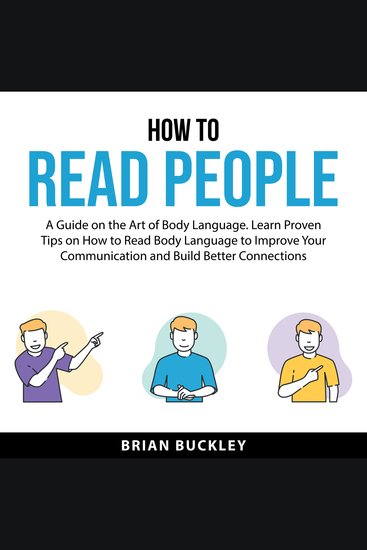
  • How to Read People - cover

    How to Read People

    Brian Buckley

    • 0
    • 0
    • 0
    How to Read People: A Guide on the Art of Body Language. Learn Proven Tips on How to Read Body Language to Improve Your Communication and Build Better ConnectionsOur body language, or the way we use different parts of our bodies when we are in public, is a very important indicator of our mental state. Several experts have noted how we can read people‘s minds just by looking at their bodies. This is known as body language reading. Reading body language surreptitiously is a powerful tool of personal development itself.This audiobook will teach you all about body language and how to interpret the movements of different parts of our body to understand someone better.This audiobook will cover the following topics:- Basic Principles of Body Language- How to Read Body Language- How to Speed-Read People’s Mind to Enhance Our Lives- The Role of Eyes in Body Language- The Role of Head and Face in Body Language- The Role of Neck, Chest and Back in Body Language- The Role of Hands and Arms in Body Language- And many more!If you know how body language is interpreted, you can manipulate your own body language so that you give out the signals you want. To learn more, scroll up and click “add to cart” now!
    Voir livre