Rejoignez-nous pour un voyage dans le monde des livres!
Ajouter ce livre à l'électronique
Grey
Ecrivez un nouveau commentaire Default profile 50px
Grey
Abonnez-vous pour lire le livre complet ou lisez les premières pages gratuitement!
All characters reduced
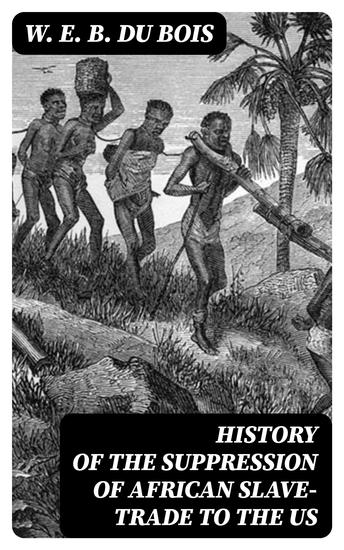
History of the Suppression of African Slave-Trade to the US - cover

History of the Suppression of African Slave-Trade to the US

W. E. B. Du Bois

Maison d'édition: DigiCat

  • 0
  • 0
  • 0

Synopsis

In "History of the Suppression of African Slave-Trade to the US," W. E. B. Du Bois meticulously chronicles the historical context surrounding the transatlantic slave trade, its economic implications, and the political shifts that contributed to its eventual suppression. Employing a rigorous analytical style enriched with primary sources and quantitative data, Du Bois positions the slave trade not merely as a relic of cruelty but as a critical element in the socio-economic fabric of American history. This work serves as a foundational text within African American studies and leaves an indelible mark on environmental history by connecting ecological perspectives to the exploitation of African peoples. W. E. B. Du Bois, a preeminent sociologist, historian, and civil rights activist, utilized his extensive background in sociology and history to shed light on injustices faced by African Americans. His landmark dual exposure to both African American and European sociocultural perspectives fueled a passion for uncovering the complexities of race relations in the United States. Du Bois's own experiences as a descendant of enslaved people imbued his scholarship with personal urgency and depth. "History of the Suppression of African Slave-Trade to the US" is recommended for scholars, educators, and anyone interested in understanding the historical underpinnings of race and inequality in America. Du Bois's incisive arguments and rich historical analysis provide the reader with essential insights into the American identity, making this book a pivotal read for historians and activists alike.
Disponible depuis: 13/11/2022.
Longueur d'impression: 286 pages.

D'autres livres qui pourraient vous intéresser

  • Modern Jewish Identity - Tradition and Innovation in Contemporary Life - cover

    Modern Jewish Identity -...

    Joseph Arston

    • 0
    • 0
    • 0
    Jewish identity is a complex and evolving concept shaped by history, culture, religion, and personal experiences. The foundation of modern Jewish identity is deeply rooted in ancient traditions while continually adapting to contemporary realities. Over time, Jewish communities have navigated periods of both integration and exclusion, influencing the ways in which identity is expressed today. The balance between maintaining heritage and embracing modernity remains central to the Jewish experience. 
    Historically, Jewish identity was primarily defined by religious observance and communal affiliation. Jewish law, customs, and shared ancestry created a strong sense of belonging. The Hebrew Bible, Talmud, and centuries of rabbinic teachings established religious principles that guided Jewish life. However, as Jewish communities spread across different regions, cultural variations emerged, shaping unique traditions within Ashkenazi, Sephardic, and Mizrahi communities. These distinctions continue to influence modern Jewish identity, highlighting both unity and diversity within the Jewish world. 
    The Enlightenment and Emancipation movements of the 18th and 19th centuries significantly altered Jewish identity. As European Jews gained citizenship and civil rights, many embraced secular education, professional opportunities, and broader societal engagement. This period saw the emergence of different expressions of Judaism, including Reform, Conservative, and Orthodox movements. While some Jews sought to modernize religious practices to align with contemporary life, others remained committed to traditional observance. These differing approaches to Judaism persist today, contributing to a broad spectrum of Jewish identities.
    Voir livre
  • Symposium - A Banquet of Perspectives – Xenophon’s Dialogue on Eros Friendship and the Deeds of Socrates - cover

    Symposium - A Banquet of...

    Xenophon, Tim Zengerink

    • 0
    • 0
    • 0
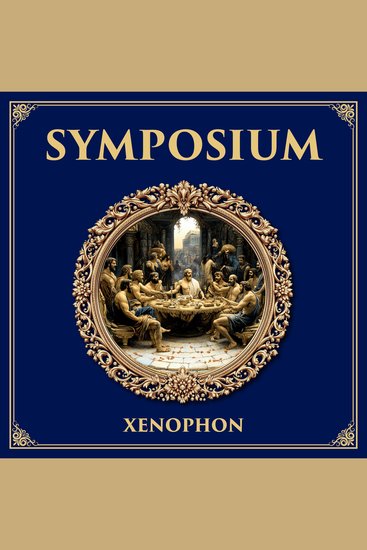
    What if the pursuit of virtue could begin with wine, laughter, and friendship? 
    In Symposium, Xenophon presents a charming and insightful dialogue that captures Socrates at his most human—participating in a banquet of ideas, jest, and gentle philosophy. This modern translation revives the lively spirit of the Athenian dinner party, where each guest reflects on love, excellence, and personal virtue. 
    What you’ll discover inside: 
    •	A vibrant and humorous dialogue of Socrates and his companions 
    •	Unique speeches on love, self-discipline, and moral character 
    •	An engaging counterpart to Plato’s Symposium, rooted in everyday life 
    •	A refreshing modern translation that brings classical Athens to life 
    Join the conversation—and see how wisdom can arise from celebration.
    Voir livre
  • David Livingstone: A short biography - 5 Minutes: Short on time – long on info! - cover

    David Livingstone: A short...

    5 Minutes, 5 Minute Biographies,...

    • 0
    • 0
    • 0
    David Livingstone, discoverer of the Victoria Falls: Life and work in a short biography! Everything you need to know, brief and concise. Infotainment, education and entertainment at its best!
    Voir livre
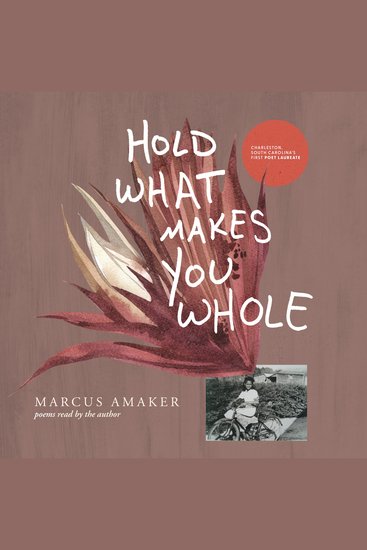
  • Hold What Makes You Whole: Poems - cover

    Hold What Makes You Whole: Poems

    Marcus Amaker

    • 0
    • 0
    • 0
    This is the audio version of Poet Laureate Marcus Amaker's tenth book, Hold What Makes You Whole. It is read by the author with original music sprinkled in the reading. 
    ~ 
    PRAISE. 
    Hold What Makes You Whole is a gratifying meditative collection of poems accompanied by kaleidoscopic visual imagery that pulls you in, settles your mind, and makes way for one's own reflections." — Lisa Willis (she/her), executive director of Cave Canem Foundation 
    ~ 
    THE BOOK. 
    Poet Laureate Marcus Amaker's (he/him) tenth book, Hold What Makes You Whole, is a pocket-sized full-color collection of new and selected works from an award-winning opera librettist, musician, and graphic designer. 
    Hold What Makes You Whole is a 200-page compilation of jazz, Blackness, self care, fatherhood, Star Wars, social justice, music, and memory.  
    On the cover of the book is Amaker’s great-great aunt Ruth Robinson, a poet and community leader who published her first book at the age of 65. 
    ~ 
    MEET MARCUS.  
    Marcus Amaker is a husband, a dad, a son, a music nerd, and a Star Wars obsessive. He served as the first Poet Laureate of Charleston, South Carolina, from 2016-22. In 2021, he became an Academy of American Poets fellow. 
    His work has been recognized by The Washington Post, The Kennedy Center, American Poets Magazine, Chicago Opera Theater, Button Poetry, NPR, The Chicago Tribune, PBS NewsHour, and more. 
    In addition to more than 40 electronic music albums, Marcus' poem “The Rain” is on two Grammy-nominated records. June 3, 2021, was named “Marcus Amaker Day” by the mayor of Charleston, SC.
    Voir livre
  • Addiction - A Very Short Introduction - cover

    Addiction - A Very Short...

    Keith Humphreys

    • 0
    • 0
    • 0
    Addiction is a subject which straddles public and personal interests; societal and criminal justice concerns; and family, social, and medical responses. It is a continuing area of uncertainty and concern for society and professionals trained in the field. 


    This Very Short Introduction presents the basic facts about addiction: what it is, how and why it develops, how it is treated, and how society can respond to it. Addictions to both illicit drugs and licit drugs (e.g., alcohol) are covered, as is the possibility that certain behaviors not involving drug use (e.g., compulsive gambling) can qualify as addictions. Keith Humphreys provides a jargon-free account of our present understanding of addiction, from treatment evaluations to studies on the effects of public policies. He also illuminates the personal experience of addiction and recovery. Humphreys considers why some people become addicted and others do not, what treatments exist to help people who are addicted, and how the laws and regulations society establishes about drugs affects the rate and experience of addiction.
    Voir livre
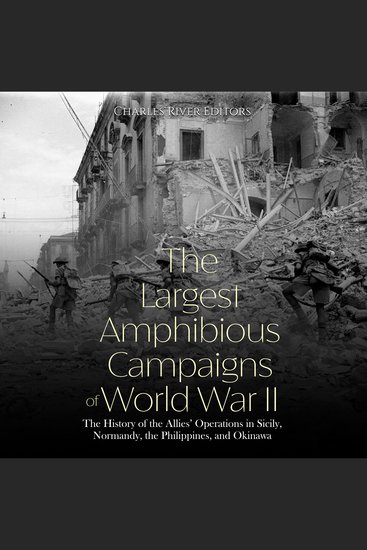
  • The Largest Amphibious Campaigns of World War II - cover

    The Largest Amphibious Campaigns...

    Editors Charles River

    • 0
    • 0
    • 0
    Despite the gargantuan scale and the importance of Operation Husky, the invasion of Sicily has since taken a backseat to the landings on D-Day. During the first half of 1944, the Americans and British commenced a massive buildup of men and resources in the United Kingdom, while Allied Supreme Commander Dwight D. Eisenhower and military brass planned the details of an enormous and complex amphibious invasion of Europe. Though the Allies used misinformation to try deceiving the Germans, the most obvious place for an invasion was just across the narrow English Channel, and the Germans had built coastal fortifications throughout France to protect against just such an invasion. 
    	The invasion across the Channel came in the early morning hours of June 6, 1944. That day, forever known as D-Day, the Allies commenced Operation Overlord by staging the largest and most complex amphibious invasion in human history. The complex operation would require tightly coordinated naval and air bombardment, paratroopers, and even inflatable tanks that would be able to fire on fortifications from the coastline, all while landing over 150,000 men across nearly 70 miles of French beaches. Given the incredibly complex plan, it’s no surprise that General Eisenhower had already written a letter apologizing for the failure of the invasion, which he carried in his coat pocket throughout the day, but the operation’s success eventually guaranteed the liberation of Paris and victory in Europe.   
    	By the time the second Phillipines campaign started, Japan was on the defensive, but as they would prove in other places like Iwo Jima and Okinawa, Japanese soldiers would act fanatically before admitting defeat or surrendering. During this second major Philippines campaign, an estimated 330,000 Japanese died, and only a bit more than 10,000 were willing to be taken prisoner.
    Voir livre