Begleiten Sie uns auf eine literarische Weltreise!
Buch zum Bücherregal hinzufügen
Grey
Einen neuen Kommentar schreiben Default profile 50px
Grey
Jetzt das ganze Buch im Abo oder die ersten Seiten gratis lesen!
All characters reduced
Candide - cover

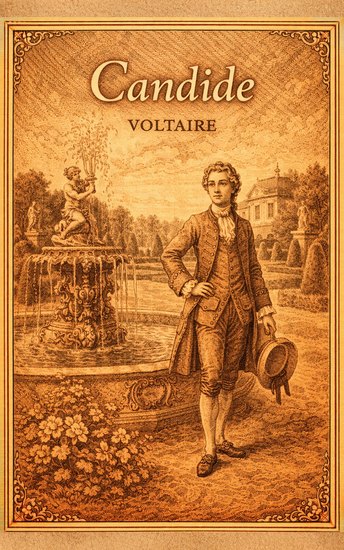
Candide

Voltaire

Verlag: CLXBX

  • 0
  • 0
  • 0

Beschreibung

Candide is a sharp, brilliantly satirical masterpiece that skewers blind optimism and challenges the philosophical complacency of its time. Written by Voltaire, this enduring classic follows the absurdly misfortunate adventures of a naïve young man whose unwavering belief that he lives in "the best of all possible worlds" is relentlessly tested by catastrophe, cruelty, and chaos.

The story begins in a sheltered castle, where Candide is raised under the influence of his tutor, Pangloss, a philosopher who insists that everything happens for the best. Cast out into a turbulent world, Candide embarks on a whirlwind journey across continents, encountering war, natural disasters, corruption, greed, betrayal, and human folly at every turn. From Europe to South America and beyond, each episode exposes the harsh realities that contradict his carefully instilled optimism.

Along the way, Candide reunites with lost companions, survives astonishing misfortunes, and witnesses both the heights of human absurdity and the depths of suffering. Voltaire's storytelling is swift and ironic, blending dark humor with biting social commentary. Through exaggerated events and colorful characters, he critiques organized religion, political tyranny, philosophical dogma, and the blind acceptance of suffering as part of a supposedly perfect design.

Yet beneath its comedic surface lies a serious philosophical inquiry. As Candide's illusions crumble, he is forced to reconsider the comforting but simplistic worldview he once embraced. The novel ultimately suggests a pragmatic alternative to empty theorizing: rather than speculating endlessly about cosmic purpose, one should focus on practical work, personal responsibility, and cultivating a meaningful life in the present.

Compact yet profound, Candide remains one of the most influential works of Enlightenment literature. Its wit is as sharp today as when it was first published, and its questions about optimism, resilience, and moral responsibility continue to resonate. With its blend of humor, adventure, and philosophical depth, Candide invites readers to laugh, reflect, and reconsider what it truly means to live wisely in an unpredictable world.
Verfügbar seit: 14.02.2026.
Drucklänge: 127 Seiten.

Weitere Bücher, die Sie mögen werden

  • The Mine Cart - From their pens to your ears genius in every story - cover

    The Mine Cart - From their pens...

    Ryunosuke Akutagawa

    • 0
    • 0
    • 0
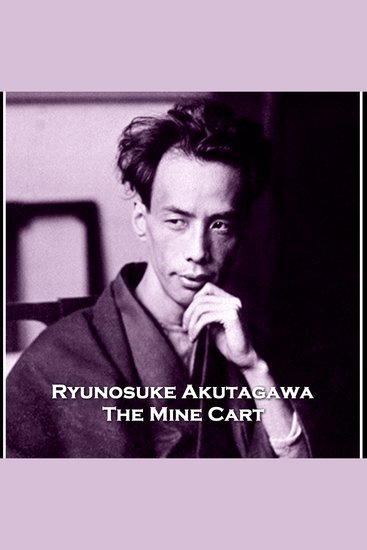
    Ryūnosuke Niihara was born in Kyōbashi, Tokyo in Japan on the 1st March 1892.  Sadly, his mother suffered severe mental illness after his birth and so, at only eight months old, he was sent to be raised by his maternal uncle and aunt, from whom he received the Akutagawa family name.  
    He was fascinated by classical Chinese literature from his early years and began writing after entering what was then the Tokyo Imperial University in 1913 to study English Literature.   
    The following year Akutagawa and his friends revived the literary journal ‘New Currents of Thought’ which published their own works and translations of such icons as W B Yeats and Anatole France. 
    Akutagawa published "Rashōmon" in 1915 and whilst it was disliked by his friends everyone else knew better.  As other short stories followed so did his growing literary reputation as the father of the Japanese short story. 
    Much of his work reinterpreted former classical works and incidents and this, melded with his strong dislike of naturalism, produced a writer of rare and genuine quality.  His character palette featured strong and domineering women, mainly based on his mother and the aunt who helped raise him. 
    In 1921, he spent four months in China as a reporter.  Whilst there his health was compromised by several illnesses and both his physical and mental health spiralled downwards.  He began to suffer from hallucinations and dreaded that he might have inherited his mother’s mental disorders.  
    Although he survived one suicide attempt Ryūnosuke Akutagawa died on the 24th July 1927 in Tokyo from an overdose of Veronal, a barbiturate.  He was 35.
    Zum Buch
  • The Garden Party and Other Stories - cover

    The Garden Party and Other Stories

    Katherine Mansfield

    • 0
    • 0
    • 0
    'And it seemed to her that kisses, voices, tinkling spoons, laughter, the smell of crushed grass were somehow inside her.'
    
    A master of the short story form, Katherine Mansfield offers fifteen remarkable tales in this pioneering and starkly perceptive collection: The Garden Party and Other Stories.
    
    Exploring themes such as class, identity and the human experience, The Garden Party and Other Stories captures several moments of emotional revelation and self-discovery. From unveiling the horrors of the disparity of wealth in the title story, 'The Garden Party', to the devastating effects of loneliness and misogyny in 'Miss Brill', Mansfield's narratives never fail to leave their emotional stamp on their reader. Famed for her vivid depiction of the inner lives of her characters, Mansfield skilfully navigates the complexities of everyday relationships and societal expectations in this stunning masterclass of short story writing. This audiobook edition is expertly brought to life by Stephanie Racine.
    Katherine Mansfield (1888 – 1923) was a New Zealand writer and critic. She was an important figurehead of the modernist movement, befriending the likes of Virginia Woolf and D. H. Lawrence amongst others. Her works regularly explored themes such as sexuality, religion and existentialism, and have been translated into twenty-five different languages across the world.
    Zum Buch
  • Twilight Alley - An early 20th century of a man exploring the underworld of a French port city - cover

    Twilight Alley - An early 20th...

    Stefan Zweig

    • 0
    • 0
    • 0
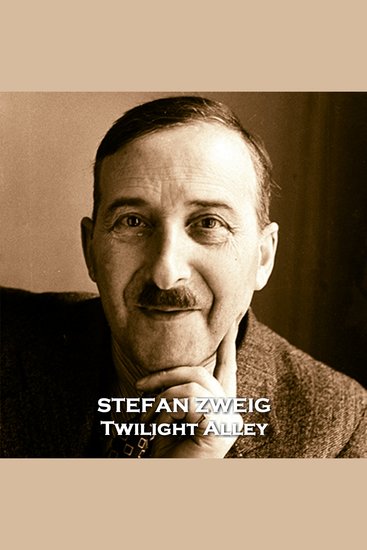
    Stefan Zweig was born on the 28th November 1881 in Vienna, then part of the Austro-Hungarian Empire, and into a wealthy Jewish family with interests in banking and textiles. 
     
    He studied philosophy at the University of Vienna and achieved his degree in 1904. 
     
    Zweig first published in 1900 and two decades later was a popular and highly regarded author in many parts of the world, although not in England.    
     
    During the Great War he served in the Archives of the Ministry of War and supported Austria's war effort through his writings in the ‘Neue Freie Presse’.  Whilst his work praised his Country’s progress and, on occasions, its excesses and massacres, he later claimed, in his memoir, that he was a pacifist. 
     
    In 1912 he began an affair with the married, and mother or two, Friderike Maria von Winternitz, but it was only in 1920 that circumstances allowed them to marry.  She took care of much of his business interests and supported him artistically.  In this decade too many of his most famous works including the short stories; ‘Amok’, and ‘Letter from an Unknown Woman’ (filmed in 1948 by Max Ophüls), novels; ‘Confusion of Feelings’ and biographies including that on Marie Antoinette (filmed by MGM in 1938) were published. 
     
    He was also the librettist with Richard Strauss of two operas and a keen collector of autographed musical manuscripts.  His collection of over two hundred pieces was later donated to the British Library.  
     
    In 1934, Zweig, as a Jew, and finding life very difficult under his anti-Semitic government and the neighbouring Nazi’s persuaded him to leave Austria for England.   
     
    In 1940 Zweig, now divorced and married to his second wife, and former secretary, Lotte Altmann, left London and via New York moved to Petrópolis, a German-colonized town 50 miles north of Rio de Janeiro in Brazil.  Although he continued to write he became, along with his wife, increasingly depressed about the situation in Europe and the future for humanity,  
     
    His memoir ‘The World of Yesterday’ was completed on the 22nd February 1942. 
     
    The following day the Zweig’s were found in their house dead of a barbiturate overdose, holding each other’s hand.  He was 60.
    Zum Buch
  • Irish Problem An - From their pens to your ears genius in every story - cover

    Irish Problem An - From their...

    Somerville & Ross - the writing...

    • 0
    • 0
    • 0
    The bookshelves of British literature are incredible collections that have gathered together centuries of very talented authors.  From these Isles their fame spread and whilst among their number many are now forgotten or neglected their talents endure.  Among them are Somerville & Ross - the writing pseudonym for Edith Somerville & Violet Florence Martin Sidney Benson Thorp.
    Zum Buch
  • The Moneychangers - cover

    The Moneychangers

    Upton Sinclair

    • 0
    • 0
    • 0
    In Upton Sinclair's "The Moneychangers," the ruthless world of high finance is laid bare as Wall Street titan Frank Cowperwood navigates a treacherous landscape of greed and power. Amidst banking scandals and corporate intrigue, Cowperwood's ambition knows no bounds, testing his morals and relationships. With a sharp critique of capitalism's darker facets, Sinclair weaves a compelling narrative of ambition, corruption, and the relentless pursuit of wealth.
    Zum Buch
  • Emma - Full Cast Drama - cover

    Emma - Full Cast Drama

    Jane Austen

    • 0
    • 0
    • 0
    "Emma," one of Jane Austen's most beloved novels, published in 1815, introduces readers to the spirited and well-intentioned but often misguided heroine, Emma Woodhouse. Set in the early 19th century in the fictional village of Highbury, the novel revolves around Emma's penchant for matchmaking and her journey of self-discovery. 
     
    At the heart of "Emma" is the titular character's desire to arrange advantageous marriages for her friends and acquaintances. Emma's well-meant but misguided attempts at matchmaking lead to a series of comedic misunderstandings and romantic entanglements. Through Emma's adventures, Austen explores the complexities of human relationships, the consequences of meddling in others' lives, and the pitfalls of making snap judgments about people's characters. 
     
    The novel also delves into the theme of self-awareness and personal growth. As the story progresses, Emma undergoes a transformation from a self-assured but somewhat arrogant young woman to a more humble and self-aware individual. Her journey of self-discovery serves as a central narrative arc, highlighting Austen's skill in portraying the moral and emotional development of her characters. 
    Austen's signature wit and humor shine through in "Emma." The novel is replete with clever dialogue, satirical observations, and sharp social commentary. The characters, from the well-meaning but misguided Emma to the reserved but perceptive Mr. Knightley, come to life through Austen's masterful storytelling.
    Zum Buch