Rejoignez-nous pour un voyage dans le monde des livres!
Ajouter ce livre à l'électronique
Grey
Ecrivez un nouveau commentaire Default profile 50px
Grey
Abonnez-vous pour lire le livre complet ou lisez les premières pages gratuitement!
All characters reduced
Candide (Annotated) - cover

Candide (Annotated)

Voltaire

Maison d'édition: Reading Masterpieces

  • 0
  • 0
  • 0

Synopsis

"Candide" is an accessible masterpiece which demonstrated to the world Volatire's genius as a satirist. The eponymous Candide is a young man tutored by an optimist who is convinced according to the cause and effect philosophy of Leibniz and perhaps is best summarized in Voltaire's leitmotif that human beings live in the "best of all possible worlds." Alexander Pope rather laughably made the same outrageous claim in his "Essay on Man" in which he writes, "Everything that is is right." How can this be so, you may well ask? Here is the nut of the problem: it seems that a perfect God has created a highly imperfect world. How can a good, omnipotent, loving God create a world in which so much catastrophic evil exists and which is so often allowed even to thrive? It is a question for the ages. Theologians argue that God created mankind with free will and without it they would simply be puppets without the freedom to make choices. Theologians also point out that the majority of the evil resident in our world is perpetuated on vast masses of humanity by other human beings, not God, and that evil is the cause and effect of conflicting self-interests imposed by people with more power upon the less powerful. But this point doesn't explain why a loving, all-powerful God would allow any of it to exist and endure. Why not cast down all the devils and give his human creatures a perfect garden, a paradise on earth, without snakes anywhere? Why did God create the serpent in the Garden of Eden in the first place? Voltaire, like Rousseau, was an avid gardener and Voltaire jests at Rousseau's good faith in the "Confessions" as if the latter were simply a country bumpkin. But gardens have a great deal of meaning in "Candide" as in, for example, Milton's "Paradise Lost" or "Genesis" and are thematically significant for Voltaire who concludes that gardens are, after all, a wise place to reside out of harm's way. Voltaire absolutely skewers the optimistic cause and effect of Pope and Leibniz with a catalog of tragicomic catastrophes which plague not only Candide and Pangloss but all of mankind infinitely. Consider the Great Lisbon Earthquake of 1755 which burst suddenly out of nowhere with all its raging fires and tidal waves to destroy nearly all of the city and the ships in its harbor. Is there no end even to the great catastrophes in which man has no hand but from which we are compelled to suffer except for God's grace? Voltaire's vivid and piercing wit is hilarious as he brazenly brings parody to places high and low, near and far, rich and poor to depict our world as the ultimate dystopia. In his novel Candide can only find a semblance of happiness in El Dorado, a rich, hidden world in South America: in other words, happiness in real life can only be found in a utopia without a basis for reality. So what are we to deduce about Candide? Is he a sometimes violent fool for all his naivete? And is Pangloss not a buffoon who earns his suffering so extensively at every turn of the road for his unjustified, unbridled optimism? Or are they heroic for their optimism despite the epic disasters that nearly devastate them time after time. Or is their fate really just the human condition and are they both just being all too human?
Disponible depuis: 22/01/2022.

D'autres livres qui pourraient vous intéresser

  • The French Resistance - Stories of Courage and Defiance under Nazi Occupation - cover

    The French Resistance - Stories...

    Sage Winters

    • 0
    • 0
    • 0
    The French Resistance is one of the most remarkable and inspiring stories of World War II, a testament to the courage and defiance shown by ordinary people in the face of unimaginable adversity. During the Nazi occupation of France from 1940 to 1944, countless men and women rose to challenge the brutal regime that had taken control of their country. With their lives at risk and a constant threat of betrayal or capture, these brave souls fought in the shadows, working tirelessly to undermine the Nazi war effort, sabotage military operations, and support the Allies. 
      
    At the heart of the Resistance was a spirit of defiance, a refusal to accept the status quo and a deep-seated belief in the values of freedom and liberty. The people who joined the movement were motivated by a sense of duty to their country, but also by a moral obligation to resist the horrors of the Nazi regime. From the rural villages to the bustling streets of Paris, the Resistance spread across France, forging networks of covert cells that communicated through secret codes, hidden messages, and underground newspapers. 
      
    The introduction of the Resistance was not a single event but a gradual process of collective resistance that evolved over time. In the early days, acts of defiance were small and isolated—anonymous leaflets denouncing the occupation, graffiti calling for revolt, and the quiet refusal of French citizens to cooperate with Nazi authorities. These early acts were the spark that would ignite a larger, more organized resistance movement. As the war progressed, Resistance groups grew in strength and sophistication, developing into a network of fighters, spies, and saboteurs working in unison to disrupt the Nazi regime’s operations.
    Voir livre
  • Hope Circuits - Rewiring Universities and Other Organizations for Human Flourishing - cover

    Hope Circuits - Rewiring...

    Jessica Riddell

    • 0
    • 0
    • 0
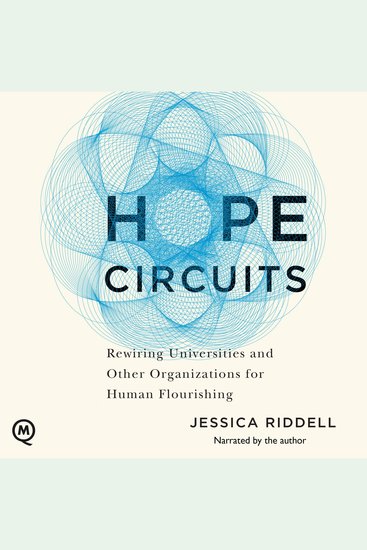
    How do we model abundance and generosity — in teaching, in learning, in leading organizations, particularly non-profits — when dealing with fiscal austerity and other forms of scarcity thinking? Hope Circuits explores this question, presenting sophisticated ideas that support democratizing higher education for everybody.
    		 
    Written in a conversational style that draws upon Jessica Riddell’s experience in governance, senior administration, and scholarship, the book is a how-to guide and thought leadership manifesto for developing the conceptual tools to seek solutions to higher education’s most pressing issues. Hope Circuits aims to rewire mindsets, perspectives, and behaviours to in turn rewire and renew the systems within which university stakeholders learn, live, and work. It tackles this challenging feat by suggesting ten tools to build hope circuits, a concept borrowed from neuroscience. 
    		 
    Riddell acknowledges that changing systems and deep cultures is not for the faint of heart; indeed, the more than 250 interviews conducted with thought partners for Hope Circuits expose how individuals who navigate complex systems regularly experience discomfort and even despair. In response, she shows us how to anchor a practice of hope in higher education with focus and intention, inviting others to adopt and adapt her approach.
    Voir livre
  • Wealth and Poverty of Nations The: Book Summary & Analysis - cover

    Wealth and Poverty of Nations...

    Briefly Summaries

    • 0
    • 0
    • 0
    This is a concise summary and analysis of The Wealth and Poverty of Nations, by 
    David S. Landes.
     
    It is not the original book and is not affiliated with or endorsed by David S. Landes.
     
    Ideal those seeking a quick and insightful overview.
     
    Why are some nations rich while others remain mired in poverty? This groundbreaking exploration delves into the historical, cultural, and economic factors that have shaped global inequalities. Spanning centuries of human history, the book examines the impact of innovation, institutions, geography, and cultural values in shaping the wealth of nations. Through compelling examples and meticulous analysis, it provides a thought-provoking narrative on how the forces of history continue to influence the present, offering insights into the roots of economic success and failure.
    Voir livre
  • The Monster and the Mirror - Mental Illness Magic and the Stories We Tell - cover

    The Monster and the Mirror -...

    K.J. Aiello

    • 0
    • 0
    • 0
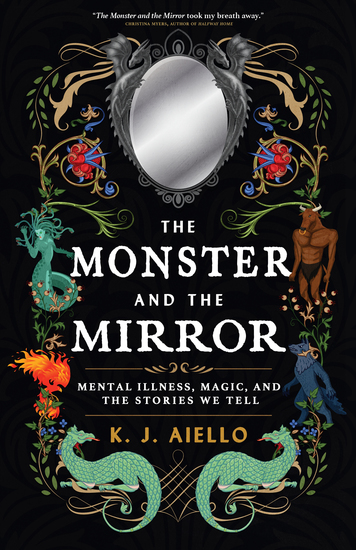
    Revelatory memoir and cultural criticism that connects popular fantasy and our perceptions of mental illness to offer an empathetic path to compassionate care
    		 
    Growing up, K.J. Aiello was fascinated by magical stories of dragons, wizards, and fantasy, where monsters were not what they seemed and anything was possible. These books and films were both a balm and an escape, a safe space where Aiello’s struggle with mental illness transformed from a burden into a strength that could win battles and vanquish villains.
    		 
    A unique blend of memoir, research, and cultural criticism, The Monster and the Mirror charts Aiello’s life as they try to understand their own mental illness using The Lord of the Rings, Game of Thrones, and other stories as both guides to heroism and agency and cautionary tales of how mental illness is easily stereotyped as bad and violent. Aiello questions who is allowed to be “mad” versus “sane,” “good” versus “evil,” and “weak” versus “strong,” and who is allowed to tell their own stories. The Monster and the Mirror explores our perceptions of mental illness in a way that is challenging and tender, empathetic and knowledgeable, and offers a path to deeper understanding and compassionate care.
    Voir livre
  • We Are F**king Machines - Why We Are Like This and What We Can Do About It - cover

    We Are F**king Machines - Why We...

    Dr. Bernadette 'bird' Bowen

    • 0
    • 0
    • 0
    Do you feel disconnected? Lonely? Sick and tired of being sick and tired? Long before COVID-19 emerged, researchers were reporting that united states citizens were having less sex. Some even going so far as to call it a “sex apocalypse”. Throughout this book, Dr. bird explores not only how and why this phenomenon occurred, but also unboxes foundationally regifted social, relational, and technological u.s. misinformation(s) and disinformation(s), which have devolved into our digital and increasingly algorithmic envirusment. To do so, first, they argue that our dominant ideas of intelligence have always been limited. Then, they connect those logics to escalating environmental crises. Third, Dr. bird reveals how our major ideas of relational intelligence have been tainted by these widely accepted human misconceptions. And, not only that, but that this mentality has been copy and pasted across nearly everything that we do and love. In doing so, Dr. bird makes clear how the envirusment era presents us abundant opportunities to understand how, in numerous violent taken for granted ways, an idea that the “body is a machine” has infected our lifestyles, sickening, disabling, and poisoning us all to death for profit. Yet, in new viral forms, instead of liberatory solutions, the richest continue to invest in more inhumane artificial intelligence. Instead, Dr. bird insists current problems cannot be solved without transformational human solutions, reminding us that we all hold and can embrace our authenticity, reflecting on our life’s knowledge, to fix this shit.
    Voir livre
  • The Next Economy MBA - Redesigning Business for the Benefit of All Life - cover

    The Next Economy MBA -...

    Kevin Bayuk, LIFT Economy, Erin...

    • 0
    • 0
    • 0
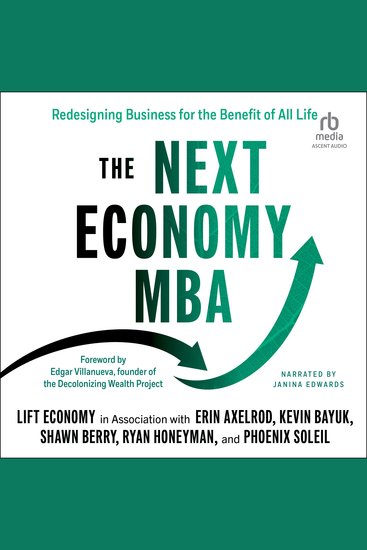
    This radical and rigorous rethinking of the traditional MBA program combines solid business principles with a commitment to environmental and social justice. 
     
    Many current and aspiring entrepreneurs are looking for a solid business education that also deeply aligns with their progressive values. Based on a course field-tested with over 500 students, this book fills that gap. It covers traditional topics such as business strategy and structure, finance, marketing, recruiting, and branding from a socially just and environmentally regenerative perspective. And it also touches on topics such as strategies to reverse climate change, nonviolent communication, self-managing organizations, locally self-reliant economies, racial justice, and more.  
     
    Traditional MBA programs are based on outdated principles that were developed during the Industrial Revolution-and they can be hugely expensive. Sustainable MBA programs, while laudable, are too incremental to make a sufficient impact. The Next Economy MBA is for entrepreneurs seeking to make business an active force for good. It draws on the authors' experience of working with over 300 social enterprises, from small organizations like Winona's Hemp and Heritage Farm to household names like Ben & Jerry's and Patagonia. 
     
    Our current economy, what the authors call the "Business as Usual Economy," has created a massive wealth gap, a climate crisis, racial division, and needless housing, food, and healthcare shortages. This book shows how businesses can pave the way to a Next Economy that meets the basic needs of all people and restores and protects the planetary ecosystem.
    Voir livre