Rejoignez-nous pour un voyage dans le monde des livres!
Ajouter ce livre à l'électronique
Grey
Ecrivez un nouveau commentaire Default profile 50px
Grey
Abonnez-vous pour lire le livre complet ou lisez les premières pages gratuitement!
All characters reduced
The World Order: New Rules or a Game without Rules - Enriched edition Putin talks to Valdai Club in Sochi - cover

The World Order: New Rules or a Game without Rules - Enriched edition Putin talks to Valdai Club in Sochi

Vladimir Putin

Maison d'édition: DigiCat

  • 0
  • 0
  • 0

Synopsis

In "The World Order: New Rules or a Game without Rules," Vladimir Putin articulates his vision of international relations and geopolitics in the post-Cold War era. The book is a reflective exploration of power dynamics, presenting a critical analysis of Western dominance and advocating for a multipolar world. Putin employs a direct and assertive literary style, infusing personal anecdotes and historical references that illustrate the intricacies of global governance. This work is situated within the context of rising tensions between Russia and the West, offering insights into the Kremlin's strategic imperatives and its interpretation of international law and order. Vladimir Putin, a seasoned political leader and former intelligence officer, draws upon his extensive experience in statecraft and international diplomacy. His tenure in various governmental roles—from his early days in the KGB to his presidency—has profoundly shaped his worldview. Having witnessed the dissolution of the Soviet Union and the subsequent geopolitical shifts, Putin's arguments reflect his commitment to Russia's sovereignty and its rightful place on the global stage, making this book a response to what he perceives as unjust challenges to Russian authority. This book is essential reading for scholars, policymakers, and anyone interested in understanding the undercurrents of contemporary geopolitical conflict. Putin's provocative insights encourage readers to rethink conventional narratives about world order and to engage critically with the concept of power in an increasingly complex international landscape.

In this enriched edition, we have carefully created added value for your reading experience:
- A succinct Introduction situates the work's timeless appeal and themes.
- The Synopsis outlines the central plot, highlighting key developments without spoiling critical twists.
- A detailed Historical Context immerses you in the era's events and influences that shaped the writing.
- An Author Biography reveals milestones in the author's life, illuminating the personal insights behind the text.
- A thorough Analysis dissects symbols, motifs, and character arcs to unearth underlying meanings.
- Reflection questions prompt you to engage personally with the work's messages, connecting them to modern life.
- Hand‐picked Memorable Quotes shine a spotlight on moments of literary brilliance.
- Interactive footnotes clarify unusual references, historical allusions, and archaic phrases for an effortless, more informed read.
Disponible depuis: 29/05/2022.
Longueur d'impression: 48 pages.
D'autres livres qui pourraient vous intéresser

  • On Liberty: Book Summary & Analysis - cover

    On Liberty: Book Summary & Analysis

    Briefly Summaries

    • 0
    • 0
    • 0
    This is a concise summary and analysis of On Liberty, by John Stuart Mill.
     
    It is not the original book and is not affiliated with or endorsed by John Stuart Mill.
    Ideal those seeking a quick and insightful overview.
     
    On Liberty is a groundbreaking philosophical work that explores the nature and limits of individual freedom in society. This classic text examines the tension between personal autonomy and societal authority, advocating for the protection of individual rights against the tyranny of the majority. With profound arguments on free speech, individuality, and self-expression, it provides a compelling defense of civil liberties that remain relevant in contemporary debates about democracy and personal freedom.
    Voir livre
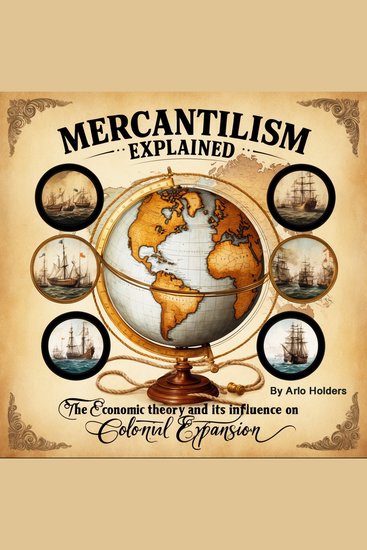
  • Mercantilism Explained - The Economic Theory and Its Influence on Colonial Expansion - cover

    Mercantilism Explained - The...

    Arlo Holders

    • 0
    • 0
    • 0
    Mercantilism, a dominant economic theory from the 16th to the 18th century, played a pivotal role in shaping the economic and political landscape of early modern Europe. Rooted in the belief that a nation's wealth and power were measured by its stockpile of precious metals, particularly gold and silver, mercantilism emphasized the importance of maintaining a favorable balance of trade. Nations sought to maximize exports while minimizing imports, often employing protectionist policies to achieve this goal. This approach reflected the belief that global wealth was finite, creating fierce competition among nations to secure the largest share of resources and economic advantage. 
    The historical context of mercantilism is deeply intertwined with the Age of Exploration and the rise of powerful nation-states. During this period, European powers such as Spain, Portugal, England, France, and the Netherlands expanded their empires overseas, establishing colonies that served as both sources of raw materials and markets for finished goods. These colonies were central to mercantilist strategies, enabling mother countries to extract wealth and resources while controlling trade to their advantage. This symbiotic relationship between mercantilism and colonial expansion would shape the geopolitical dynamics of the time, fueling rivalries and conflicts between competing empires. 
    Central to mercantilism was the role of government intervention in the economy. Unlike modern free-market principles, mercantilist policies relied heavily on state control to regulate trade and protect domestic industries. Governments imposed tariffs on imported goods, subsidized local production, and established monopolies through chartered companies to ensure economic self-sufficiency and reduce dependence on foreign powers. This top-down approach sought to consolidate economic power within the state, reinforcing the notion that national prosperity and security were interconnected.
    Voir livre
  • The 1960's - A Decade of Change Revolution Resistance and Reform - cover

    The 1960's - A Decade of Change...

    Harry Montgomery

    • 0
    • 0
    • 0
    The 1960s opened with a sense of cautious optimism in America. Following the stability of the postwar 1950s, the country was on the brink of transformation. The seeds of change were being planted by a young and increasingly restless population. The rise of youth culture signaled a break from the conservatism of their parents’ generation. Young people began questioning authority, traditional values, and the social norms that had shaped American life for decades. Television became a powerful force in shaping ideas, music spread messages of rebellion, and college campuses buzzed with debates over justice and freedom. Teenagers and young adults embraced new forms of expression, setting the stage for a cultural revolution. 
    At the heart of this evolving decade was the civil rights movement, which had already begun stirring in the 1950s. In the early years of the sixties, the push for racial justice gained momentum, marked by nonviolent protests, sit-ins, and mass marches. African Americans, particularly in the South, fought against systemic racism and demanded equal treatment under the law. Martin Luther King Jr. became a prominent voice during this time, advocating for civil disobedience and peaceful protest. As the movement grew, so did the urgency for legislation that would challenge segregation and discrimination. The activism of this period began to awaken a broader consciousness about social injustice, laying the groundwork for other rights movements to follow. 
    On the global stage, the Cold War continued to cast a long shadow over American life. The rivalry between the United States and the Soviet Union defined much of the political atmosphere. The threat of nuclear conflict loomed, and the government’s efforts to contain communism influenced both foreign and domestic policy.
    Voir livre
  • All In: How we build a country that works - cover

    All In: How we build a country...

    Lisa Nandy

    • 0
    • 0
    • 0
    ‘A persuasive manifesto for a better Britain.’ Observer Book of the Day 
    Britain needs a fresh start. This timely book by one of the stars of the new government shows how to achieve it. 
    In this brilliant and accessible intervention, Lisa Nandy reveals how Britain can leave behind the mess in which we find ourselves. All In charts a course towards a fairer, more equal, more prosperous country by drawing on the greatest asset we have – each other. 
    Rapid global changes, political division and economic crisis have left Britain reeling. For decades, large swathes of the country have been shut out, condemned to low productivity, underinvestment and managed decline, and stripped of their voice. With most major cities now beset with high housing costs, air pollution and congestion, even the ‘winners’ are losing. 
    All In shows how, by handing power and resources to people with a stake in the outcome, Britain can draw on the talent, assets and potential in every part of the country and start firing on all cylinders again. Finding strength rather than fear in our differences, it reimagines the relationship between people and government so that all of us can play our part in meeting the challenges of our age and rebuilding Britain the only way that works – together. 
    Lucid, clear-eyed and hopeful, this book sets out how we restore values, energy and direction to our politics and offers a glimpse of the alternative future that remains within our grasp. 
    Nandy's autobiography is a personal exploration of the process of political change, offering a best case scenario for a united, prosperous Britain. Drawing on history and economics, she presents a compelling vision for the 21st century. 
    For fans of Wes Streeting (One Boy, Two Bills and a Fry Up), Gordon Brown (My Life, Our Times), Jess Phillips (Truth to Power), Chris Bryant (Code of Conduct), and Sebastian Payne (Broken Heartlands). 
    HarperCollins 2022
    Voir livre
  • Mao Zedong - The Rise and Fall of a Revolutionary Leader - cover

    Mao Zedong - The Rise and Fall...

    Will Forrest

    • 0
    • 0
    • 0
    Ladies and Gentlemen, prepare to be transported back in time to the world of 20th-century China, where the fate of a nation was shaped by the rise and fall of a charismatic and controversial leader. Join us on a journey of discovery as we explore the life and legacy of Mao Zedong, a revolutionary figure whose impact on Chinese history is still felt to this day. 
    In this compelling book, you will find: 
    • A vivid and insightful portrait of Mao's character and motivations: Through a careful analysis of his personal life and political career, readers gain a deeper understanding of the man behind the myth. 
    • A nuanced and comprehensive overview of the political and social forces that shaped Mao's rise to power. This book presents a nuanced and detailed account of the events that led to Mao's ascent. 
    • A timeless tale of ambition, betrayal, and triumph. This book is a must-read for anyone who loves a good story.
    Voir livre
  • A Conspiratorial Life - Robert Welch the John Birch Society and the Revolution of American Conservatism - cover

    A Conspiratorial Life - Robert...

    Edward H. Miller

    • 0
    • 0
    • 0
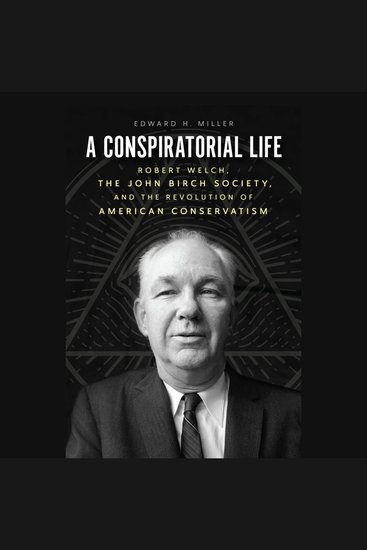
    The first full-scale biography of Robert Welch, who founded the John Birch Society and planted some of modern conservatism’s most insidious seeds. 
      
    Though you may not know his name, Robert Welch (1899-1985)—founder of the John Birch Society—is easily one of the most significant architects of our current political moment. In A Conspiratorial Life, the first full-scale biography of Welch, Edward H. Miller delves deep into the life of an overlooked figure whose ideas nevertheless reshaped the American right. 
     
    A child prodigy who entered college at age 12, Welch became an unlikely candy magnate, founding the company that created Sugar Daddies, Junior Mints, and other famed confections. In 1958, he funneled his wealth into establishing the organization that would define his legacy and change the face of American politics: the John Birch Society. Though the group’s paranoiac right-wing nativism was dismissed by conservative thinkers like William F. Buckley, its ideas gradually moved from the far-right fringe into the mainstream. By exploring the development of Welch’s political worldview, A Conspiratorial Life shows how the John Birch Society’s rabid libertarianism—and its highly effective grassroots networking—became a profound, yet often ignored or derided influence on the modern Republican Party. Miller convincingly connects the accusatory conservatism of the midcentury John Birch Society to the inflammatory rhetoric of the Tea Party, the Trump administration, Q, and more. As this book makes clear, whether or not you know his name or what he accomplished, it’s hard to deny that we’re living in Robert Welch’s America.
    Voir livre