Begleiten Sie uns auf eine literarische Weltreise!
Buch zum Bücherregal hinzufügen
Grey
Einen neuen Kommentar schreiben Default profile 50px
Grey
Jetzt das ganze Buch im Abo oder die ersten Seiten gratis lesen!
All characters reduced
Corn Ancient Uses - cover

Corn Ancient Uses

Vivian Brooks

Übersetzer A AI

Verlag: Publifye

  • 0
  • 0
  • 0

Beschreibung

"Corn Ancient Uses" explores the fascinating history of maize, tracing its journey from ancient Mesoamerica to its global impact as a staple crop. The book highlights the ingenuity of indigenous peoples in domesticating maize from its wild ancestor, teosinte, and in developing nixtamalization, a process of alkaline cooking using lime or wood ash. This method dramatically increased the bioavailability of essential nutrients, showcasing a remarkable feat of food technology and indigenous innovation.

 
The book progresses systematically, starting with the origins of maize and the archaeological evidence of its domestication. It then delves into the nixtamalization process, detailing its nutritional and cultural importance. Later chapters examine the spread of maize throughout the Americas and its influence on various indigenous cultures. The book integrates evidence from archaeology, anthropology, botany, and nutrition science to provide a comprehensive understanding of the profound impact of maize on civilizations.

 
The book uniquely emphasizes indigenous agency in developing both the crop and nixtamalization, challenging Eurocentric narratives of agricultural development. This perspective underscores the sophisticated knowledge systems of ancient civilizations. By focusing on the ancient uses of corn, the book provides a valuable understanding of how food technology and cultural practices have shaped human health and societal structures, while also informing contemporary discussions on food security and sustainable agriculture.
Verfügbar seit: 27.02.2025.
Drucklänge: 68 Seiten.
Weitere Bücher, die Sie mögen werden

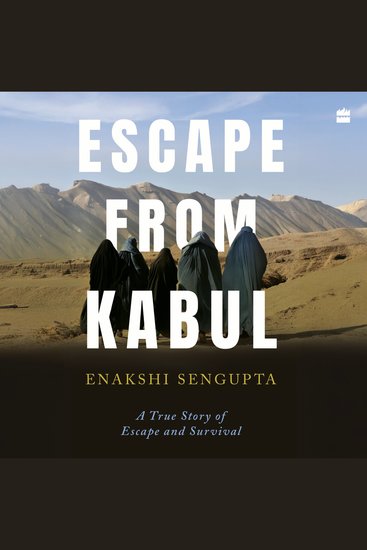
  • Escape from Kabul - A True Story of Escape and Survival - cover

    Escape from Kabul - A True Story...

    Enakshi Sengupta

    • 0
    • 0
    • 0
    Five Women. A Crumbling City. A Daring Flight to Freedom. 
     
    August 2021. The fall of Kabul.  
    Twenty years after they were defeated, the Taliban storms Afghanistan's capital, claiming every piece of land they pass and plunging the city into chaos. 
    For Anjali and four other women, who were all from different parts of the world and worked together at the Anglo-American University of Kabul, this moment marks the beginning of a harrowing journey. Forced into hiding, hunted for their work at the University, and unsure of whom to trust, knowing betrayal is just a whisper away, they are bound by one urgent impetus: to get out alive. 
    What unfolds is an inspiring story of resistance and survival, furtive phone calls, forged documents and midnight dashes through enemy territory-and the relentless courage of women who refuse to be silenced. 
    Searing and utterly gripping, Escape from Kabul is at once an extraordinary first-person account of sisterhood in crisis as well as a meditation on the meaning of freedom, and what it takes to reclaim agency when the world closes in.
    Zum Buch
  • Summa Theologica - 08 Pars Prima Secundae Treatise on Habits Virtues and Vices - cover

    Summa Theologica - 08 Pars Prima...

    Saint Thomas Aquinas

    • 0
    • 0
    • 0
    The Summa Theologica (or the Summa Theologiae or simply the Summa, written 1265–1274) is the most famous work of Thomas Aquinas (c. 1225–1274) although it was never finished. It was intended as a manual for beginners and a compilation of all of the main theological teachings of that time. It summarizes the reasoning for almost all points of Christian theology in the West, which, before the Protestant Reformation, subsisted solely in the Roman Catholic Church. The Summa's topics follow a cycle: the existence of God, God's creation, Man, Man's purpose, Christ, the Sacraments, and back to God. (Summary adapted from the Wikipedia)This selection of the Summa Theologica covers questions 49-89 of the Prima Secundae ("First-half of the Second Part"), a Treatise on the Habits, Virtues and Vices: the habits in general (questions 49-54), and in particular (questions 55-89), whether expressed as virtues (55-70) or as vices (71-89).
    Zum Buch
  • You In The Tao - Productivity Stress Sex Health and Armony How to Be Like Water in an Anxious and Fidgeting Society - cover

    You In The Tao - Productivity...

    Quinto Greco

    • 0
    • 0
    • 0
    ARE YOU FEELING OVERWHELMED BY STRESS, AND EXPECTATIONS, SEEKING BALANCE, OR CRAVING A DEEPER CONNECTION TO YOUR INNERSELF? 
    Imagine a life where you could transform daily anxieties into moments of tranquility, where productivity and peace go hand in hand. YOU IN THE TAO isn’t just a short book—it’s your personal guide to navigating the fast-paced, noisy world with the calm and grace of centuries-old Taoist wisdom. 
    What You’ll Discover Inside: 
    . Introduction to Taoism 
    . Uncover the history and core principles of Taoism, a profound Chinese philosophy rooted in nature and balance. 
    YOU IN THE TAO offers readers a simple, insightful path to understanding these age-old teachings. 
    .Timeless Tales, Modern Applications 
    . Learn through beloved Taoist stories and parables that reveal how ancient masters viewed life, challenges, and the art of effortless flow. Each story brings timeless lessons you can apply to today’s hectic world. 
    . Practical Techniques for Daily Life 
    . Find invaluable advice on improving productivity, nurturing relationships, enhancing physical health, and restoring peace of mind. 
    .  Step-by-step tips help you face modern stressors with the calm, adaptable mindset of Taoist philosophy. 
    Whether you’re a curious beginner or someone familiar with holistic practices, this book brings fresh, powerful insights to create a life of balance and resilience. 
    With YOU IN THE TAO, you’ll discover that the way to thrive isn’t through constant struggle but through embracing a life of harmony, fluidity, and effortless action. Imagine feeling like water—calm, adaptable, and deeply grounded, no matter how turbulent the world becomes. 
    Ready to start your journey? 
    Grab your copy of "YOU IN THE TAO" and start your transformation today!
    Zum Buch
  • Argentina: The History and Legacy of the Nation from the Colonial Era to Today - cover

    Argentina: The History and...

    Charles River Editors

    • 0
    • 0
    • 0
    By the time Christopher Columbus started setting east from the New World, he had explored San Salvador in the Bahamas (which he thought was Japan), Cuba (which he thought was China), and Hispaniola, the source of gold. As the common story goes, Columbus, en route back to Spain from his first journey, called in at Lisbon as a courtesy to brief the Portuguese King John II of his discovery of the New World. King John subsequently protested that according to the 1479 Treaty of Alcáçovas, which divided the Atlantic Ocean between Spanish and Portuguese spheres of influence, the newly discovered lands rightly belonged to Portugal. To make clear the point, a Portuguese fleet was authorized and dispatched west from the Tagus to lay claim to the “Indies,” which prompted a flurry of diplomatic activity in the court of Ferdinand and Isabella. At the time, Spain lacked the naval power to prevent Portugal from acting on this threat, and the result was the hugely influential 1494 Treaty of Tordesillas. 
    Perhaps inevitably, a regional rivalry had developed as the Portuguese began to establish a colony in Brazil and push its boundaries southwards. After the conquest of the Incas in the 1530s, the Portuguese threat prompted the authorization of a second expedition, commanded this time by Pedro de Mendoza with a force of some 1,500 men. The party arrived at the mouth of the Río de la Plata in 1536, and there Mendoza founded the settlement of Nuestra Señora Santa María del Buen Ayre. This was the basis of the future city of Buenos Aires, but its establishment was not without resistance from surrounding tribes, marking the kind of conflicts that would shape the history and independence movements of Argentina over the next 300 years.
    Zum Buch
  • New York's Secret Subway - The Underground Genius of Alfred Beach and the Origins of Mass Transit - cover

    New York's Secret Subway - The...

    Matthew Algeo

    • 0
    • 0
    • 0
    In the nineteenth century, Manhattan's streets were so choked with pedestrians, horses, vehicles, and vendors that a trip from City Hall to Central Park could take hours. Alfred Beach had the perfect solution: build a giant pneumatic tube underneath Broadway from the Battery to Harlem. Air pressure would shoot passengers up and down the island in clean, quiet carriages. But Beach was up against the operators of the horse-drawn streetcars and the politicians in their pay, most conspicuously William M. Tweed, the notorious "Boss" of Tammany Hall.New York's Secret Subway: The Underground Genius of Alfred Beach and the Origins of Mass Transit tells a classic story of good versus evil, pitting the mild-mannered Beach, a visionary inventor and entrepreneur, against the oafish tyrant Tweed, the exemplar of corruption in the Gilded Age. It also tells the story of one of the most astonishing feats of engineering in American history, the surreptitious creation of the nation's first operational subway. Unfortunately, political lethargy and greed would conspire to deny the city a subway for another thirty years. Yet Alfred Beach still proved conclusively the feasibility of underground railways in Manhattan, and paved the way for modern mass transportation systems. Although this true story took place more than a century ago, it will at times sound surprisingly familiar.
    Zum Buch
  • Don't Believe Everything You Think - How to stop making decisions that let you down lead you astray and keep you from success - cover

    Don't Believe Everything You...

    Colin J Browne

    • 0
    • 0
    • 0
    When it comes to making great decisions, the way you think about things is usually a lot more influential than what you actually think.
    If you ever hired a person who 'looks the part', dated someone who 'gives you a good feeling', voted for the party that 'speaks the most sense' or got into an investment that 'cannot be missed', only to realise you made a horrible mistake, you might have wondered how you ever talked yourself into it.
    Yet, still bearing the bruises, you're likely to make exactly the same decision the next time.
    The beliefs that guide your ideas and the instincts that drive your actions, are all informed by your unconscious biases, and literally every single one of us has them, which irrationally tell us one thing is good and another is bad, one thing is absolutely true and another is utterly false, and make you act less smartly than you should.
    But the good news is that you can learn to see them, to manage them and ultimately overcome them.
    In Don't Believe Everything You Think, Colin J Browne shows you how biases work, why they matter, and how to reframe your thinking to make well-founded decisions about life and work, relationships and investing, and much else in between, to vastly improve your chances of success.
    Zum Buch