Rejoignez-nous pour un voyage dans le monde des livres!
Ajouter ce livre à l'électronique
Grey
Ecrivez un nouveau commentaire Default profile 50px
Grey
Abonnez-vous pour lire le livre complet ou lisez les premières pages gratuitement!
All characters reduced
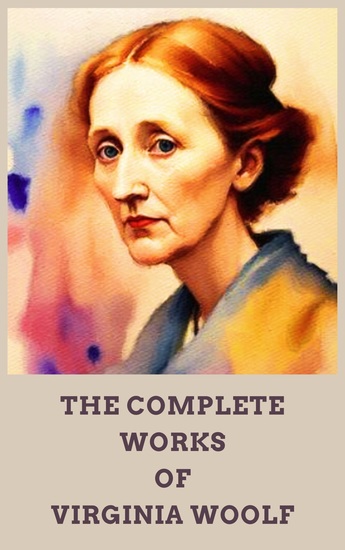
Virginia Woolf - The Complete Works - cover

Virginia Woolf - The Complete Works

Virginia Woolf, Zenith Crescent Moon Press

Maison d'édition: Zenith Crescent Moon Press

  • 0
  • 0
  • 0

Synopsis

🌊 Step into the extraordinary world of Virginia Woolf with The Complete Works, a comprehensive collection of her literary masterpieces. This definitive eBook gathers all her iconic works, including Mrs. Dalloway, To the Lighthouse, Orlando, and The Waves, as well as her groundbreaking essays and short stories. Dive into Woolf's eloquent prose and explore the intricacies of human consciousness, memory, and time.

✨ Woolf's works are a celebration of modernist innovation, offering profound insights into the human experience. Her use of stream of consciousness, lyrical beauty, and experimental narrative structures make her a cornerstone of 20th-century literature. This collection also features her powerful essays, such as A Room of One's Own, which continue to inspire discussions on gender, identity, and creativity.

đź“– Celebrated for her ability to capture fleeting moments and inner thoughts, Virginia Woolf's writing resonates with timeless themes of love, loss, and self-discovery. The Complete Works invites you to witness her literary genius and immerse yourself in the richness of her imagination.

🌟 Embark on a transformative reading experience with the works of one of modernism's most influential voices. Click Buy Now and uncover the enduring beauty of Virginia Woolf's legacy.
Disponible depuis: 26/03/2025.
Longueur d'impression: 16223 pages.
D'autres livres qui pourraient vous intéresser

  • The Young Tsar - Absolute Power Moral Awakening and the Burden of Leadership - cover

    The Young Tsar - Absolute Power...

    Leo Tolstoy, Tim Zengerink

    • 0
    • 0
    • 0
    Can a ruler change the world—or will the world change him first? 
    In The Young Tsar, Leo Tolstoy paints a haunting portrait of a young monarch determined to bring mercy and justice to his people. Filled with compassion, the new ruler seeks to reform the system he now controls—but soon finds himself trapped in its invisible chains. 
    This modern audiobook adaptation brings clarity and emotional weight to Tolstoy’s powerful story, perfect for contemporary listeners seeking meaningful, character-driven tales. 
    What You’ll Hear in This Modern Translation: 
    •	The awakening of a moral leader faced with the hidden mechanics of power 
    •	A moving confrontation between human conscience and political structure 
    •	A quiet tragedy that echoes far beyond the palace walls 
    Included in This Edition: 
    Faithful to Tolstoy’s original message yet refined for today’s audience, this audiobook offers a clear, moving experience that stirs the heart and mind. 
    Listen now—and reflect on what it truly means to lead.
    Voir livre
  • Dark Psychology - Body Language Seduction Non-Verbal Communication and More - cover

    Dark Psychology - Body Language...

    Lucia Kohlers

    • 0
    • 0
    • 0
    What is dark psychology? You probably already know the answer to this question, but there is so much involved in it. 
    What is manipulation? And more importantly, how can you spot it fast when others use it? 
    These questions will be answered exactly in this elaborate book. A myriad of other subtopics will be addressed as well. We will talk about things like: 
    Seduction 
    Sex traffickers 
    Verbal abuse 
    Persuasion techniques 
    The Dark Triad 
    How people decide on things 
    Sociopaths 
    NLP 
    Serial killers 
    Mentalism 
    Propaganda 
    Emotions 
    Scams 
    Subconscious mind 
    And so many other things. You probably don’t realize how much of a jackpot you have hit when it comes to valuable content. I suggest you pick up this book now! Don’t wait any longer!
    Voir livre
  • When Panic Attacks: Book Summary & Analysis - cover

    When Panic Attacks: Book Summary...

    Briefly Summaries

    • 0
    • 0
    • 0
    This is a concise summary and analysis of When Panic Attacks, by David D. Burns. It is not the original book and is not affiliated with or endorsed by David D. Burns. Ideal for those seeking a quick and insightful overview.
     
    "When Panic Attacks" is a groundbreaking book that offers a fresh and powerful approach to overcoming anxiety, fear, and panic attacks. The authors present scientifically proven techniques that challenge traditional methods of dealing with anxiety disorders. Through cognitive behavioral therapy (CBT) and innovative exercises, this book guides readers to identify and transform the thoughts and beliefs that fuel their fears. The authors emphasize that anyone can overcome anxiety without medication by learning to change their thinking patterns. The book is filled with real-life examples, practical exercises, and a compassionate tone, making it accessible to anyone struggling with anxiety.
    Voir livre
  • Waning Crescent - The Rise and Fall of Global Islam - cover

    Waning Crescent - The Rise and...

    Faisal Devji

    • 0
    • 0
    • 0
    A compelling examination of the rise of Islam as a global historical actor Until the nineteenth century, Islam was variously understood as a set of beliefs and practices. But after Muslims began to see their faith as an historical actor on the world stage, they needed to narrate Islam's birth anew as well as to imagine its possible death. Faisal Devji argues that this change, sparked by the crisis of Muslim sovereignty in the age of European empire, provided a way of thinking about agency in a global context: an Islam liberated from the authority of kings and clerics had the potential to represent the human race itself as a newly empirical reality. Ordinary Muslims, now recognized as the privileged representatives of Islam, were freed from traditional forms of Islamic authority. However, their conception of Islam as an impersonal actor in history meant that it could not be defined in either religious or political terms. Its existence as a civilizational and later ideological subject also deprived figures like God and the Prophet of their theological subjectivities while robbing the Muslim community of its political agency. Devji illuminates this history and explores its ramifications for the contemporary Muslim world.
    Voir livre
  • Free to Obey - How the Nazis Invented Modern Management - cover

    Free to Obey - How the Nazis...

    Johann Chapoutot

    • 0
    • 0
    • 0
    What if the rules of modern capitalism were written during the Third Reich?
     
    Reinhard Höhn (1904-2000) was a commander of the SS, one of Nazi Germany’s most brilliant legal minds, and an archetype of the fervid technocrats and intellectuals that built the Third Reich. Following Germany’s defeat, after a few years in hiding, he emerged in the early 1950s as the founder and director of a renowned management school in Lower Saxony.
     
    Höhn’s story wouldn’t be very different from that of many other prominent Nazis if not for the fact that a vast number of Germany’s postwar business leaders—more than 600,000 executives—were educated at his management school.
     
    In this fascinating book, Johann Chapoutot, one of France’s most brilliant historians, traces the profound links between Nazism and the principles of modern corporate management, our definitions of success, and a concept of personal freedom that masks rigid hierarchical structures of power and control.
     
    “One of the most gifted European historians of his generation.”—Timothy Snyder, New York Times best-selling author of On Tyranny
    Voir livre
  • The End of Feudalism - How Societal Changes Transitioned to Modern Economic Systems - cover

    The End of Feudalism - How...

    Arlo Holders

    • 0
    • 0
    • 0
    Feudalism was a social, political, and economic system that dominated medieval Europe, particularly from the 9th to the 15th century. Its structure was based on the exchange of land for loyalty, military service, and labor. At its core, feudalism established a hierarchical order in which the king, or monarch, granted land, known as fiefs, to vassals (nobles) in exchange for their service. In turn, these vassals would grant portions of their land to serfs or peasants, who worked the land in return for protection and sustenance. This land-based economy was highly localized, with power concentrated in the hands of a few, and much of daily life revolved around agricultural production. 
    The decline of feudalism did not happen overnight but was a gradual process influenced by several interconnected factors. Key to its decline was the increasing centralization of power by monarchs. As monarchs gained more control, often through military conquest or strategic marriages, they began to diminish the power of feudal lords. This shift marked the beginning of the nation-state as a powerful political entity, replacing the decentralized feudal system. Additionally, the rise of a money-based economy undermined the land-based economy that feudalism relied upon. The growth of trade, the development of markets, and the emergence of a merchant class further destabilized feudal structures. 
    Another critical event in the decline of feudalism was the Black Death in the 14th century. The plague decimated large portions of Europe’s population, resulting in severe labor shortages. This, in turn, weakened the traditional feudal relationships between lords and serfs. With fewer workers available, peasants were able to demand better conditions, higher wages, or even freedom from their obligations. This shift in labor dynamics helped to weaken the power of feudal lords, who could no longer rely on a subjugated, large labor force to maintain their estates.
    Voir livre