Junte-se a nós em uma viagem ao mundo dos livros!
Adicionar este livro à prateleira
Grey
Deixe um novo comentário Default profile 50px
Grey
Assine para ler o livro completo ou leia as primeiras páginas de graça!
All characters reduced
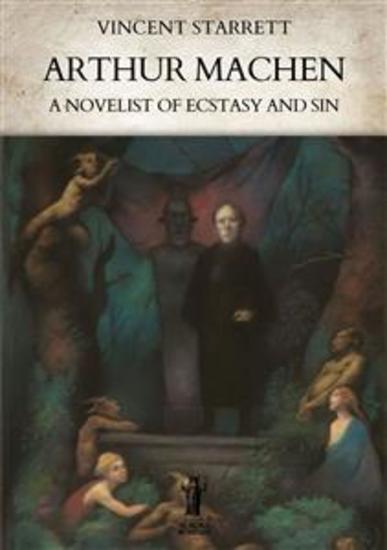
Arthur Machen: A Novelist of Ecstasy and Sin - cover
LER

Arthur Machen: A Novelist of Ecstasy and Sin

Vincent Starrett

Editora: Edizioni Aurora Boreale

  • 0
  • 0
  • 0

Sinopse

Vincent Starrett (1886-1974), was a Canadian-born American writer, journalist, and bibliophile.A great connoisseur and admirer of British literature, Starrett was a major enthusiast of Welsh writer and mystic Arthur Machen and was instrumental in bringing Machen's work to an American audience for the first time.Arthur Machen, best known for his influential supernatural, fantasy, and horror fiction, was above all a great mystic and initiate, and a member of the Hermetic Order of the Golden Dawn.From the beginning of his literary career, Machen espoused a mystical belief that the humdrum ordinary world hid a more mysterious and strange world beyond. His gothic and decadent works of the 1890s concluded that the lifting of this veil could lead to madness, sex, or death, and usually a combination of all three. His later works became somewhat less obviously full of gothic trappings, but for him investigations into mysteries invariably resulted in life-changing transformation.In 1918 Starrett wrote and published in Chicago the essay Arthur Machen: A Novelist of Ecstasy and Sin, which we today repropose to our readers. The essay includes two uncollected poems by Arthur Machen.
Disponível desde: 03/08/2023.

Outros livros que poderiam interessá-lo

  • A Novel in a Nutshell - From their pens to your ears genius in every story - cover

    A Novel in a Nutshell - From...

    George Moore

    • 0
    • 0
    • 0
    The bookshelves of British literature are incredible collections that have gathered together centuries of very talented authors.  From these Isles their fame spread and whilst among their number many are now forgotten or neglected their talents endure.  Among them is George Moore.
    Ver livro
  • The Last Days of Marilyn Monroe - cover

    The Last Days of Marilyn Monroe

    Donald H Wolfe

    • 0
    • 0
    • 0
    In such films as Gentlemen Prefer Blondes and The Seven Year Itch, Marilyn Monroe enchanted and captivated the world. Sixty years after her death, devotion to the pop culture icon is as strong as ever, and the truth about her mysterious death continues to fascinate fans and experts alike. With explosive revelations concerning the "National Security Matter" that led to the cover-up of her murder, The Last Days of Marilyn Monroe provides a fascinating and riveting account of one of the most shocking crimes of the century. Drawing on CIA and FBI files that document Marilyn's relationship with the Kennedys, her break-up with the president, and the bizarre events that took place at her home the day she died, Donald H. Wolfe meticulously chronicles Marilyn's final days, names her killer, and identifies those who orchestrated the cover-up.
    Ver livro
  • Frederick Douglass and Harriet Tubman: The History of the Most Influential Black Activists in 19th Century America - cover

    Frederick Douglass and Harriet...

    Charles River Editors

    • 0
    • 0
    • 0
    With the possible exception of Dr. Martin Luther King, Jr., no African American has been more instrumental in the fight for minorities’ civil rights in the United States than Frederick Douglass, an American social reformer, orator, writer and statesman. His list of accomplishments would be impressive enough even without taking into account the fact that he was born into slavery.  
    	Douglass was born into slavery, and it’s believed his father was a white man, even perhaps his master Aaron Anthony. When Douglass was about 12, his slaveowner’s wife, Sophia Auld, began teaching him the alphabet in defiance of the South’s laws against teaching slaves how to read. When her husband Hugh found out, he was furious, reminding her that if the slave learned to read, he would become dissatisfied with his condition and desire freedom. Those words would prove prophetic. 
    	Douglass is noted as saying that "knowledge is the pathway from slavery to freedom,” and he took that advice to heart, teaching himself how to read and write with his knowledge of the alphabet. On September 3, 1838, Douglass successfully escaped slavery, traveling by boat to Delaware, Philadelphia, and finally New York, all in the span of a day. Douglass found a “new world had opened upon me.” 
    	Harriet Tubman is one of the most famous women in American history, and from an early age every American learns of her contributions to abolition and the Underground Railroad. The woman who became known as the Moses of her people personally led more than 13 expeditions to free slaves in the South, and she was so integral in helping escaped slaves achieve freedom that her name is practically synonymous with the Underground Railroad today.  
    	If anything, the central role she played in the Underground Railroad has become so ingrained among subsequent generations that Tubman’s life has been shrouded in legend, and other important aspects have been overlooked.
    Ver livro
  • The Rise And Fall Of The Confederate Goverment - cover

    The Rise And Fall Of The...

    Jefferson Davis

    • 0
    • 0
    • 0
    Jefferson Davis was an American politician who served as the president of the Confederate States from 1861 to 1865. He represented Mississippi in the United States Senate and the House of Representatives as a member of the Democratic Party before the American Civil War. He had previously served as the United States Secretary of War from 1853 to 1857 under President Franklin Pierce. 
    Davis, the youngest of ten children, was born in Fairview, Kentucky to a moderately prosperous farmer couple. He grew up in Wilkinson County, Mississippi, and also lived in Louisiana. His eldest brother Joseph Emory Davis secured the younger Davis's appointment to the United States Military Academy. After graduating, Jefferson Davis served six years as a lieutenant in the United States Army. He fought in the Mexican–American War (1846–1848) as the colonel of a volunteer regiment. Before the American Civil War, he operated in Mississippi a large cotton plantation that his brother Joseph had given him, and owned as many as 113 slaves. Although Davis argued against secession in 1858, he believed the states had an unquestionable right to leave the Union. 
     
    During the American Civil War, Davis guided Confederate policy and served as its commander-in-chief. When the Confederacy was defeated in 1865, Davis was captured, accused of treason, and imprisoned at Fort Monroe in Hampton, Virginia. He was never tried and was released after two years. Davis's legacy is intertwined with his role as President of the Confederacy. Immediately after the war, he was often blamed for the Confederacy's loss. After he was released, he was seen as a man who suffered unjustly for his commitment to the South, becoming a hero of the Lost Cause of the Confederacy during Reconstruction. This is his story.
    Ver livro
  • Flashbacks - An Autobiography - cover

    Flashbacks - An Autobiography

    Timothy Leary

    • 0
    • 0
    • 0
    Timothy Leary (1920-1996) was an American psychologist, educator, and author who advocated the use of psychedelic drugs. His books included Exo-Psychology, Your Brain Is God, and Turn On, Tune In, Drop Out.
    Ver livro
  • Autobiography of Mother Jones The - Unabridged - cover

    Autobiography of Mother Jones...

    Mother Jones

    • 0
    • 0
    • 0
    Perhaps the most famous labor activist and union organizer in history, Mary Harris Jones was an Irish emigre who watched her husband and four children die of yellow fever, saw her modest dressmaking shop go up in flames in the Great Chicago Fire and, as a lonely, poor widow in the late 19th century, was facing a bleak future.  Then, as she approached old age and became involved in the labor movement, she reinvented herself as "Mother Jones" - a fierce advocate of unionizing coal minors, textile workers and others - and through her work with disenfranchised and abused laborers became one of the most famous Americans of her age.  Jones was a celebrated orator, a fearless supporter of workers rights and a tireless campaigner for the abolition of child labor.  During her later years - chronicled in this book - Jones became a living legend; celebrated by pro-union workers across the country and demonized (and often jailed) by anti-union forces in industry and government.
    Ver livro