Rejoignez-nous pour un voyage dans le monde des livres!
Ajouter ce livre à l'électronique
Grey
Ecrivez un nouveau commentaire Default profile 50px
Grey
Abonnez-vous pour lire le livre complet ou lisez les premières pages gratuitement!
All characters reduced
Caspar David Friedrich Master of the tragic landscape (5 September 1774 – 7 May 1840) - cover

Nous sommes désolés! L'éditeur ou l'auteur a retiré ce livre de notre catalogue. Mais ne vous inquiétez pas, vous pouvez toujours choisir les livres que vous souhaitez parmi plus de 500 000 titres!

Caspar David Friedrich Master of the tragic landscape (5 September 1774 – 7 May 1840)

Victoria Charles

Maison d'édition: Parkstone International

  • 0
  • 0
  • 0

Synopsis

Caspar David Friedrich (1774-1840), a prominent German painter of the 19th century, was a vital figure in the Romantic movement. His artwork is characterised by its poetic and melancholic essence, displaying a profound sense of spirituality and transcendence. In his paintings, he masterfully blended external nature depictions with deep inner symbolism. His often desolate landscapes and grand architecture evoke a yearning for peace, solitude, and spiritual elevation. The skilful utilisation of light and shadow in his composition amplifies the emotional resonance of Friedrich's art, imbuing it with an almost mystical quality. The artistic legacy of Caspar David Friedrich continues to influence contemporary landscape painting. His unparalleled aptitude for capturing the infinite within the finite renders his work a timeless representation of humanity's quest for transcendence and spiritual connection. This biography delves into the life and creations of this remarkable artist, celebrating his invaluable contributions to the evolution of Romantic painting.
Disponible depuis: 10/07/2023.
Longueur d'impression: 84 pages.

D'autres livres qui pourraient vous intéresser

  • The Sun Also Rises - cover

    The Sun Also Rises

    Ernest Hemingway

    • 0
    • 0
    • 0
    The debut novel from the Nobel Prize-winning author that is both a tragic love story and a searing group portrait of hapless American expatriates drinking, dancing, and chasing their dreams in postwar Europe. 
    “An absorbingly beautiful and tenderly absurd, heart-breaking narrative ... It is a truly gripping story.” —The New York Times 
    Ernest Hemingway, winner of the Nobel Prize in Literature in 1954, exerted a lasting influence on fiction in English through his economical prose style that conceals more than it reveals. His first novel, published in 1926, is narrated by world-weary journalist Jake Barnes, who is burdened by a wound acquired in World War I and by his utterly hopeless love for the flamboyantly decadent Lady Brett Ashley. The Sun Also Rises tracks the Lost Generation of the 1920s from the nightclubs of Paris to the bullfighting arenas of Spain
    Voir livre
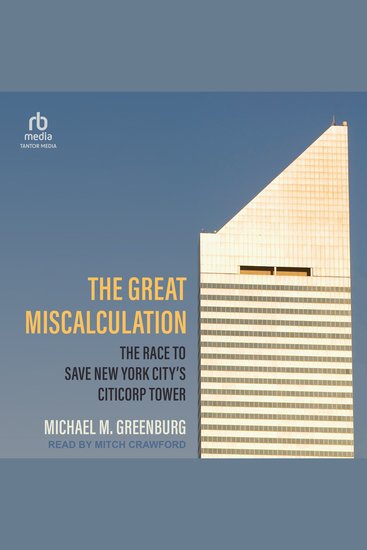
  • The Great Miscalculation - The Race to Save New York City's Citicorp Tower - cover

    The Great Miscalculation - The...

    Michael M. Greenburg

    • 0
    • 0
    • 0
    The Citicorp Center, a fifty-nine-story skyscraper built in 1977, immediately became one of the most recognizable features on the New York City skyline with its distinctive inclined roof and oddly placed support columns. Designed by one of the top structural engineers in the field, William LeMessurier, the tower would become the crown jewel of his professional career; In essence, he created a skyscraper on stilts. The building was a modern marvel—until it was revealed that it had a one in sixteen chance of collapse. 


    The Great Miscalculation tells the riveting story of LeMessurier's discovery of a fatal flaw in his building's design and his decision to blow the whistle on himself, putting his reputation on the line in a race to save this iconic skyscraper. With hurricane season rapidly approaching, the structural design flaws of the Citicorp Tower posed a menacing danger. Meanwhile, the economic hardships and political turmoil of 1970s New York only compounded the obstacles to a massively expensive, never-before-seen structural redesign in the heart of downtown Manhattan. 


    A fascinating piece of overlooked New York City history, The Great Miscalculation tells the gripping narrative of a catastrophe averted in the nick of time.
    Voir livre
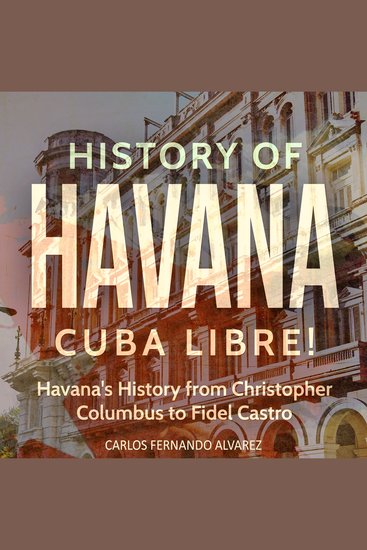
  • History of Havana: Cuba Libre! Havana's History from Christopher Columbus to Fidel Castro - cover

    History of Havana: Cuba Libre!...

    Carlos Fernando Alvarez

    • 0
    • 0
    • 0
    Get to know the ups and downs of Havana 
    Are you planning to visit Havana for your next vacation, to cool off your brain as you learn about Havana’s culture and history? Have you read many confusing stories about Havana, or worse still read for several weeks without getting the real picture of Havana in your previous reading escapades? 
    This book “History of Havana: Cuba Libre! Havana’s History from Christopher Columbus to Fidel Castro” by Carlos Fernando Alvarez is the right reading resource to quench your historical thirst on Havana.This book details the discovery and establishment of Havana and shows the people behind Havana’s establishment and the specific timelines. It also captures the location, the colonial masters and the activities therein.Havana was and still is one of the most strategic and adventurous city in the world. 
    This is what you will be able to learnThe discovery and the establishment of HavanaThe attacks and how the colonial administrations respondedThe century of peaceThe seven years of war because of political and economic alliancesHow foreign invasion affected the economic and demographic landscapeHavana under the rule of Fidel Castro 
    Order Now!
    Voir livre
  • Rarest Interviews - cover

    Rarest Interviews

    Elvis Presley

    • 0
    • 0
    • 0
    A collection of rare, insightful interviews from the one and only King of Rock: Elvis Presley.
    Voir livre
  • Lost Time And The Meaning of Photography - How Images Shape Identity Grief and Collective Memory - cover

    Lost Time And The Meaning of...

    Jason Williams

    • 0
    • 0
    • 0
    This audiobook is narrated by an AI Voice.   
    Do you ever feel like your memories are slipping away—until a photograph brings them flooding back? 
    In a world drowning in images, we're still haunted by one central question: What do photographs do to our memories—and our sense of self? 
    If you've ever wondered why a single photo can evoke tears, trigger buried trauma, or transport you across decades, Lost Time and the Meaning of Photography is your essential guide. Whether you're a photographer, historian, grieving loved one, or simply a human being living in the age of visual overload, this book will challenge your understanding of memory, mourning, and meaning. 
    Unlock the hidden power behind every photograph you've ever taken—or kept. 
    In this gripping and poetic exploration, you'll learn: 
    •	Why photography isn't just a way to capture life, but a way to construct identity. 
    •	How grieving individuals and entire cultures use images to keep the dead alive—and what that means for healing. 
    •	Why do some photographs bring comfort while others deepen the ache of loss? 
    •	The neuroscience behind memory and image—how your brain processes pictures and how it changes who you are. 
    •	How national tragedies and historical trauma are archived, mythologized, or erased through visual media. 
    •	What we risk losing in the flood of selfies, algorithm-curated memories, and disappearing snaps. 
    You'll walk away with a deep understanding of how personal photos shape the story you tell yourself—and how collective images shape the stories nations tell about themselves. 
    Ready to rediscover your past—and reshape your future—one image at a time? 
    Buy Lost Time and the Meaning of Photography today and start your journey into the memory behind the lens.
    Voir livre
  • Mughal Empire - The Taj Mahal Legacy - cover

    Mughal Empire - The Taj Mahal...

    Rolf Hedger

    • 0
    • 0
    • 0
    The Mughal Empire emerged as one of the most powerful and influential dynasties in Indian history, leaving a lasting impact on culture, architecture, and governance. Its foundation was laid by Babur, a descendant of both Timur and Genghis Khan, who established Mughal rule in the early 16th century. Babur's military prowess and strategic vision enabled him to defeat the Delhi Sultanate in the First Battle of Panipat in 1526. This victory marked the beginning of Mughal dominance in the Indian subcontinent. However, Babur’s reign was short-lived, and it was his grandson, Akbar, who truly solidified the empire’s foundation. 
    Akbar ascended the throne at a young age and quickly proved himself to be an exceptional leader. His reign, which lasted from 1556 to 1605, was marked by territorial expansion, administrative reforms, and a commitment to cultural and religious harmony. Unlike previous rulers, Akbar recognized the diversity of India and sought to integrate different communities into his empire. He abolished the jizya tax on non-Muslims, promoted interfaith dialogue, and appointed talented individuals from various backgrounds to key positions in his administration. His policy of religious tolerance and inclusive governance earned him the loyalty of many, contributing to the stability and prosperity of the empire. 
    One of Akbar’s most remarkable achievements was the establishment of an efficient administrative system. He divided his empire into provinces, each governed by appointed officials who reported directly to the central authority. This system ensured effective governance and facilitated tax collection, trade, and law enforcement. Additionally, Akbar introduced a standardized revenue system that helped regulate the economy and promote agricultural growth. His emphasis on merit-based appointments created a well-organized bureaucracy that endured long after his reign.
    Voir livre