Rejoignez-nous pour un voyage dans le monde des livres!
Ajouter ce livre à l'électronique
Grey
Ecrivez un nouveau commentaire Default profile 50px
Grey
Abonnez-vous pour lire le livre complet ou lisez les premières pages gratuitement!
All characters reduced
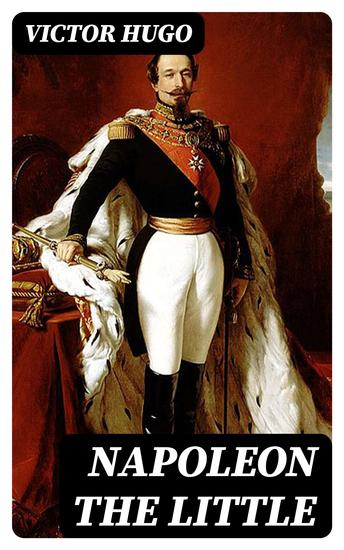
Napoleon the Little - cover

Napoleon the Little

Victor Hugo

Maison d'édition: DigiCat

  • 0
  • 0
  • 0

Synopsis

In "Napoleon the Little," Victor Hugo weaves a passionate and critical portrayal of Napoleon Bonaparte, exploring the complexities of his legacy through a blend of vivid prose and biting political commentary. Written in 1852, during Hugo's exile from France, the book serves both as a biography and a polemic, juxtaposing the grandeur of Napoleon's achievements with the moral impoverishment he perceived in his tyrannical rule. The literary style is marked by Hugo's characteristic lyricism and dramatic flair, infused with a powerful sense of justice that reflects the political turbulence of his time and the dichotomy between idealism and authoritarianism. Victor Hugo, an ardent republican, found himself in exile following the coup d'état of 1851, an event that galvanized his opposition to authoritarian regimes. This personal experience of displacement and political disenfranchisement profoundly influenced his writing, as he sought to expose the dangers of tyranny while advocating for democracy and individual rights. Hugo's earlier works, combined with his deep-seated love for France and its revolutionary ideals, culminated in the urgent need to document and critique Napoleon's impact on European society and politics. "Napoleon the Little" is recommended for readers interested in the intersection of history, literature, and political thought. Hugo's incisive analysis is not only a reflection of his era but also resonates with contemporary discussions regarding leadership, power, and moral responsibility. This work provides invaluable insights for anyone seeking to understand the complexities of one of history's most controversial figures.
Disponible depuis: 15/08/2022.
Longueur d'impression: 190 pages.


D'autres livres qui pourraient vous intéresser

  • Ending Isolation - The Case Against Solitary Confinement - cover

    Ending Isolation - The Case...

    Christopher William Blackwell,...

    • 0
    • 0
    • 0
    The injustice and cruelty of the US carceral system find their barbaric apogee in the practice of solitary confinement. Once deemed a form of torture by the US Supreme Court, "the hole" is still wrongly used as a solution to prison overcrowding and violence. But locking someone in a cell the size of a parking space for months or years causes profound psychological harm. For Christopher Blackwell, it was a harrowing ordeal that changed his life forever. Ending Isolation weaves Chris's vivid account with other stories from solitary, alongside insights from legal and medical experts. Through these narratives and undeniable research, the book makes a powerful case for abolishing this cruel and unusual punishment.
    Voir livre
  • Britain’s Secret Defences - Civilian Saboteurs Spies and Assassins During the Second World War - cover

    Britain’s Secret Defences -...

    Andrew Chatterton

    • 0
    • 0
    • 0
    The first full history of the highly trained and ruthless civilian volunteers secretly trained across Britain to be deployed in the case of a German invasion.The narrative surrounding Britain’s anti-invasion forces has often centered on ‘Dad’s Army’-like characters running around with pitchforks, on unpreparedness and sense of inevitability of invasion and defeat. The truth, however, is very different.  Top-secret, highly trained and ruthless civilian volunteers were being recruited as early as the summer of 1940. Had the Germans attempted an invasion they would have been countered by saboteurs and guerrilla fighters emerging from secret bunkers, and monitored by swathes of spies and observers who would have passed details on via runners, wireless operators and ATS women in disguised bunkers.  Alongside these secret forces, the Home Guard were also setting up their own ‘guerrilla groups’, and SIS (MI6) were setting up post-occupation groups of civilians – including teenagers – to act as sabotage cells, wireless operators, and assassins had the Nazis taken control of the country.  The civilians involved in these groups understood the need for absolute secrecy and their commitment to keeping quiet meant that most went to their grave without ever telling anyone of their role, not even their closest family members. There has been no official and little public recognition of what these dedicated men and women were willing to do for their country in its hour of need, and after over 80 years of silence the time has come to highlight their remarkable role.
    Voir livre
  • Selected Poems of the Tang Dynasty - 精选唐诗 - cover

    Selected Poems of the Tang...

    Wang Yushu

    • 0
    • 0
    • 0
    Tang poetry covers a wide range of subjects and has profound implications, shiny images, ornate diction and longstanding appeal. Different artistic styles and genres appeared at that time as if competing with one another for fascination. Many beautiful Tang poems are still on everyone's lips in China today and turn out to be gems in the treasure house of world literature. 
    The audiobook Selection of Tang Dynasty Poems contains the Tang Dynasty (618-907) poems from Selected Poems and Pictures of the Tang Dynasty, translated by Mr. Wang Yushu. Recited in Chinese and English by professionals, the audiobook is expected to help "readers" coming from varied language and cultural backgrounds to better enjoy the beauty of the Tang Dynasty poems.
    Voir livre
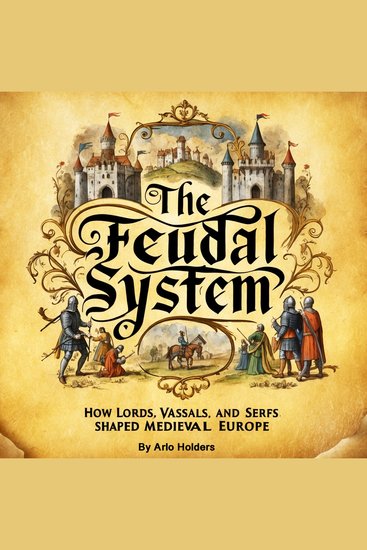
  • The Feudal System - How Lords Vassals and Serfs Shaped Medieval Europe - cover

    The Feudal System - How Lords...

    Arlo Holders

    • 0
    • 0
    • 0
    Feudalism was a dominant social, economic, and political system in medieval Europe that shaped the lives of millions from the 9th to the 15th centuries. Rooted in the decline of the Roman Empire, it emerged as a response to the need for local defense, stability, and order. With the fall of centralized authority, particularly in the wake of the collapse of Roman imperial power, local leaders, and warriors filled the vacuum, giving rise to a new hierarchical structure that became the backbone of medieval society. 
    At the heart of feudalism was the relationship between lords and vassals, defined by a system of land ownership and mutual obligations. The land, or fief, was the most valuable asset in the feudal system. Lords, or landowners, granted portions of their land to vassals, typically in exchange for military service, loyalty, and other obligations. In return for this land, vassals swore an oath of fealty to their lord, pledging to serve him in times of war, provide counsel, and honor the lord’s authority. This bond was often formalized through ceremonies that emphasized loyalty and trust, making feudalism not just a legal arrangement but a deeply personal relationship. 
    In addition to the lord-vassal dynamic, serfs and peasants formed the labor force that sustained the feudal economy. While lords and vassals fought battles and governed lands, serfs worked the fields and managed agriculture, which was the primary source of wealth in the medieval world. Unlike slaves, serfs were bound to the land, unable to leave without their lord’s permission. In exchange for protection and the right to work the land, serfs provided a portion of their crops and other goods as rent.
    Voir livre
  • Your Best Friend - And Other Essays - cover

    Your Best Friend - And Other Essays

    M. B. Werapitiya

    • 0
    • 0
    • 0
    This is an audiobook of Bodhi Leaves No. 90 by M. B. Werapitiya, Your Best Friend: And Other Essays, narrated by Tejendra Patel. The print edition can be found in the Pariyatti Edition of Collected Bodhi Leaves Vol. III. The eBook of Bodhi Leaves No. 90 can be downloaded from the BPS website.
     
    Excerpt:
     
    "To understand ourselves, we must live with ourselves and know all about ourselves. The mind for that matter is flickering, fickle, difficult to guard and control and flutters like a fish taken out of its watery abode and thrown upon the land. Somebody causes you hurt and although the aggressor has disappeared from sight, the hurt grows within you and every so often keeps surfacing with an overpowering intensity to give you a warp. Then again, you see something that has captured your attention and your mind has instantly photographed it from every conceivable angle with a see-through lens, developed it in your mental dark-room, brought out the prints and enlargements with the skill of an expert cameraman and processor rolled into one. Similarly, all the sense faculties and the mind are of high sensitivity and respond to anything and everything exciting. If the degree of excitement is not sufficiently satisfying, you step it up with the use of drugs, intoxicants and poisons. This activity goes on unabated and makes of you a human derelict. A wise person living in his mind protects himself holding himself dear. Such a person whose senses are subdued, whose pride is destroyed and is free from corruptions, is calm of mind, speech and action and rightly knows, and is perfectly peaceful and equipoised."
    Voir livre
  • The Great Reorganisation - Evolving Beyond Conflict to Building a Living Future - cover

    The Great Reorganisation -...

    Ylia Callan

    • 0
    • 0
    • 0
    This audiobook is narrated by an AI Voice.   
    Humanity stands at a pivotal moment. For centuries, conflict, inequality, and environmental collapse have defined the systems we rely on. Yet the knowledge, technology, and creativity to evolve beyond these crises already exist. The Great Reorganisation: Evolving Beyond Conflict to Building a Living Future presents a bold, integrative vision for the transformation of civilisation. 
    This book explores how education, culture, governance, technology, and economy can be realigned to serve life itself. It envisions a world where militaries and conflicts are replaced by global cooperative competitions, where open-source innovation accelerates progress, and where economies measure wealth not in profit but in well-being, equity, and environmental health. Through principles of regenerative design, the book demonstrates how cities, agriculture, energy systems, and finance can operate in harmony with natural ecosystems rather than against them. 
    At its core, The Great Reorganisation emphasises consciousness. Individual and collective awareness are presented as the foundation of planetary intelligence, enabling humanity to respond to crises with foresight, empathy, and creativity. From cultivating inner resilience to fostering global collaboration, the book provides practical frameworks for integrating mindfulness, ethics, and innovation into every aspect of society. 
    This work is both a call and a guide: a call to reimagine what is possible, and a guide to implementing the systems, practices, and cultural shifts needed to bring that possibility to life. It offers readers the tools to participate actively in shaping a sustainable, equitable, and vibrant civilisation.
    Voir livre