Begleiten Sie uns auf eine literarische Weltreise!
Buch zum Bücherregal hinzufügen
Grey
Einen neuen Kommentar schreiben Default profile 50px
Grey
Jetzt das ganze Buch im Abo oder die ersten Seiten gratis lesen!
All characters reduced
The New Poetry: An Anthology - cover

The New Poetry: An Anthology

Various Various

Verlag: DigiCat

  • 0
  • 0
  • 0

Beschreibung

The New Poetry: An Anthology encapsulates a vibrant and diverse collection of contemporary poems, showcasing a myriad of voices that reflect the complexities of modern existence. With a focus on innovative forms and bold thematic explorations, this anthology embraces the rich tapestry of styles ranging from lyrical to confessional, while challenging traditional poetic conventions. The editors curate the selected works with a keen eye for authenticity and cultural relevance, situating them within the broader literary context of a postmodern society marked by rapid change and the quest for identity. The editors of The New Poetry represent a collective of established and emerging poets who are both shaped by and respond to the cultural zeitgeist of the 21st century. Their varied backgrounds, experiences, and artistic philosophies converge to provide readers with a multifaceted perspective on contemporary life. Each contributor brings their unique narrative and stylistic approach, reflecting a world in which voice is increasingly democratized yet profoundly fragmented. This anthology is highly recommended for anyone seeking to engage with the pulse of modern poetry. It offers an enlightening journey through the current poetic landscape, making it an essential read for students, enthusiasts, and scholars alike—an exploration that promises to inspire, challenge, and resonate long after the last page is turned.
Verfügbar seit: 03.06.2022.
Drucklänge: 229 Seiten.
Weitere Bücher, die Sie mögen werden

  • Poetics - The Foundations of Storytelling and Dramatic Theory - cover

    Poetics - The Foundations of...

    Aristotle, Tim Zengerink

    • 0
    • 0
    • 0
    What if you could master the art of storytelling, understand the essence of great drama, and unlock the timeless secrets behind compelling narratives? 
    Poetics brings you Aristotle’s groundbreaking exploration of storytelling, carefully translated and adapted for the modern reader. 
    Written over two thousand years ago, Poetics is the cornerstone of literary theory and dramatic structure. Aristotle examines the elements that make stories resonate—plot, character, conflict, and catharsis—revealing what separates a great story from a forgettable one. His insights continue to influence writers, filmmakers, playwrights, and creators across the world. 
    This is not just an ancient text—it’s a practical guide to understanding the foundations of storytelling and how to create narratives that captivate audiences. Whether you’re a writer, filmmaker, student, or lover of literature, Aristotle’s teachings offer essential tools for mastering your craft and appreciating great works of art. 
    What You’ll Discover in This Modern Translation: 
    - Aristotle’s principles for crafting compelling stories with powerful structure, plot, and themes. 
    - How characters and their struggles create emotional impact and drive engaging narratives. 
    - The emotional power of drama and how stories can move and transform their audience. 
    - Aristotle’s insights in clear, modern language that makes his teachings practical and relevant for today. 
    Imagine having the knowledge to craft engaging stories, understand the mechanics of dramatic tension, and appreciate the art behind great literature and film. This modern translation of Poetics delivers Aristotle’s insights in a practical format, empowering you to master the art of storytelling. 
    Get your copy today and begin your journey toward mastering the foundations of storytelling with Aristotle’s timeless wisdom.
    Zum Buch
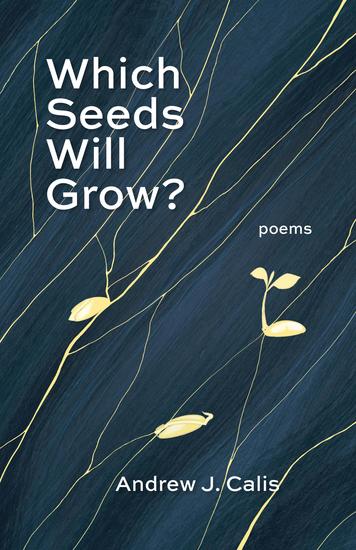
  • Which Seeds Will Grow? - Poems - cover

    Which Seeds Will Grow? - Poems

    Andrew Calis

    • 0
    • 0
    • 0
    A new collection of poems by Palestinian-American Catholic poet Andrew Calis, Which Seeds Will Grow? ​finds hope in the Holy Land.
    Grappling with his identity as a Christian Palestinian American, Andrew Calis recalls his father who saw Israeli jets swoop over his house in Jerusalem and a military helicopter fire bullets into his front yard. The same father who wouldn't teach his children Arabic, for fear that they would have accented English, who kept his past close to his chest—unknown to his son. He recounts the death of his grandfather, a grandfather who would beat his father, and for whom he could not fully mourn because Arab men don't cry.
    Andrew Calis digs through the pain of his family and of his homeland to find the fragile seed of contained life and delicate hope for the Holy Land—and reflects on how tenderly that seed must be nurtured.
    Steeped in wonder, Which Seeds Will Grow? explores the past and the present, from ancient Jerusalem to Baltimore's gardens and alleys through the lens of a Palestinian American. The poems are patient, waiting for seasons to end, waiting for space to expand outward, and waiting for light to touch the earth. Despite the difficulty of waiting, readers will find hope in hopelessness and comfort in the contemplation of the world and its sacred mysteries.
    From Which Seeds Will Grow?
    Planting a Garden 
    
    Stealing clippings from neighbors' yards
    
    And smiling as they grew their own blooms
    
    In the safe and hidden rooms where we
    
    Keep watch on them like they are our children.
    
    ***
    
    Nothing grew. We knew this was
    
    A possibility, had read
    
    It sometimes takes two years,
    
    And we hoped in spite of only dirt
    
    For the green that could be anything.
    Perhaps we dug too shallow or too close
    
    To the shade, or stepped where we had already planted,
    
    Either crushing roots or breaking their curled
    
    First shoots before they broke the surface.
    
    ***
    
    So when one survived, wove a green line
    
    Of its own, thinly sprouting something unknowable, I ran
    
    Inside and for a moment felt
    
    What John must have felt
    
    Leaving Peter, old and unsteadily running,
    
    And running breathlessly
    
    To tell everyone —
    
    Everyone
    
    What had happened
    
    And how you wouldn't believe your eyes.
    Zum Buch
  • Falsely Accused - cover

    Falsely Accused

    Pamela J

    • 0
    • 0
    • 0
    Is Spank a cheater? Or is Daphne just an insecure, paranoid wife, who believes her husband is always cheating if she is not right in front of him.  Come alone to find out if Spank is a loving caring husband or if Daphne is right and he is a cheater or is Spank just is Falsely Accused
    Zum Buch
  • Quantum A New Reality - cover

    Quantum A New Reality

    Justin Wesenberg

    • 0
    • 0
    • 0
    Quantum is a channeled poetry book about manifesting a new reality for ourselves, and the planet.  
    This poetry book is for those who are ready to attract, manifest, and magnetize all that they desire. 
    It’s time to create 
    A new reality 
    So that you can live 
    In your totality 
    Beautiful and abundant 
    Alive and free 
    It's now time 
    For you to see 
    How to create and manifest 
    All that you believe 
    So that you can allow yourself 
    To truly receive 
    All that you wish for 
    And all that you desire 
    Will come to you 
    In the sacred fire 
    Allow yourself 
    To illuminate the night 
    And shine like the stars 
    With your infinite light 
    This channeled poetry book was inspired by the quantum queen, who helped me write a brand new dream. 
    If it’s time for you to attract, manifest, and magnetize all your desires, allow Quantum A New Reality to help you anchor the vibration of a new reality!
    Zum Buch
  • The Rupture Tense - Poems - cover

    The Rupture Tense - Poems

    Jenny Xie

    • 0
    • 0
    • 0
    Shaped around moments of puncture and release, The Rupture Tense registers what leaks across the breached borders between past and future, background and foreground, silence and utterance. In polyphonic and formally restless sequences, Jenny Xie cracks open reverberant, vexed experiences of diasporic homecoming, intergenerational memory  
    transfer, state-enforced amnesia, public secrecies, and the psychic fallout of the Chinese Cultural Revolution. Across these poems, memory—historical, collective, personal—stains and erodes. Xie voices what remains irreducible in our complex entanglements with familial ties, language, capitalism, and the histories in which we find ourselves lodged. 
     
    The Rupture Tense begins with poems provoked by the photography of Li Zhensheng, whose negatives, hidden under his floorboards to avoid government seizure, provide one of the few surviving visual archives of the Chinese Cultural Revolution, and concludes with an aching elegy for the poet’s grandmother, who took her own life shortly after the end  
    of the Revolution. This extraordinary collection records the aftershocks and long distances between those years and the present, echoing out toward the ongoing past and a trembling future.
    Zum Buch
  • Gitanjali - cover

    Gitanjali

    Rabindranath Tagore

    • 0
    • 0
    • 0
    Gitanjali is a collection of 103 poems in English, largely translations by the Bengali poet Rabindranath Tagore. This volume became very famous in the West, and was widely translated into other languages. In England a slender volume was published in 1913, with an exhilarating preface by W. B. Yeats. In the same year, Rabindranath became the first non-European to win the Nobel prize. (summary by Hilara)"On many an idle day have I grieved over lost time. But it is never lost, my lord. Thou hast taken every moment of my life in thine own hands.Hidden in the heart of things thou art nourishing seeds into sprouts, buds into blossoms, and ripening flowers into fruitfulness.I was tired and sleeping on my idle bed and imagined all work had ceased. In the morning I woke up and found my garden full with wonders of flowers." 81, Gitanjali
    Zum Buch