Rejoignez-nous pour un voyage dans le monde des livres!
Ajouter ce livre à l'électronique
Grey
Ecrivez un nouveau commentaire Default profile 50px
Grey
Abonnez-vous pour lire le livre complet ou lisez les premières pages gratuitement!
All characters reduced
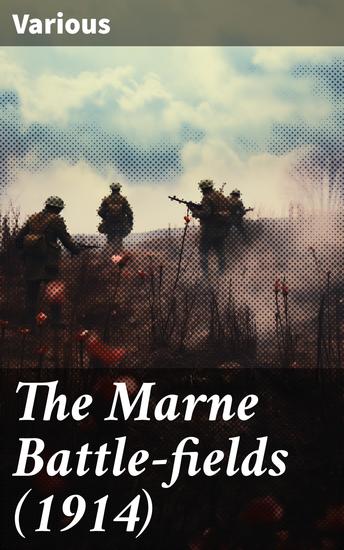
The Marne Battle-fields (1914) - A Glimpse into the Battlefields of World War I - cover

The Marne Battle-fields (1914) - A Glimpse into the Battlefields of World War I

Various Various

Maison d'édition: Good Press

  • 0
  • 0
  • 0

Synopsis

In "The Marne Battle-fields (1914)", various authors compile a compelling chronicle of the pivotal First Battle of the Marne, which marked a critical turning point in World War I. The text employs a vivid and immersive literary style, interweaving personal narratives with military analysis to convey the chaos and valor of the battle. The descriptions not only detail the strategic maneuvers involved but also poignantly capture the human experiences of the soldiers. Set against the backdrop of early 20th-century warfare, this work reflects the historical significance and devastating toll of one of the war's most consequential engagements. The authors, comprised of military historians and veterans, delve into their first-hand experiences and scholarly research to provide a nuanced understanding of the battle's impact on the course of the war. Their diverse perspectives stem from a shared commitment to ensuring that the sacrifices made during this tumultuous period are not forgotten, reflecting their own connections to the events and the broader historical implications for Europe. I highly recommend "The Marne Battle-fields (1914)" to scholars and general readers alike, as it offers both an intimate portrayal of battle and a detailed strategic analysis. This book is an essential addition to any library focused on military history, World War I studies, or the exploration of human endurance in times of conflict.
Disponible depuis: 25/10/2023.
Longueur d'impression: 450 pages.

D'autres livres qui pourraient vous intéresser

  • Procrastination - What It Is Why It's a Problem and What You Can Do About It - cover

    Procrastination - What It Is Why...

    Fuschia M. Sirois

    • 0
    • 0
    • 0
    Why do we procrastinate? How can we stop wasting time, and finish our work? 


    Drawing on the latest theory and research, this book explains why people procrastinate, and provides practical, evidence-based strategies to help you stop delaying, complete your tasks, and fulfill your potential. At the heart of procrastination are your emotions and ability to regulate your mood. In this book you will learn how to dial down negative emotions, and replace old habits with new ones that can help you stay on track with your tasks and goals. You will also learn how to treat your procrastination with compassion, rather than harsh judgments or complicated analyses of your motivation. 


    Exercises in the book help you recognize why a task might be triggering negative feelings, plus how to be more self-compassionate, and how to build meaning into the everyday tasks that help you reach your goals. This book is ideal for anyone who struggles with procrastination, or knows someone who does, and who is looking for evidence-based insights and strategies for dealing with procrastination.
    Voir livre
  • We Were Once a Family - A Story of Love Death and Child Removal in America - cover

    We Were Once a Family - A Story...

    Roxanna Asgarian

    • 0
    • 0
    • 0
    One of Literary Hub's most anticipated books of 2023"Narrator Suehyla El-Attar gives an impassioned performance that enhances the touching, terrifying tale of social injustice and systemic failure. Her delivery is compelling and clear, evoking a captivating listening experience from this true-crime tragedy."- Library JournalThe shocking, deeply reported story of a murder-suicide that claimed the lives of six children—and a searing indictment of the American foster care system.On March 26, 2018, rescue workers discovered a crumpled SUV and the bodies of two women and several children at the bottom of a cliff beside the Pacific Coast Highway. Investigators soon concluded that the crash was a murder-suicide, but there was more to the story: Jennifer and Sarah Hart, it turned out, were a white married couple who had adopted the six Black children from two different Texas families in 2006 and 2008. Behind the family's loving facade, however, was a pattern of abuse and neglect that went ignored as the couple withdrew the children from school and moved across the country. It soon became apparent that the State of Texas knew very little about the two individuals to whom it had given custody of six children—with fateful consequences.In the manner of Adrian Nicole LeBlanc's Random Family and other classic works of investigative journalism, Roxanna Asgarian’s We Were Once a Family is a revelation of vulnerable lives; it is also a shattering exposé of the foster care and adoption systems that produced this tragedy. As a journalist in Houston, Asgarian became the first reporter to put the children’s birth families at the center of the story. We follow the author as she runs up against the intransigence of a state agency that removes tens of thousands of kids from homes each year in the name of child welfare, while often failing to consider alternatives. Her reporting uncovers persistent racial biases and corruption as children of color are separated from birth parents without proper cause. The result is a riveting narrative and a deeply reported indictment of a system that continues to fail America’s most vulnerable children while upending the lives of their families.A Macmillan Audio production from Farrar, Straus and Giroux.
    Voir livre
  • The US Supreme Court - A Very Short Introduction - cover

    The US Supreme Court - A Very...

    Linda Greenhouse

    • 0
    • 0
    • 0
    For thirty years, Pulitzer Prize-winning journalist Linda Greenhouse chronicled the activities of the U.S. Supreme Court and its justices as a correspondent for the New York Times. In this Very Short Introduction, she draws on her deep knowledge of the court's history and of its written and unwritten rules to show listeners how the Supreme Court really works. 


    Greenhouse offers a fascinating institutional biography of a place and its people—men and women who exercise great power but whose names and faces are unrecognized by many Americans and whose work often appears cloaked in mystery. How do cases get to the Supreme Court? How do the justices go about deciding them? What special role does the chief justice play? What do the law clerks do? How does the court relate to the other branches of government? Greenhouse answers these questions by depicting the justices as they confront deep constitutional issues or wrestle with the meaning of confusing federal statutes. Throughout, the author examines many individual Supreme Court cases to illustrate points under discussion. 


    The third edition of Greenhouse's Very Short Introduction tracks the changes in the Court's makeup over the past decade, including the landmark decisions of the Obama and Trump eras and the emergence of a conservative supermajority.
    Voir livre
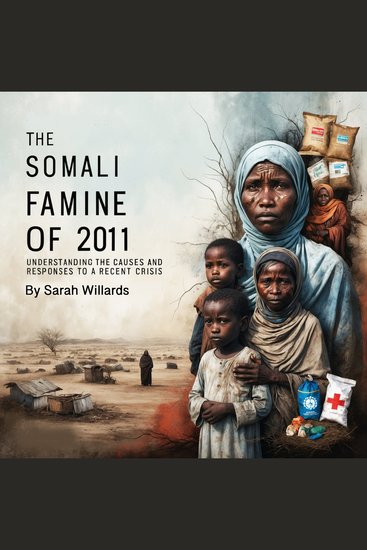
  • The Somali Famine of 2011 - Understanding the Causes and Responses to a Recent Crisis - cover

    The Somali Famine of 2011 -...

    Sarah Willards

    • 0
    • 0
    • 0
    The Somali Famine of 2011 stands as one of the most devastating humanitarian crises of the 21st century. It resulted in the deaths of tens of thousands of people, the majority of whom were children, and displaced millions of others. The famine, which lasted from mid-2010 to early 2012, was driven by a combination of environmental, political, and social factors. This chapter will examine the key aspects of the crisis, providing an understanding of how it emerged and what made it so catastrophic. 
    The roots of the famine can be traced to a severe drought that affected much of the Horn of Africa in 2011. The drought, one of the worst in decades, was exacerbated by irregular rainfall patterns linked to climate change. Somalia, already a country struggling with inadequate infrastructure and poor governance, faced dire consequences as crops failed, livestock perished, and food supplies dwindled to critical levels. The lack of sufficient rainfall and water sources left millions without the means to grow food or sustain their livelihoods. 
    However, the drought alone was not the sole cause of the famine. Somalia had been suffering from ongoing conflict and instability for years. The rise of militant groups, particularly the Al-Shabaab insurgency, contributed to the breakdown of essential services, such as food distribution and medical care. The instability also hindered the ability of international aid organizations to access those in need, which only deepened the crisis. The government’s weak control over large portions of the country and its inability to respond effectively to the disaster further complicated the situation.
    Voir livre
  • Sulla and Gaius Marius: The Lives and Legacies of the Leaders Who Fought Rome’s First Civil War - cover

    Sulla and Gaius Marius: The...

    Editors Charles River

    • 0
    • 0
    • 0
    Caesar is still remembered for winning a civil war and helping bring about the end of the Roman Republic, leaving a line of emperors in its place, but it’s quite possible that none of what Caesar did would’ve happened without the template for such actions being set 40 years earlier. At the time, when Caesar was in his teens, war was being waged both on the Italian peninsula and abroad, with domestic politics pitting the conservative, aristocratic optimates against the populist, reformist populares, and this tension ultimately escalated into an all-out war. One of the leading populares was Caesar’s uncle, Gaius Marius, a military visionary who had restructured the legions and extended the privileges of land ownership and citizenship to legionaries on condition of successful completion of a fixed term of service. In the late 2nd century BCE, Marius had waged a successful campaign against several Germanic tribes, and after earning eternal fame in the Eternal City, Marius was appointed a consul several times. In 88 BCE, he entered into conflict with his erstwhile protégé, the optimate Sulla, over command of the army to be dispatched against Mithridates VI of Pontus, a long-time enemy of Rome and its Greek allies.   
    	Ironically, Marius’s reforms had made the legions fiercely loyal to their individual generals rather than the state, which allowed Sulla to march his army against Rome and force Marius into exile. With that, Rome’s first civil war was officially underway, but Sulla’s triumph proved short-lived. Just as Sulla departed for a campaign, Marius returned at the head of a scratch army of veterans and mercenaries, taking over the city and purging it of Sulla’s optimate supporters, and though Marius died in 86 BCE, his party remained in power. 
    Voir livre
  • Racial Emotion at Work - Dismantling Discrimination and Building Racial Justice in the Workplace - cover

    Racial Emotion at Work -...

    Tristin K. Green

    • 0
    • 0
    • 0
    This timely book unravels race and emotion in the workplace—exploring why racial emotion is often left out of equity conversations and why we must confront it. 


    Racial Emotion at Work is an invitation to understand our own emotions and associated behaviors around race—and much more. With this surprising and timely book, Tristin K. Green takes us beyond diversity trainings and other individualized solutions to discrimination and inequality in employment, calling for sweeping changes in how the law and work organizations treat and shape racial emotions. 


    Green provides listeners with the latest research on racial emotions in interracial interactions and ties this research to thinking about discrimination and disadvantage at work. We see how our racial emotions can result in discrimination, and how our institutions—the law and work organizations—value and skew our racial emotions in ways that place the brunt of negative consequences on people of color. It turns out we need to reset our institutional and not just our personal radars on racial emotion to advance racial justice. Racial Emotion at Work shows how we can rise to the task.
    Voir livre