Rejoignez-nous pour un voyage dans le monde des livres!
Ajouter ce livre à l'électronique
Grey
Ecrivez un nouveau commentaire Default profile 50px
Grey
Abonnez-vous pour lire le livre complet ou lisez les premières pages gratuitement!
All characters reduced
Old English Chronicles - Enriched edition - cover

Old English Chronicles - Enriched edition

Various Various

Maison d'édition: DigiCat

  • 0
  • 0
  • 0

Synopsis

The "Old English Chronicles" is a compendium that encapsulates the rich historical narratives of early medieval England, showcasing a literary style that blends poetic verse with prose. These chronicles serve not only as historical documentation but also as a reflection of the social, political, and cultural milieu of the time. The intricacies of Old English provide readers with a linguistic window into the era, while the chronicles' vivid storytelling and moral undertones echo the anxieties and aspirations of a society grappling with the influx of Christianity, the struggle for power, and the preservation of tradition amidst change. Compiled by various authors, these chronicles bear witness to the evolution of Old English literature, likely stemming from a desire to record national identity and the tumultuous past of Anglo-Saxon England. The collaborative nature of these texts reflects a community effort to safeguard their heritage, which is crucial in understanding the duality of oral traditions and written records during this period. These chronicles illustrate the complexities of cultural memory in a time when sources were often scarce and the historical narrative was contested. For scholars, students, and enthusiasts of medieval history and literature alike, the "Old English Chronicles" is an indispensable resource that vividly brings to life the early English experience. This book not only enriches our understanding of the past but also invites readers to ponder the mechanisms of memory, identity, and narrative construction that continue to resonate in contemporary society.

In this enriched edition, we have carefully created added value for your reading experience:
- An Introduction draws the threads together, discussing why these diverse authors and texts belong in one collection.
- Historical Context explores the cultural and intellectual currents that shaped these works, offering insight into the shared (or contrasting) eras that influenced each writer.
- A combined Synopsis (Selection) briefly outlines the key plots or arguments of the included pieces, helping readers grasp the anthology's overall scope without giving away essential twists.
- A collective Analysis highlights common themes, stylistic variations, and significant crossovers in tone and technique, tying together writers from different backgrounds.
- Reflection questions encourage readers to compare the different voices and perspectives within the collection, fostering a richer understanding of the overarching conversation.
Disponible depuis: 10/08/2022.
Longueur d'impression: 581 pages.

D'autres livres qui pourraient vous intéresser

  • Axum Empire - The African Kingdom That Controlled the Red Sea Trade - cover

    Axum Empire - The African...

    Rolf Hedger

    • 0
    • 0
    • 0
    This audiobook is narrated by an AI Voice.  
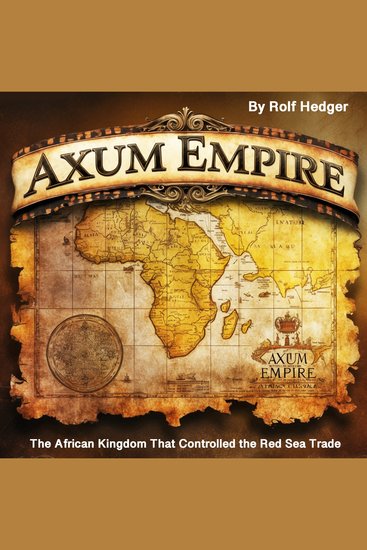
    The Axum Empire was one of the most influential civilizations in ancient Africa, flourishing between the 4th and 7th centuries AD. It was located in what is today northern Ethiopia and parts of Eritrea, strategically positioned along the Red Sea trade routes. This placement not only allowed Axum to thrive economically but also made it a key player in global trade between Africa, the Middle East, and Asia. The kingdom of Axum’s rise to prominence marked a pivotal moment in African history, shaping the culture, economy, and politics of the region for centuries. 
    The origins of the Axum Empire are somewhat shrouded in mystery, but its establishment is often linked to the rise of the city of Axum (also spelled Aksum) around the 1st century AD. According to various historical accounts, Axum was originally a small kingdom that grew in power through trade, conquest, and political alliances. It eventually became one of the most advanced civilizations of its time, possessing advanced knowledge of agriculture, architecture, and metallurgy. 
    At its height, the Axum Empire was an extraordinary political and economic entity. The kingdom controlled an extensive territory that stretched from modern-day Ethiopia and Eritrea to parts of Sudan and Arabia. Axum became a major center for trade, exporting goods such as ivory, gold, frankincense, and myrrh, while also importing luxury goods from Roman, Indian, and Arabian merchants. The city of Axum itself was known for its monumental obelisks, palaces, and sophisticated urban planning.
    Voir livre
  • Angelica - For Love and Country in a Time of Revolution - cover

    Angelica - For Love and Country...

    Molly Beer

    • 0
    • 0
    • 0
    Few women of the American Revolution have come through 250 years of US history with such clarity and color as Angelica Schuyler Church. She was Alexander Hamilton's "saucy" sister-in-law, and the heart of Thomas Jefferson's "charming coterie" of artists and salonnières in Paris. Her transatlantic network of important friends spanned the political spectrum of her time and place, and her astute eye and brilliant letters kept them well informed. 


    A woman of great influence in a time of influential women (Catherine the Great and Marie-Antoinette were contemporaries), Angelica was at the red-hot center of American history at its birth: in Boston, when General Burgoyne surrendered to the revolutionaries; in Newport, receiving French troops under the command of her soon-to-be dear friend Marquis de Lafayette; in Yorktown, just after the decisive battle; in Paris and London, helping to determine the standing of the new nation on the world stage. 


    In this enthralling and revealing woman's-eye view of a revolutionary era, Molly Beer breathes vibrant new life into a period usually dominated by masculine themes and often dulled by familiarity. In telling Angelica's story, she illuminates how American women have always plied influence and networks for political ends, including the making of a new nation.
    Voir livre
  • Union Intelligence in the Civil War: The History of the North’s Spy Networks and Covert Operations against the Confederates - cover

    Union Intelligence in the Civil...

    Charles River Editors

    • 0
    • 0
    • 0
    Americans have long been fascinated by the Civil War, marveling at the size of the battles, the leadership of the generals, and the courage of the soldiers. Since the war's start over 150 years ago, the battles have been subjected to endless debate among historians and the generals themselves. The Civil War was the deadliest conflict in American history, and had the two sides realized it would take four years and inflict over a million casualties, it might not have been fought. Since it did, however, historians and history buffs alike have been studying and analyzing the biggest battles ever since.  
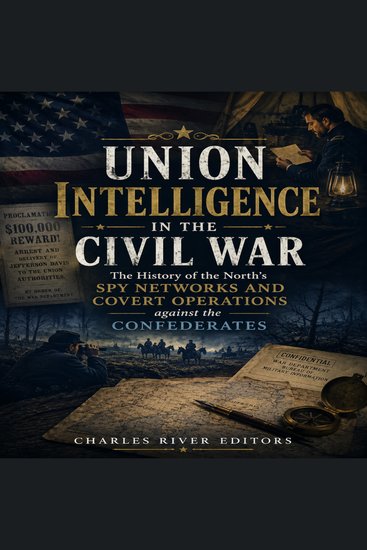
    In September 1862, the Union had no intelligence service worthy of the name. It had detectives, scouts, scattered networks of informants, balloons, signal flags, and a great deal of luck, but the federal government did not have a coordinated system, to the extent that military commanders did not know enemy troop strength. In fact, General George McClellan spent most of his time in command of the Army of the Potomac dramatically overestimating the size of Robert E. Lee's Confederate army in front of him, and it would inform how he fought at Antietam on September 17, 1862. At that battle, McClellan believed Lee outnumbered him because his intelligence chief, Allan Pinkerton, had told him so. 
    	By the end of the war, the Union would be running the most sophisticated intelligence operations in American history to that point. The government eventually forged an integrated, all-source, professional service that fed the commanding generals daily reports on enemy strength, disposition, morale, and intent. The Union also successfully maintained a network of spies inside the Confederate capital that intercepted enemy signal traffic; read Southern newspapers for what the editors had let slip, and used escaped slaves as sources of intelligence and treated their testimony as it deserved to be treated.
    Voir livre
  • The Cascade Effect of Migration Deals - Culture Human Rights and Neo-Colonialism - cover

    The Cascade Effect of Migration...

    Anna Fausta Scardigno, Martina...

    • 0
    • 0
    • 0
    This volume offers a rigorous and interdisciplinary exploration of how the European Union's externalization of migration governance has reshaped territorial, political, and human landscapes at its periphery. Tracing the aftermath of the 2015 migration crisis, the volume examines how informal agreements with Turkey, Libya, Tunisia, and Albania initiated a cascading logic that normalizes legal opacity, erodes accountability, and institutionalizes human rights violations. Moving beyond legal and geopolitical critique, the book investigates the entanglement of migration containment with tourism development in border regions such as Lampedusa and Lesvos, exposing how these territories become doubly burdened as sites of both securitization and commodification. By engaging with law, postcolonial theory, and critical tourism studies, the authors reveal the neo-colonial dynamics underlying EU mobility governance and advance alternative models grounded in accountability, territorial justice, and the defense of fundamental rights.
    Voir livre
  • Cognitive Behavioral Therapy - cover

    Cognitive Behavioral Therapy

    Franz Bement

    • 0
    • 0
    • 0
    If you’re someone suffering from excessive anxiety disorder, chronic depression, or fear so crippling it may well be a phobia, but you are not sure what to actually do concerning the treatment options, then Cognitive Behavioral Therapy: Complete Guide to Retraining Your Brain to Overcome Anxiety and Depression is the audiobook you have been waiting for.Cognitive Behavioral Therapy (CBT) is a type of psychotherapy that analyzes the response you feel to specific sets of stimuli and then asks why it is that you feel the way you do. As anxiety, depression, low self-esteem, and phobias, when left untreated, can all lead to irrational responses to common scenarios as they can easily result in altered perceptions of reality and all-around distorted thinking. When used correctly, CBT offers patients an alternative that promotes realistic, healthy thought. Acquire knowledge of depression and anxiety as they pertain to the symptoms that occur and the causes of the disorders.Take some time to learn about the various subcategories of each disorder and the ways in which they may present at differing ages of onset. Find out when and why depression and anxiety disorders are likely to occur. Discover the specific ways in which cognitive behavioral therapy is designed to work as a treatment plan for both anxiety disorders and depressive disorders.You will learn:- About Cognitive Behavioral Therapy and the secret behind the use of CBT for successful treatment of anxiety and depressive disorder.- CBT techniques used by professionals to help people in dealing with a wide variety of anxiety, depression, low self-esteem, suicidal, and negative thoughts.- Ways to successfully manage your symptoms- Common symptoms and side effects of anxiety and depressive disorders.- Different ways in which anxiety, depression, low self-esteem, and negative thoughts can be overcome.- And many more...So, what are you waiting for? Cop yours today and start your healing journey!
    Voir livre
  • Steppe Nomads The: The History of the Different Nomadic Groups and Their Raids into Europe - cover

    Steppe Nomads The: The History...

    Editors Charles River

    • 0
    • 0
    • 0
    Though history is usually written by the victors, the lack of a particularly strong writing tradition from the Mongols ensured that history was largely written by those who they vanquished. Because of this, their portrayal in the West and the Middle East has been extraordinarily (and in many ways unfairly) negative for centuries, at least until recent revisions to the historical record. The Mongols have long been depicted as wild horse-archers galloping out of the dawn to rape, pillage, murder and enslave, but the Mongol army was a highly sophisticated, minutely organized and incredibly adaptive and innovative institution, as witnessed by the fact that it was successful in conquering enemies who employed completely different weaponry and different styles of fighting, from Chinese armored infantry to Middle Eastern camel cavalry and Western knights and men-at-arms.  
    	Geographically the Tatars descend from several parts of Asia, particularly Central Asia, but the Crimean region has been the nexus of several great power rivalries and numerous conflicts. Yet the Crimean Tatars endured through many of these, aligning themselves with a number of larger powers and developing a reputation as fearsome warriors. Today the Tatars are mainly linked with and live in the Volga region of the Russian Federation. Indeed, Tatarstan is a republic in modern Russia. The “Volga Tatars” are perhaps the best known of the peoples known as Tatars and today number about 5 million people.  
    	Before the Mongols rode across the steppes of Asia and Eastern Europe, the Cumans were a major military and cultural force that monarchs from China to Hungary and from Russia to the Byzantine Empire faced, often losing armies and cities in the process. The Cumans were a tribe of Turkic nomads who rode the steppes looking for plunder and riches, but they rarely stayed long after they got what they wanted. 
    Voir livre