Rejoignez-nous pour un voyage dans le monde des livres!
Ajouter ce livre à l'électronique
Grey
Ecrivez un nouveau commentaire Default profile 50px
Grey
Abonnez-vous pour lire le livre complet ou lisez les premières pages gratuitement!
All characters reduced
Arden of Feversham - cover

Arden of Feversham

Various Various

Maison d'édition: DigiCat

  • 0
  • 0
  • 0

Synopsis

Arden of Feversham presents a gripping exploration of domestic tragedy, attributed to various playwrights, likely echoing the collaborative nature of Elizabethan drama. The play unfolds in a narrative steeped in darkness, centering on betrayal, jealousy, and murder, as it follows the doomed marriage of Arden and his unfaithful wife, Alice. Characterized by its raw emotional depth and vivid dialogue, the work serves as an early example of the domestic tragedy genre, challenging the ideals of love and fidelity while exposing the fragility of human relationships in a society grappling with moral ambiguity. While the true authorship remains debated, Arden of Feversham reflects the volatile social landscape of late 16th-century England, impacted by personal and political upheavals. Its focus on intimate domestic spaces contrasts sharply with the grand historical narratives of the time, offering an introspective look at individual lives. This thematic preoccupation mirrors contemporary anxieties about honor and betrayal, likely resonating with audiences who sought to critique the society around them. Recommended for both scholars and general readers, Arden of Feversham invites a profound reflection on the darker aspects of human nature and relationships. Its rich characterization and emotional complexity provide fertile ground for discussion, making it an essential read for those interested in the evolution of English drama and the human condition.
Disponible depuis: 15/09/2022.
Longueur d'impression: 65 pages.

D'autres livres qui pourraient vous intéresser

  • Pamphilia to Amphilanthus - cover

    Pamphilia to Amphilanthus

    Lady Mary Wroth

    • 0
    • 0
    • 0
    Pamphilia to Amphilanthus is the first sonnet sequence written by an Englishwoman. Published in 1621, the poems invert the usual format of sonnet sequences by making the speaker a woman (Pamphilia, whose name means "all-loving") and the beloved a man (Amphilanthus, whose name means "lover of two."). It is possible that Wroth based the story on her own fraught relationship with her cousin, William Herbert. (Summary by Elizabeth Klett.)
    Voir livre
  • Fire Cider Rain - cover

    Fire Cider Rain

    Rhiannon Ng Cheng Hin

    • 0
    • 0
    • 0
    SHORTLISTED FOR THE 2023 ARCHIBALD LAMPMAN AWARD 
    Poetry that navigates the science of cold waterways to consider the warmth of the poet’s Chinese-Mauritian family ties 
    Fire Cider Rain is about the limits to which shared cultural and geographic histories can hold a family together. It follows the lives of three Chinese-Mauritian women on the course of dispersing, settling, and rooting over northern landscapes, and the brittle family bonds that tie them to one another and to their home country. Told from the perspective of the youngest of the three women, Fire Cider Rain follows the events leading up to and following the death of her grandmother, an ex-lighthouse keeper and matriarch whose fractured relationship with her own daughter haunts the narrator’s life in soft, painful aftershocks. As she navigates the cold cities and waterways of Southern Ontario, our narrator struggles with conflicting desires to run toward and flee from her island identity, which grows ever distant, ever more difficult to find her way back to. 
    At its core, Fire Cider Rain is a book about parent-child relationships as vessels for cultural identity, and the ways in which expressions of love and non-love within those relationships can rupture sense of place, self, and at times, a collective diaspora. Throughout the book, Ng Cheng Hin explores the geopolitics of island nations, the dilution of family histories over time, and the experience of water as a medium for the cyclical movement of island bodies, stories, and cultures. The Mauritian landscape and waterways of southern Ontario recur through the book as convergence points for its many themes. 
    "In this stunning debut, Rhiannon Ng Cheng Hin weaves wondrous verse across geological spaces that extend from Mauritius to Canada. In this poetry, the Indian Ocean converses with northern landscapes to give voice to the (un)settling of diasporic women in search of rootedness. Water becomes a medium, a metaphor, a rhythm, a motif, and a metamorphosing figure through which memory, loss and mourning become bodies. Rhiannon Ng Cheng Hin's sweeping poetry is infused with dexterous and lavish verse that makes the reader want to live within the nuances of each line. Fire Cider Rain is a dazzling debut!" – Kama La Mackarel, author of ZOM-FAM 
    “Mauritian waters of memory migrate through ‘imperial decay’ and ‘calcic dust’ to the cold northern continent where Rhiannon Ng Cheng Hin’s lustrous poetic telemetry manifests a lexical biogeography of uprootedness—her lyrical ‘I’ the connecting thread between past and future, between mother and moth, grandmother and cyclone, selia lover and terra nullius. Fire Cider Rain erupts as ebb and swell, distilling belonging and meaning in postcolonial drift, filling absence with terraqueous inquiry and salvaged wake.” – Jeffrey Yang, author of Line and Light 
    "In reading Rhiannon Ng Cheng Hin’s poetry, I became immersed within a deep sense memory of why I came to love poetry in the first place. Her attunement to language and cadence vibrates, or as she writes 'love – or recognition, catches in my throat and stings.' Hers is a voice that can make nerve endings sing and one that speaks with such artful earnestness to the difficulties there are in a personal history. Ng Cheng Hin’s poetry is cousin to the spider's web, which belies a kind of vulnerability through its delicate beauty, yet each of its strands contains an exceptional tensile strength." – Liz Howard, author of Letters in a Bruised Cosmos
    Voir livre

  • Astrology Poetry 101: Cypher - cover

    Astrology Poetry 101: Cypher

    Gregory Sulface

    • 0
    • 0
    • 0
    Imagine when the zodiac signs have all gathered together, maybe sharing some drinks and having a long chat—in poetry.  Will they talk about who is more fun? Will they point fingers at who is being dramatic? Or would they talk about the people who represent them and if these people were representing their signs very well? Will these signs be friends? Will Aries, Leo, and Sagittarius throw fire at other signs? Will Cancer, Scorpio, and Pisces douse everyone else with water? Will the earth (Capricorn, Taurus, and Virgo) and air (Gemini, Libra, and Aquarius) signs meet? There would surely be intriguing topics and heightened emotions involved in this party. If you want to eavesdrop, get a copy of Astrology Poetry 101: Cypher.
    Voir livre
  • The Higher Pantheism - cover

    The Higher Pantheism

    Alfred Lord Tennyson

    • 0
    • 0
    • 0
    LibriVox volunteers bring you 13 recordings of The Higher Pantheism by Alfred, Lord Tennyson. This was the Weekly Poetry project for September 18, 2011.Alfred Tennyson, 1st Baron Tennyson, FRS was Poet Laureate of the United Kingdom during much of Queen Victoria's reign and remains one of the most popular poets in the English language. ( Summary by Wikipedia )
    Voir livre
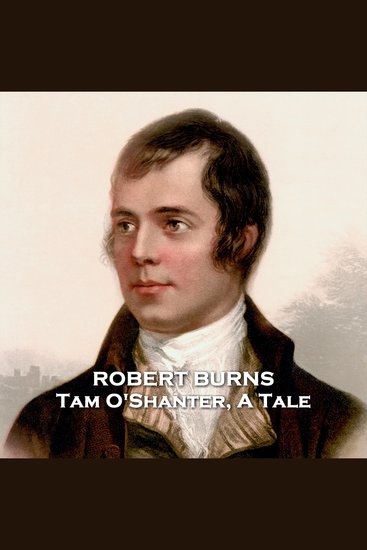
  • Tam O'Shanter A Tale - This Robby Burns classic is a tale that simply grabs you and never lets up - cover

    Tam O'Shanter A Tale - This...

    Robert Burns

    • 0
    • 0
    • 0
    Many nations have produced outstanding poets who they would gladly have represent their Culture.  But can any Nation say they have an equivalent of Robbie Burns?  Rabbie. The Ploughman Poet.  The Bard (Of Scotland).  This one poet is indelibly linked and intertwined with the culture and people of Scotland.  His life, loves, politics, verse and songs speak as them and for them.  
    From humble roots, the eldest son of seven born in 1759 to parents, both from tenant farming stock, the family endured both hardship and poverty.   Burns endured the test and began to write first at 15 and to publish his first volume some two years later.    
    He wrote in both true Scottish, dialect and English as well as turning his hand to song.  Politically he was an inspiration to both liberalism and socialism as well as a Scottish parliament.  His unique ability enabled him to appeal to all and quite rightly to be viewed as the National poet.    
    As well as creating his own great works he was also an avid collector of Scottish Folk Songs preserving for posterity the works of others.  
    However his own life was short dying at the young age of only 37.   What further greatness would have lain before him is impossible to say.  But, poetically, on the day of his death his son, Maxwell was born.    
    His fame today is worldwide and celebrated in January each year with the Traditional Burns night.  Each New Years Eve friends and families the world over link arms to ‘Auld Lang Syne’, giving immortality to his words and aims.  
    As former Secretary General of the United Nations, Kofi Annan says:  Burn’s poems dignify and illuminate the struggle faced by the vast majority of the world’s population today.
    Voir livre
  • The Theogony - cover

    The Theogony

    Hesiod

    • 0
    • 0
    • 0
    The Theogony "the genealogy or birth of the gods" is a poem by Hesiod (8th – 7th century BC) describing the origins and genealogies of the Greek gods, composed c. 730–700 BC. It is written in the Epic dialect of Ancient Greek and contains 1022 lines. 
    Hesiod's Theogony is a large-scale synthesis of a vast variety of local Greek traditions concerning the gods, organized as a narrative that tells how they came to be and how they established permanent control over the cosmos. It is the first known Greek mythical cosmogony. The initial state of the universe is chaos, a dark indefinite void considered a divine primordial condition from which everything else appeared. Theogonies are a part of Greek mythology which embodies the desire to articulate reality as a whole; this universalizing impulse was fundamental for the first later projects of speculative theorizing.
    Hesiod appropriates to himself the authority usually reserved to sacred kingship. The poet declares that it is he, where we might have expected some king instead, upon whom the Muses have bestowed the two gifts of a scepter and an authoritative voice (Hesiod, Theogony 30–3), which are the visible signs of kingship. It is not that this gesture is meant to make Hesiod a king. Rather, the point is that the authority of kingship now belongs to the poetic voice, the voice that is declaiming the Theogony.
    Voir livre