Rejoignez-nous pour un voyage dans le monde des livres!
Ajouter ce livre à l'électronique
Grey
Ecrivez un nouveau commentaire Default profile 50px
Grey
Abonnez-vous pour lire le livre complet ou lisez les premières pages gratuitement!
All characters reduced
History of the United States Democracy - Enriched edition Key Civil Rights Acts Constitutional Amendments Supreme Court Decisions & Acts of Foreign Policy - cover

History of the United States Democracy - Enriched edition Key Civil Rights Acts Constitutional Amendments Supreme Court Decisions & Acts of Foreign Policy

U.S. Supreme Court, U.S. Government, U.S. Congress

Maison d'édition: DigiCat

  • 0
  • 0
  • 0

Synopsis

History of the United States Democracy offers an in-depth exploration into the intricacies and evolution of American democratic ideals through a curated selection of seminal documents and landmark decisions. Spanning a broad spectrum of styles from foundational speeches to pivotal Supreme Court rulings, the anthology captures the vibrant tapestry of American political and legal thought. The diversity of content—from foundational legislation to incisive court opinions—showcases the dynamic interplay of justice, governance, and citizen rights, bringing to light transformative moments in U.S. history. Certain decisions resonate profoundly, shaping the past and continuing to influence present-day democratic discourse. The contributors to this anthology, comprising the U.S. Supreme Court, the U.S. Government, and the U.S. Congress, reflect a rich tradition of political and judicial voices that have collectively shaped the nation's democratic framework. Through their historical, cultural, and legal lenses, these institutions have significantly contributed to major movements such as civil rights, federalism, and the separation of powers, all of which converge in this compilation. Each entry offers invaluable context to the forces that have collectively steered the American democratic experiment, providing a tapestry of perspectives that enrich the overall narrative. This collection is an essential resource for readers eager to explore the multifaceted nature of American democracy. It invites scholars, students, and history enthusiasts alike to immerse themselves in a compelling dialogue between the past and present. Its comprehensive scope not only offers educational insights but also serves as a testament to the enduring power of dialogue in shaping a democratic society. Engage with this anthology to navigate the complexities of U.S. history and appreciate the resilient spirit of its democratic processes.

In this enriched edition, we have carefully created added value for your reading experience:
- An Introduction draws the threads together, discussing why these diverse authors and texts belong in one collection.
- Historical Context explores the cultural and intellectual currents that shaped these works, offering insight into the shared (or contrasting) eras that influenced each writer.
- A combined Synopsis (Selection) briefly outlines the key plots or arguments of the included pieces, helping readers grasp the anthology's overall scope without giving away essential twists.
- A collective Analysis highlights common themes, stylistic variations, and significant crossovers in tone and technique, tying together writers from different backgrounds.
- Reflection questions encourage readers to compare the different voices and perspectives within the collection, fostering a richer understanding of the overarching conversation.
Disponible depuis: 25/12/2023.
Longueur d'impression: 1118 pages.


D'autres livres qui pourraient vous intéresser

  • Anaxagoras - Mind and Cosmos in Ancient Greece - cover

    Anaxagoras - Mind and Cosmos in...

    Hector Davidson

    • 0
    • 0
    • 0
    Anaxagoras of Clazomenae, born around 500 BCE, was a pre-Socratic philosopher whose ideas bridged the gap between the earlier Milesian school and the more developed metaphysical and scientific theories of later Greek philosophy. His life and work significantly influenced subsequent thinkers, including Socrates, Plato, and Aristotle. 
    Early Life and Education: 
    Anaxagoras was born in Clazomenae, a city in Ionia, an area known for its vibrant intellectual culture. His early education exposed him to the philosophies of Thales, Anaximander, and Anaximenes, laying the groundwork for his own philosophical inquiries. He later moved to Athens, where he became a prominent figure in the intellectual circles of the time. 
    Philosophical Innovations: 
    Anaxagoras is best known for his introduction of the concept of Nous (Mind or Intellect), which he posited as the organizing principle of the cosmos. Unlike his predecessors who sought a single material principle as the origin of all things, Anaxagoras argued that the universe is governed by a rational, intelligent principle, Nous, which imparts order and structure to the chaotic flux of matter.
    Voir livre
  • The White Album - Essays - cover

    The White Album - Essays

    Joan Didion

    • 0
    • 0
    • 0
    "First appearing in print in 1979, this remarkable and intimate audiobook chronicles the implosion of the 1960s and reports on the people, mores, and trends that defined that turbulent time."—AudioFileFirst published in 1979, Joan Didion's The White Album records indelibly the upheavals and aftermaths of the 1960s. Examining key events, figures, and trends of the era—including Charles Manson, the Black Panthers, and the shopping mall—through the lens of her own spiritual confusion, Joan Didion helped to define mass culture as we now understand it. Written with a commanding sureness of tone and linguistic precision, The White Album is a central text of American reportage and a classic of American autobiography.
    Voir livre
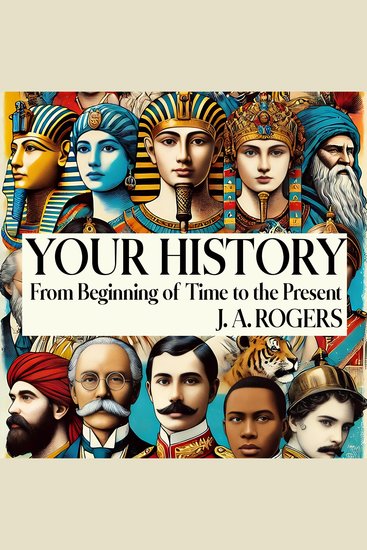
  • Your History: From Beginning of Time to the Present - cover

    Your History: From Beginning of...

    J. A. Rogers

    • 0
    • 0
    • 0
    Your History: From the Beginning of Time to the Present by J.A. Rogers is a compelling and enlightening book that explores the significant contributions of African and African-descended individuals throughout human history. Written in a concise, accessible style, the book highlights achievements in science, culture, politics, and innovation from ancient civilizations to modern times. Rogers, a pioneering historian and journalist, masterfully weaves together a narrative that challenges Eurocentric perspectives, offering readers an empowering and inclusive view of history. This book is an essential resource for those seeking to broaden their understanding of global heritage and the profound impact of African heritage on the world.
    Voir livre
  • The British Matron - cover

    The British Matron

    Nathaniel Hawthorne

    • 0
    • 0
    • 0
    Nathaniel Hawthorne (1804-1864) was born in Salem, Massachusetts. His ancestors include John Hathorne, the only judge involved in the Salem witch trials who never repented of his actions. Nathaniel later added W to make his name Hawthorne in order to hide his relation. 
    The Scarlet Letter, his most famous novel, was published in 1850, followed by a succession of other novels, including The House of the Seven Gables, and various short stories. 
    The British Matron is a satirical essay. 
    Narrator Alfred C. Martino is a graduate of Duke University and The Marshall School of Business at the University of Southern California. He currently lives in Jersey City. 
    Public Domain (P)2017 Listen & Live Audio
    Voir livre
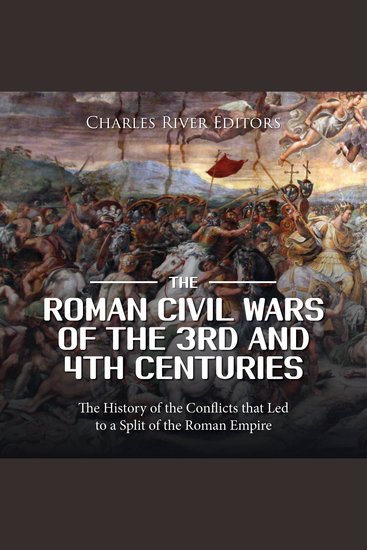
  • Roman Civil Wars of the 3rd and 4th Centuries The: The History of the Conflicts that Led to a Split of the Roman Empire - cover

    Roman Civil Wars of the 3rd and...

    Editors Charles River

    • 0
    • 0
    • 0
    The 50 years following the assassination of Severus Alexander on March 19, 235 CE has been generally regarded by academics as one of the lowest points in the history of the Roman Empire. This stands in stark contrast to the previous 150 years, which included the reigns of the Five Good Emperors and has been universally praised as one of the high points of the empire. Severus Alexander was the last of the Severan emperors, and the subsequent years of crisis (235-285 CE) were characterized by a series of short reigns, usually ending in the violent death of the reigning emperor. 
    At the same time, this period of time also saw the empire beset by threatening forces on all sides. The Romans faced a newly resurgent Persia in the east, as well as significant forces from German tribes on the Rhine and Goths along the Danube. The various conflicts would result in the unprecedented death of a sitting emperor in battle, which took place in 251 with Emperor Decius, and Emperor Valerian was captured in 260 CE.  
    Diocletian's reign would see reforms put into place to achieve the desired end of the Imperial Crisis, and several of the emperors before him may well have had the ability to manage the reform process, but the army’s power and willingness to use and abuse power ensured that few of them truly had a chance to really make their marks. It was the worst period in the history of the Roman Empire to that point, even as it forced the Romans to deal with belligerent foreign powers and problems created by the emergence of increasingly powerful and populous provinces. 
    The pressures created by population growth, both within the empire and outside of it, have been thoroughly researched, but more recently, issues created by climate change have also commanded attention.
    Voir livre
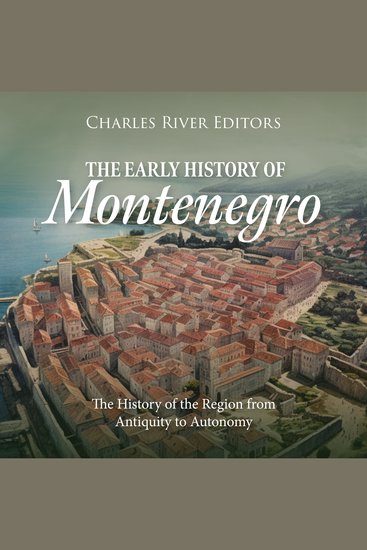
  • Early History of Montenegro The: The History of the Region from Antiquity to Autonomy - cover

    Early History of Montenegro The:...

    Editors Charles River

    • 0
    • 0
    • 0
    Much has been written about Western intervention during the breakup of Yugoslavia, and whether it made matters worse, prevented worse atrocities, or was simply ineffective. In early 1992, however, what was clear was that Europe was hopelessly divided over the best course of action to take towards Yugoslavia, and after several years of fighting, the Bosnian War was one of the most violent conflagrations in Europe since the end of World War II. 
    That war had been the byproduct of centuries of tensions in the Balkans, and an attempt in the wake of World War I to redraw the political boundaries of Europe and the Middle East. That included forming the Kingdom of Yugoslavia, initially known as the Kingdom of Serbs, Croats and Slovenes, a particularly fragile enterprise, and there was almost constant tension between the majority Serbs and the other Yugoslav nationalities, especially the Croats. As a result, the Kingdom was a land of political assassinations, underground terrorist organizations, and ethnic animosities. In 1929, King Alexander I suspended democracy and ruled as a dictator until he himself was assassinated in 1934. 
    Depending on the source, many authors have focused on different catalysts for Yugoslavia’s demise, but Vesna Drapac may have succinctly summed the situation up when he wrote that by the end, the state “lacked a reason to exist.” There is certainly something in this sentiment, but the disintegration came at an enormous cost. 
    Given what happened in Yugoslavia, it should be little surprise the area that eventually became the modern nation of Montenegro has had a turbulent history for millennia, with shifting borders, different degrees of autonomy, and various conflicts occurring within it.
    Voir livre