¡Acompáñanos a viajar por el mundo de los libros!
Añadir este libro a la estantería
Grey
Escribe un nuevo comentario Default profile 50px
Grey
Suscríbete para leer el libro completo o lee las primeras páginas gratis.
All characters reduced
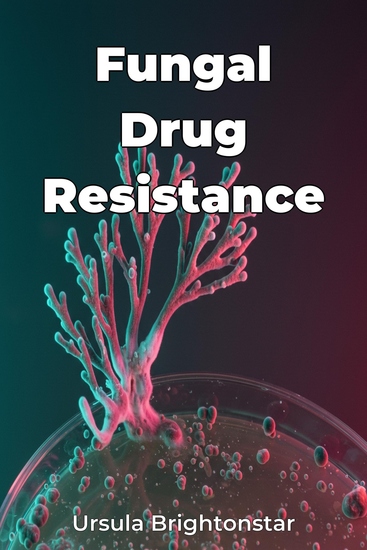
Fungal Drug Resistance - cover

Fungal Drug Resistance

Ursula Brightonstar

Traductor A AI

Editorial: Publifye

  • 0
  • 0
  • 0

Sinopsis

Fungal Drug Resistance addresses the growing crisis of antifungal resistance, a significant threat to global health. The book explores how fungi develop resistance at the molecular level and the clinical consequences, such as increased treatment failures and mortality rates. It also investigates innovative strategies to combat resistance, highlighting the urgent need for new drug development and alternative therapeutic interventions. Understanding the genetics and mechanisms behind resistance is crucial, as is recognizing the real-world impact on patient outcomes. This comprehensive work examines the fundamental principles of fungal biology and antifungal pharmacology, then progresses to the molecular mechanisms of resistance, including genetic mutations and biofilm formation. Later chapters focus on the clinical implications, epidemiology, diagnostics, and treatment strategies. The book uniquely combines molecular insights with clinical realities, offering a holistic view of the challenges and potential solutions.

 
The book is structured to provide a thorough understanding of the subject, starting with basic principles and moving towards complex therapeutic approaches. It bridges microbiology, pharmacology, and clinical medicine to provide insights for researchers, clinicians, and public health professionals. It emphasizes the importance of coordinated action to safeguard the efficacy of existing antifungals and develop novel strategies, such as immunotherapies, to combat resistant strains.
Disponible desde: 27/02/2025.
Longitud de impresión: 88 páginas.

Otros libros que te pueden interesar

  • Summary - Fight Club - Based On The Book By Chuck Palahniuk - cover

    Summary - Fight Club - Based On...

    Fastbooks Publishing

    • 0
    • 0
    • 0
    SUMMARY 
      
    FIGHT CLUB 
    BASED ON THE BOOK BY CHUCK PALAHNIUK 
      
    SUMMARY WRITTEN BY: FASTBOOKS PUBLISHING 
      
    CONTENT 
    The Beginning 
    The Rules of Fight Club 
    Life with Tyler 
    The Chemical Burn and Hitting Bottom 
    Sabotage and Mayhem 
    Project Mayhem 
    The Expansion of Project Mayhem 
    The Revelation 
    The Confrontation and Collapse 
    General Analysis 
      
    ABOUT THE ORIGINAL BOOK 
    Fight Club by Chuck Palahniuk tells the story of an unnamed narrator, struggling with insomnia and a dissatisfying life, who meets a charismatic soap salesman named Tyler Durden. Together they form a fight club, a space for men to engage in bare-knuckle brawls, as a rebellion against modern consumer culture. This escalates into a destructive movement called Project Mayhem, challenging societal norms with acts of chaos. The narrator’s life spirals as he grapples with the increasingly dangerous consequences of his actions and with a mysterious woman named Marla Singer. The novel explores themes of identity, alienation, and the search for meaning in a world that the characters feel is superficial and empty. The story questions the nature of reality, sanity, and the limits of self-destruction.
    Ver libro
  • Daily Vagus Nerve Exercises - The Most Effective Methods to Dramatically Reduce Inflammation Release Trauma and Rewire Your Brain From Anxiety - cover

    Daily Vagus Nerve Exercises -...

    Katrina Power

    • 0
    • 0
    • 0
    Do you often experience the following symptoms? 
    - Anxiety, emotional overwhelm or difficulty switching off? 
    - Depression, feel flat or numb? 
    - Gastrointestinal issues like stomach bloating and pain, IBS, SIBO or sensitivities? 
    - Chronic pain, migraine or fibromyalgia? 
    - Frequent Insomnia? 
    - Chronic fatigue? 
    - Chronic inflammation or autoimmune issues? 
    If yes, then this guide could help you. 
    This book combines education & interactive exercises on the vagus nerve, brain, the nervous system, self-regulation, stress recovery and how they can improve your physical health. 
    You’ll learn how to enhance the functioning of your vagus nerve using postures, movement, sensory points, audio exercises and the breath. 
    The exercises can be your daily ally, helping you to unwind the long-term tension that’s been held in your body and mind, and kept old, unhealthy emotional patterns playing out. 
    Meanwhile, the vagus nerve stimulation has been shown to improve conditions such as: 
    - Anxiety disorder 
    - Heart disease 
    - Tinnitus 
    - Obesity 
    - Alcohol addiction 
    - Migraines 
    - Alzheimer’s 
    - Leaky gut 
    - Bad blood circulation 
    - Mood disorder 
    - Cancer 
    Whether you are feeling anxiety or depression, you can use tools to engage your social nervous system to re-establish higher order nervous system functions. 
    Healing the nervous system can take time and requires patience. Put the polyvagal theory into action in your life to increase your sense of freedom in body and mindThis audiobook provides all the tools you need to understand and heal your vagus nerve.
    Ver libro
  • 5 Types of Eating Disorders - Understanding the Spectrum of Disordered Eating - cover

    5 Types of Eating Disorders -...

    John Harpoon

    • 0
    • 0
    • 0
    Eating disorders are complex mental health conditions that affect millions of people worldwide. They go beyond simple concerns about food and body weight, influencing emotional well-being, self-esteem, and overall health. While many associate eating disorders with extreme thinness or excessive eating, the reality is that they exist on a spectrum, affecting individuals in diverse ways. These disorders are not merely lifestyle choices; they are serious medical conditions with potentially life-threatening consequences. Understanding the different types of eating disorders is essential for identifying warning signs, promoting early intervention, and supporting those who struggle with disordered eating behaviors.  
      
    The causes of eating disorders are multifaceted, involving genetic, psychological, and environmental factors. Societal pressures and unrealistic beauty standards contribute significantly to the development of these conditions, as media portrayal of body ideals often distorts self-perception. Additionally, personal experiences such as trauma, stress, and co-occurring mental health conditions like anxiety or depression can increase vulnerability to disordered eating patterns. Recognizing these risk factors helps in fostering a more empathetic and informed approach to addressing eating disorders.  
      
    One of the greatest challenges in combating eating disorders is the stigma and misinformation surrounding them. Many people believe that individuals can simply “snap out of it” or that eating disorders only affect young women. However, they impact people of all ages, genders, and backgrounds. Some disorders, such as anorexia and bulimia, are more widely recognized, while others, like avoidant/restrictive food intake disorder (ARFID) and orthorexia, remain relatively unknown despite their serious consequences. This lack of awareness often prevents individuals from seeking help, delaying diagnosis and treatment. 
    Ver libro
  • University Technical Colleges - The First Ten Years - cover

    University Technical Colleges -...

    David Harbourne

    • 0
    • 0
    • 0
    The only book specifically about University Technical Colleges. Will interest researchers with a special interest in secondary and post-secondary education, university libraries and other research organisations in the UK and elsewhere.
    Ver libro
  • The Genius of Home - Teaching Your Children at Home with the Waldorf Curriculum - cover

    The Genius of Home - Teaching...

    PhD Catherine Read

    • 0
    • 0
    • 0
    To educate means to draw forth (Latin, educare: to lead, to bring up); the teacher must draw forth, but, also, must meet the new individual at her or his own level. But what does the teacher draw forth from the child? Is the teacher like the sun that draws forth the plants? Children do grow up, but at the same time, they come down. What if one is teaching one's own children? 
    There are as many possible approaches to teaching children at home, that is, "homeschooling", as there are homes and families who choose to take up this individualized approach to education. Catherine Read chose to model her School-at-Home on the curriculum used in Waldorf schools. 
    This book is the story of her journey as the primary teacher of her two daughters through the Waldorf curriculum from early childhood through high school grade eleven: what she did, when she did it, and why. 
    Along the way, this flexible, artistic, challenging, and ultimately rewarding approach to education comes into focus. Inspiring and instructional, the account of her years as both parent and teacher will be a boon to anyone thinking of founding their own School-at-Home.
    Ver libro
  • About Us - Essays from the Disability Series of the New York Times - cover

    About Us - Essays from the...

    Anónimo

    • 0
    • 0
    • 0
    Boldly claiming a space in which people with disabilities can be seen and heard as they are—not as others perceive them—About Us captures the voices of a community that has for too long been stereotyped and misrepresented. Speaking not only to those with disabilities, but also to their families, coworkers, and support networks, the authors in About Us offer intimate stories of how they navigate a world not built for them. 


    Since its 2016 debut, the popular New York Times "Disability" column has transformed the national dialogue around disability. Now, echoing the refrain of the disability rights movement, "Nothing about us without us," this landmark collection gathers the most powerful essays from the series that speak to the fullness of human experience—stories about first romance, childhood shame and isolation, segregation, professional ambition, child-bearing and parenting, aging and beyond. 


    Reflecting on the fraught conversations around disability—from the friend who says "I don't think of you as disabled," to the father who scolds his child with attention differences, "Stop it stop it stop it what is wrong with you?"—the stories here reveal the range of responses, and the variety of consequences, to being labeled as "disabled" by the broader public.
    Ver libro