Rejoignez-nous pour un voyage dans le monde des livres!
Ajouter ce livre à l'électronique
Grey
Ecrivez un nouveau commentaire Default profile 50px
Grey
Abonnez-vous pour lire le livre complet ou lisez les premières pages gratuitement!
All characters reduced
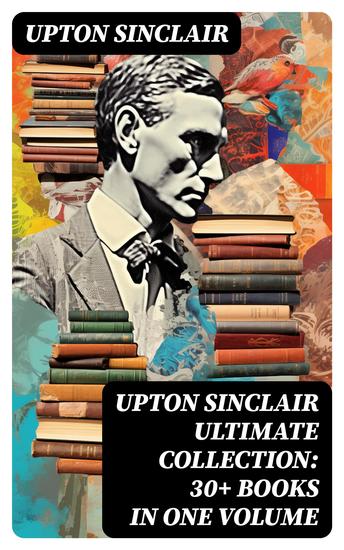
UPTON SINCLAIR Ultimate Collection: 30+ Books in One Volume - cover

UPTON SINCLAIR Ultimate Collection: 30+ Books in One Volume

Upton Sinclair

Maison d'édition: DigiCat

  • 0
  • 0
  • 0

Synopsis

The "Upton Sinclair Ultimate Collection" is a compendium that encapsulates the breadth of Sinclair's literary contributions, showcasing over 30 of his significant works. Renowned for his incisive social commentary and fervent advocacy for reform, Sinclair employed a realist literary style, often blending poignant narratives with stark realism to expose societal injustices. This collection includes masterpieces like "The Jungle," which unveils the grim truths of the meatpacking industry, and "Oil!", a critique of greed and moral corruption in America's industrial landscape. The volumes reflect the tumultuous socio-political climate of the early 20th century, making them not only engaging reads but also essential historical texts that evoke reflection on social issues that remain pertinent today. Upton Sinclair (1878-1968) was a prolific author and activist, whose writings were deeply influenced by his commitment to socialism and reform. His experiences as a laborer's advocate in Chicago inspired much of his early work, leading him to delve into topics of class struggle, labor rights, and corporate malfeasance. Sinclair's unyielding belief in the power of literature as a vehicle for change fueled his relentless exploration of American society's darker corners, making him a pivotal figure in American literature. For readers seeking a profound understanding of early 20th-century America, this expansive collection is indispensable. Sinclair's works not only provide insight into the historical context of his time but also resonate with contemporary issues of inequality and corporate ethics. Engaging with this collection offers a compelling pathway to understanding the struggles for social justice that continue to echo today.
Disponible depuis: 13/12/2023.
Longueur d'impression: 5598 pages.

D'autres livres qui pourraient vous intéresser

  • Aristocratic Education - From their pens to your ears genius in every story - cover

    Aristocratic Education - From...

    Stephen leacock

    • 0
    • 0
    • 0
    Stephen P H Butler Leacock FRSC was born on the 30th December 1869 in Swanmore, near Southampton, England, the third of eleven children. 
    The family emigrated to Canada in 1876 to live on a 100-acre farm in Sutton, Ontario.  There Leacock was home-schooled and later enrolled into the elite private school Upper Canada College in Toronto.  Academically he was very strong and enrolled at the University of Toronto to study languages and literature.  He left there after his alcoholic father abandoned the family and finances were too stretched to continue his attendance.  He now enrolled in a three-month course at Strathroy Collegiate Institute to become a qualified high school teacher and with it a regular income. 
    Leacock published humorous articles in many Canadian and US magazines but his real passion was economics and political theory.  In 1899 he enrolled for postgraduate studies at the University of Chicago and earned his PhD in 1903. 
    His marriage to Beatrix Hamilton produced a single child 15 years later.  Over time father and son developed a love-hate relationship, partially caused by his son’s diminutive stature of only four feet.  
    He accepted a post at McGill University and kept it until he retired in 1936.  His work ‘Elements of Political Science’, was adopted as a standard textbook for two decades and was also his most profitable.  He now also began public speaking and lecturing.  
    In 1910, he privately printed some articles as ‘Literary Lapses’.  It was then released by a recognised publisher, and he became a commercially successful writer.  His collections of light-hearted whimsy, parody, nonsense, and satire were now frequently published along with biographies and several award-winning volumes on Canada. 
    Politically Leacock was a difficult creature.  He opposed women’s right to vote, was a champion of Empire but advocated social welfare legislation and wealth redistribution, but he often caused friction with his racist views. 
    Leacock has been forgotten as an economist, but it’s often said that in 1911 more people had heard of him than had heard of Canada.  For the decade after 1915 Leacock was the most popular humorist in the English-speaking world. 
    Stephen Leacock died on 28th March 1944 of throat cancer in Toronto, Canada.  He was 74.
    Voir livre
  • The Chessmen of Mars - cover

    The Chessmen of Mars

    Edgar Rice Burroughs

    • 0
    • 0
    • 0
    The story follows the adventures of Dejah Thoris, princess of Helium, and her husband John Carter, Warlord of Mars. The novel is set on the planet Mars, which is inhabited by a variety of creatures, including giant green men, four-armed white apes, and ferocious Martians.
    Voir livre
  • Lady Windermere's Fan - cover

    Lady Windermere's Fan

    Oscar Wilde

    • 0
    • 0
    • 0
    A four act play by Oscar Wilde, first performed in 1892, Lady Windermere's Fan is another one of his productions that takes a half-sardonic, half-serious look into the intrigues of life. 
    In this play, Lady Windermere's idyllic life as the young wife of the rich Lord Windermere is disturbed by the rumour that her husband is visiting a lady of ill reputation, and is reportedly spending vast sums of money on her. 
    When confronted with the fact, he fails to adequately explain himself, and furthermore insists on inviting said woman in question, Mrs Erlynne to her birthday ball that night! 
    Distraught, Lady Windermere finds herself seriously entertaining the amorous advances of another man... but was is the truth behind the matter? 
    And where, will her fan finally end up...? 
    Narrated by Michael Ward
    Voir livre
  • Loss of Breath - cover

    Loss of Breath

    Edgar Allan Poe

    • 0
    • 0
    • 0
    Loss of Breath is a humorous short story by Edgar Allan Poe that first appeared in a 1832 issue of The Philadelphia Saturday Courier.
    Voir livre
  • Pride and Prejudice - cover

    Pride and Prejudice

    Jane Austen

    • 0
    • 0
    • 0
    Since its immediate success in 1813, Pride and Prejudice has remained one of the most popular novels in the English language. Jane Austen called this brilliant work “her own darling child” and its vivacious heroine, Elizabeth Bennet, “as delightful a creature as ever appeared in print.” The romantic clash between the opinionated Elizabeth and her proud beau, Mr. Darcy, is a splendid performance of civilized sparring. And Jane Austen’s radiant wit sparkles as her characters dance a delicate quadrille of flirtation and intrigue, making this book the most superb comedy of manners of Regency England.
    
    ©2020 Pandora's Box (P)2020 Pandora's Box
    Voir livre
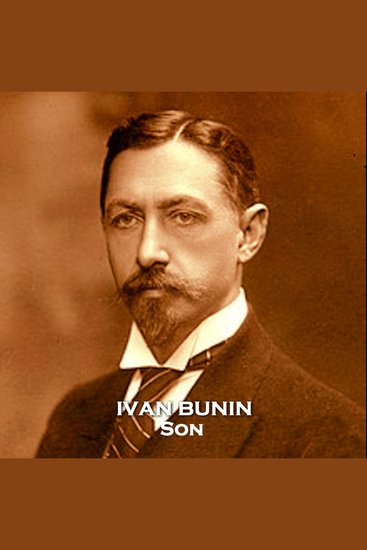
  • Son - From their pens to your ears genius in every story - cover

    Son - From their pens to your...

    Ivan Bunin

    • 0
    • 0
    • 0
    Ivan Alekseyevich Bunin was born on 22nd October 1870 in Voronezh province, in the South-West of the Russian Empire. 
    His early life was plagued by his Father’s gambling habits which caused his education to be erratic and the family to lose most of their wealth. 
    Bunin published his first poem in 1887 in St Petersburg and later in Oryol he worked for the local paper and became its editor, handily allowing him to publish his own poems and short stories.  There he met and married Varvara Pashchenko.  Ivan Bunin's debut book of poetry ‘Poems (1887–1891)’ was published in 1891. 
    This poetry and his translation of Longfellow garnered him his first Pushkin Prize.  Now he switched to writing prose and his novella ‘Antonov Apples’ is regarded as his first masterpiece.  Many more would follow. 
    The October Revolution of 1905 found Bunin in the Crimea.  Scenes of ‘class struggle’ he saw more as the oppressed people's craving for anarchy and destruction. 
    In November 1906 he began a passionate affair with Vera Muromtseva, within a few months they were touring through Egypt and Palestine.  ‘The Bird's Shadow’ collection was the result.   
    His second Pushkin Prize came in 1909 for Poems (1903–1906) and further translations.  He was now elected to the prestigious Russian Academy. 
    More widespread fame came in 1910 with ‘The Village’, a controversial and bleak portrayal of Russian country life.  Travel too beckoned them back to the Middle East, Ceylon (now Sri Lanka) and for winters in Capri with their friend Maxim Gorky.  
    That friendship suddenly ended in April 1917 as the revolution began to ferment in war-ravaged Russia.  After the Bolsheviks took power and the upheavals continued, he decided to leave Russia, finally achieving that in early 1920.  
    It would take some time to heal the wounds and stress he had been under and for his writing to begin again.  Settled in France, Bunin published many of his previous works and collections of novellas.  He also made regular contributions to the Russian emigre press.  
    Although reluctant to become involved in politics, Bunin was now feted as both a writer and the figurehead of non-Bolshevik Russian values and traditions.  In 1933 he became the first Russian to be awarded the Nobel Prize for Literature ‘for following through and developing with chastity and artfulness the traditions of Russian classic prose.’  
    In 1938 Bunin began working on the celebrated cycle of nostalgic, and erotically themed stories known Dark Avenues (or Dark Alleys).  
    As World War II broke out he chose to remain in Grasse spending the war at his remote Villa Jeanette, high in the mountains.  
    Ivan Bunin was a staunch anti-Nazi, and often, under difficult conditions, sheltered fugitives after Vichy was occupied by the Germans.  He wrote but did not publish during these years until on August 23rd the Nazi’s fled Grasse without a fight.  The next day the Americans came.  
    In May 1945 he returned to Paris and, apart from convalescing at times in Juan-les-Pins, he stayed for the rest of his life. 
    After 1948, with his health deteriorating, Bunin concentrated upon writing his memoirs and a book on Chekhov.  His last years were overshadowed by bitterness and despair at the situation in Russia and the treatment of its peoples.  He was suffering now from asthma, bronchitis and chronic pneumonia. 
    Ivan Alekseyevich Bunin died in a Paris attic flat on 8th November 1953.  Heart failure, cardiac asthma and pulmonary sclerosis were given as the causes of death.  He was 83.
    Voir livre