Rejoignez-nous pour un voyage dans le monde des livres!
Ajouter ce livre à l'électronique
Grey
Ecrivez un nouveau commentaire Default profile 50px
Grey
Abonnez-vous pour lire le livre complet ou lisez les premières pages gratuitement!
All characters reduced
The Machine - cover

The Machine

Upton Sinclair

Maison d'édition: Open Road Media

  • 0
  • 0
  • 0

Synopsis

A three-act drama about political corruption in early–twentieth century New York, from the Pulitzer Prize–winning author of The Jungle. First published in 1912, Upton Sinclair’s The Machine tells the story of political grafting in New York City. The corrupt politicians of the Tammany Hall syndicate are using their business connections for their own financial gain, while some of the city’s most vulnerable are drawn into a human trafficking ring. But a journalist, a lawyer, and an activist are eager to go up against the broken system and take it down . . .
Disponible depuis: 04/10/2022.
Longueur d'impression: 87 pages.

D'autres livres qui pourraient vous intéresser

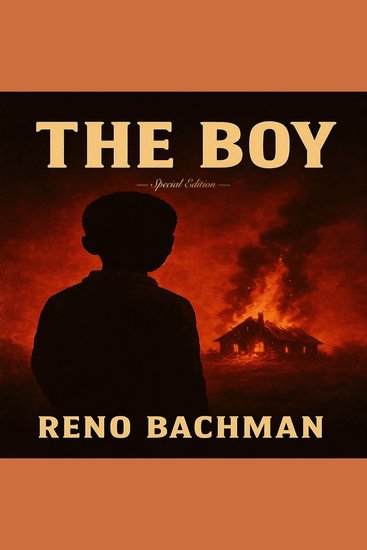
  • The Boy - Special Edition - cover

    The Boy - Special Edition

    Reno Bachman

    • 0
    • 0
    • 0
    This audiobook is narrated by an AI Voice.   
    A brutal coming-of-age Western set in blood, dust, and redemption. The Boy follows a young Black gunman forged by tragedy and raised by an outlaw prospector in a violent American frontier where justice is paid for in gunfire, silence, and consequence. 
    When the boy’s father—feared across the territory as the man who could outdraw any living soul—is murdered and left without dignity, the boy swears revenge. Guided only by harsh lessons, instinct, and the code of the dying West, he grows into a quiet storm: patient, disciplined, and lethal. 
    But revenge is never simple, and the trail forces him to confront more than his father’s killer. Along the way he finds love, betrayal, cruelty, unexpected mercy, and the terrifying truth that a man must decide whether violence defines him—or frees him. 
    Dark, poetic, and cinematic, The Boy blends Western grit with emotional depth and cultural legacy. It explores the cost of survival, the burden of history, and the myth of the gunfighter through a voice both intimate and unforgiving. 
    For listeners who enjoy Cormac McCarthy, Sergio Leone stylings, or stories rooted in justice, rage, and resilience, this is a Western that doesn’t just aim—it hits.
    Voir livre
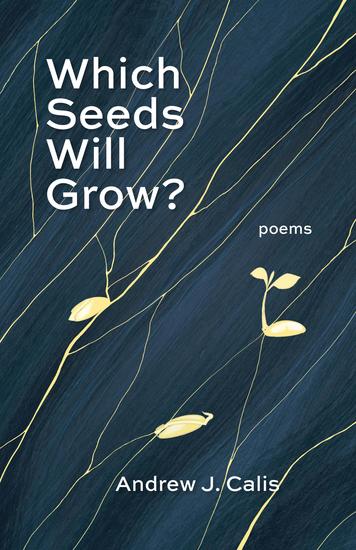
  • Which Seeds Will Grow? - Poems - cover

    Which Seeds Will Grow? - Poems

    Andrew Calis

    • 0
    • 0
    • 0
    A new collection of poems by Palestinian-American Catholic poet Andrew Calis, Which Seeds Will Grow? ​finds hope in the Holy Land.
    Grappling with his identity as a Christian Palestinian American, Andrew Calis recalls his father who saw Israeli jets swoop over his house in Jerusalem and a military helicopter fire bullets into his front yard. The same father who wouldn't teach his children Arabic, for fear that they would have accented English, who kept his past close to his chest—unknown to his son. He recounts the death of his grandfather, a grandfather who would beat his father, and for whom he could not fully mourn because Arab men don't cry.
    Andrew Calis digs through the pain of his family and of his homeland to find the fragile seed of contained life and delicate hope for the Holy Land—and reflects on how tenderly that seed must be nurtured.
    Steeped in wonder, Which Seeds Will Grow? explores the past and the present, from ancient Jerusalem to Baltimore's gardens and alleys through the lens of a Palestinian American. The poems are patient, waiting for seasons to end, waiting for space to expand outward, and waiting for light to touch the earth. Despite the difficulty of waiting, readers will find hope in hopelessness and comfort in the contemplation of the world and its sacred mysteries.
    From Which Seeds Will Grow?
    Planting a Garden 
    
    Stealing clippings from neighbors' yards
    
    And smiling as they grew their own blooms
    
    In the safe and hidden rooms where we
    
    Keep watch on them like they are our children.
    
    ***
    
    Nothing grew. We knew this was
    
    A possibility, had read
    
    It sometimes takes two years,
    
    And we hoped in spite of only dirt
    
    For the green that could be anything.
    Perhaps we dug too shallow or too close
    
    To the shade, or stepped where we had already planted,
    
    Either crushing roots or breaking their curled
    
    First shoots before they broke the surface.
    
    ***
    
    So when one survived, wove a green line
    
    Of its own, thinly sprouting something unknowable, I ran
    
    Inside and for a moment felt
    
    What John must have felt
    
    Leaving Peter, old and unsteadily running,
    
    And running breathlessly
    
    To tell everyone —
    
    Everyone
    
    What had happened
    
    And how you wouldn't believe your eyes.
    Voir livre
  • Moments of Vision and Miscellaneous Verses (Selection) - cover

    Moments of Vision and...

    Thomas Hardy

    • 0
    • 0
    • 0
    Hardy claimed poetry as his first love, and published collections until his death in 1928. Although not as well received by his contemporaries as his novels, Hardy's poetry has been applauded considerably in recent years. Most of his poems deal with themes of disappointment in love and life, and mankind's long struggle against indifference to human suffering. (Summary from Wikipedia).
    Voir livre
  • Shakespearean Dialogues Collection 001 - cover

    Shakespearean Dialogues...

    William Shakespeare

    • 0
    • 0
    • 0
    This is a collection of scenes from Shakespeare's plays, mainly comprising dialogues between two characters. The theme for this collection is "Wooing, Wedding, and Repenting" (inspired by a line from Much Ado About Nothing). (Summary by Elizabeth Klett) The Taming of the Shrew, Act 2 Scene 1 read by: Algy Pug, Verity Kendall   Richard III, Act 1 Scene 3 read by: Winston Tharp, Elizabeth Barr  A Midsummer Night's Dream, Act 2 Scene 1 read by: Martin Geeson, Grace Garrett   Romeo and Juliet, Act 2 Scene 2 read by: Charlotte Duckett, Verity Kendall   Much Ado About Nothing, Act 4 Scene 1 read by: Arielle Lipshaw, Valerie Tan  Henry V, Act 5 Scene 2 read by: Tiffany Halla Colonna, Winston Tharp, Elizabeth Klett   As You Like It, Act 3 Scene 2 read by: Arielle Lipshaw, Elizabeth Klett   Hamlet, Act 3 Scene 1 read by: Martin Geeson, Grace Garrett   Twelfth Night, Act 1 Scene 5 read by: Elizabeth Barr, Grace Garrett   Measure For Measure, Act 2 Scene 4 read by: Algy Pug, Elizabeth Klett   All's Well That Ends Well, Act 4 Scene 2 read by: Martin Geeson, Elizabeth Barr   Antony and Cleopatra, Act 1 Scene 3 read by: Amanda Friday, Algy Pug   Cymbeline, Act 1 Scene 6 read by: David Richardson, Carol Box   The Winter's Tale, Act 4 Scene 4 read by: Amanda Friday, Martin Geeson   The Tempest, Act 3 Scene 1 read by: Algy Pug, Arielle Lipshaw, Elizabeth Klett
    Voir livre

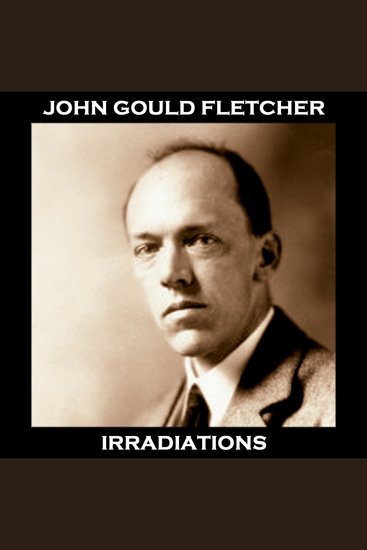
  • Irradiations - Emotional and thought provoking seaside poems - cover

    Irradiations - Emotional and...

    John Gould Fletcher

    • 0
    • 0
    • 0
    John Gould Fletcher was born in Little Rock, Arkansas on 3rd January 1886 to a socially prominent family.  
    He was educated at Phillips Academy, Andover before advancing to Harvard University which he attended from 1903 to 1907, before dropping out after his father's death. 
    As a young man Fletcher spent many years in England where he became part of the influential Imagist group of poets together with Amy Lowell and Ezra Pound.   
    His first marriage came from a resumed relationship with the now married Florence Emily ‘Daisy’ Arbuthnot. Her adultery with Fletcher was the grounds for her divorce from Malcolm Arbuthnot.  They married on 5th July 1916 but later divorced.  
    Fletcher first published in 1912, with ‘The Dominant City’ too much praise and admiration and followed this with other well-regarded volumes such as ‘Irradiations: Sand and Spray’, and ‘Goblins and Pagodas’. 
    In the late 1920s and 1930s Fletcher became increasingly active with a group of Southern writers and poets known as the Southern Agrarians. They published the classic ‘I'll Take My Stand: The South and the Agrarian Tradition’. 
    Although he was highly regarded as a poet he was not very prolific.  However, such was the undoubted quality that in 1939 he received the Pulitzer Prize for his work ‘Selected Poems’.  He was the first poet from the south to receive such an accolade.  Fletcher’s other passion and pursuit was as an authority on modern painting, a subject on which he also published. 
    A second marriage followed in 1936 to the children’s author, Charlie May Simon. They built ‘Johnswood’, a residence on the bluffs of the Arkansas River and travelled frequently to New York for shots of modern culture and intellectual stimulation as well as to the American West and South for the climate after Fletcher developed chronic arthritis. 
    In 1937 he wrote his autobiography, ‘Life is My Song’. 
    His developing passion for his roots and background resulted in the writing of a history of his State and published in 1947; ‘Arkansas’. 
    By now Fletcher was suffering from bouts of depression and on 10th May 1950, he committed suicide by drowning himself in a pond near his home in Little Rock, Arkansas.
    Voir livre
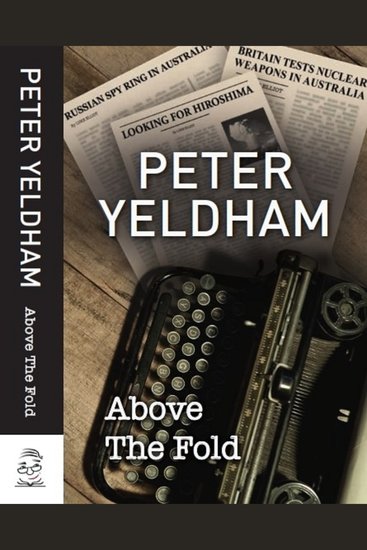
  • Above The Fold - cover

    Above The Fold

    Peter Yeldham

    • 0
    • 0
    • 0
    ‘Peter Yeldham’s historical fiction pedigree is one of the best in the country.’ - SUNDAY TELEGRAPH 
    Luke Elliott and Claudia Marsden have fallen in love at a perilous time. The Second World War is raging in the Pacific, barbed wire and gun emplacements are strung along Sydney's northern beaches in preparation for invasion. As the war moves closer, their ‘sextet’ of loyal school friends is splintering as individual career dreams are pursued. Luke yearns to be a writer, but a start in journalism is proving challenging. The war’s end unexpectedly provides Luke’s big break, but the pursuit of his dream will keep him away from Australia and Claudia, with surprising consequences for them both. 
    “Above The Fold is a big-hearted novel that explicitly examines notions of love and loyalty … Anyone who enjoys reading about post-war Australian history and the attitudes that informed much of it, will be delighted.” - GABRIELLE LORD, AUTHOR OF DISHONOUR 
    “Written with meticulous detail, this is an engaging story spanning a tumultuous period in Australian history.” 
    - NICOLE ALEXANDER, AUTHOR OF THE GREAT PLAINS
    Voir livre