Begleiten Sie uns auf eine literarische Weltreise!
Buch zum Bücherregal hinzufügen
Grey
Einen neuen Kommentar schreiben Default profile 50px
Grey
Jetzt das ganze Buch im Abo oder die ersten Seiten gratis lesen!
All characters reduced
The Collected Works - cover

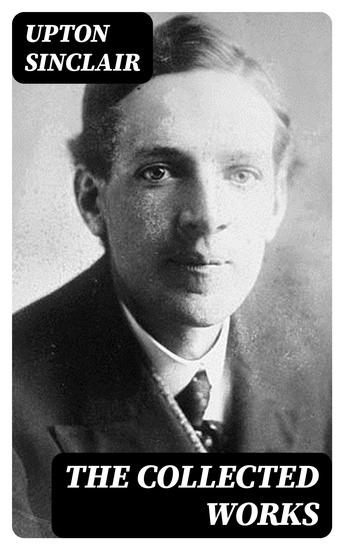
The Collected Works

Upton Sinclair

Verlag: DigiCat

  • 0
  • 0
  • 0

Beschreibung

Upton Sinclair's 'The Collected Works' comprises a multifaceted examination of American society through a radical literary lens. From the gritty realism of industrial exploitation in 'The Jungle' to incisive social critiques in his other novels and essays, Sinclair's prose is both poignant and unflinching. This collection showcases his unique ability to blend journalism with fiction, revealing the social injustices of his time while advocating for progressive reforms. Sinclair's work is marked by an undercurrent of muckraking journalism, aiming to enlighten readers about the harsh realities faced by the working class during the early 20th century. Sinclair was a fervent social activist and a prominent figure in the Socialist Party. His firsthand experiences with the struggles of laborers and immigrants deeply influenced his writing. An advocate for social change, Sinclair's commitment to revealing the truth about corporate malfeasance and political corruption is evident throughout this comprehensive anthology, which not only represents his literary genius but also his relentless pursuit of social justice. The reader is encouraged to delve into 'The Collected Works' to explore the transformative power of literature as a catalyst for change. This collection serves as an essential lens through which one can understand the socio-economic issues of the early 20th century, while still offering a timeless call to action that remains relevant today.
Verfügbar seit: 11.10.2022.
Drucklänge: 2628 Seiten.
Weitere Bücher, die Sie mögen werden

  • The Scaremongerer - From their pens to your ears genius in every story - cover

    The Scaremongerer - From their...

    Ford Maddox

    • 0
    • 0
    • 0
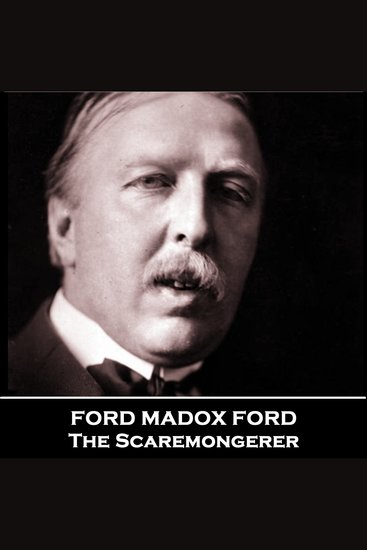
    Ford Madox Ford was born Ford Hermann Hueffer on 17th December 1873 in Wimbledon, London, England.    
    Today he is best known for one book, ‘The Good Soldier’, which is regularly held to be one of the 100 greatest novels of all time.  But, rather unfairly, the breadth of his career has been overshadowed.  He wrote novels as well as essays, poetry, memoirs and literary criticism. Today he is well-regarded but known only for a few works rather than the grand arc of his career. 
    Ford collaborated with Joseph Conrad on three novels but would later complain that, as with all his collaborators, and those he so readily championed, his contribution was overshadowed by theirs.  
    He founded The English Review and The Transatlantic Review which were instrumental in publishing and promoting the works of so many authors and movements. 
    During WWI he initially worked on propaganda books before enlisting. Ford was invalided back to Britain in 1917, remaining in the army and giving lectures until the War’s end. After a spell recuperating in the Sussex countryside he lived mostly in France during the 1920s.  
    He published the series of four novels known as Parade’s End, between 1924 and 1928. These were particularly well-received in America, where Ford spent much of his time from the later 1920s to his death in 1939. 
    His last years were spent teaching at Olivet College in Olivet, Michigan. 
    His poetry is an excellent example of his talents.  His evocation of the horrors of War are outstanding examples of the time and have become greatly admired.  
    Ford Madox Ford died on 26th June 1939 at Deauville, France at the age of 65.
    Zum Buch
  • Where Was Wych Street - From their pens to your ears genius in every story - cover

    Where Was Wych Street - From...

    Stacy Aumonier

    • 0
    • 0
    • 0
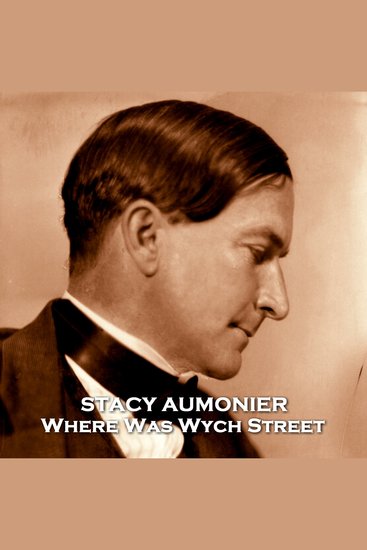
    Stacy Aumonier was born at Hampstead Road near Regent’s Park, London on 31st March 1877. 
    He came from a family with a strong and sustained tradition in the visual arts; sculptors and painters. 
    In 1890 the teenage Aumonier attended Cranleigh School in Surrey. Although he would later write critically about English public schools (with articles for the London Evening Standard and New York Times) in how they tried to impose conformity on students, records indicate that he integrated well into Cranleigh. Aumonier was a passionate cricket player, belonged to the Literary and Debating Society, and, in his final year, became a prefect. 
    On leaving school it seemed the family tradition of the visual arts would be his career path. In particular his early talents were that of a landscape painter. He exhibited paintings at the Royal Academy in 1902 and 1903, and 1908. An exhibition of his work would later be held at the Goupil Gallery in London in 1911. 
    In 1907 he married the international concert pianist, Gertrude Peppercorn, at West Horsley in Surrey. She herself was the daughter of a landscape painter (Arthur Douglas Peppercorn, occasionally cited as ‘the English Corot’.) A son, Timothy, was born in 1921. 
    A year after his marriage, Aumonier began a brief career in a second branch of the arts at which he enjoyed outstanding success—as a stage performer writing and performing his own sketches.  
    The Observer newspaper commented that "...the stage lost in him a real and rare genius, he could walk out alone before any audience, from the simplest to the most sophisticated, and make it laugh or cry at will." 
    In 1915, Aumonier published a short story ‘The Friends’ which was well received (and voted one of the best short stories of 1915 by the Boston Magazine, Transcript).  
    Despite his age being 40 in 1917 he was called up for service in World War I. He began as a private in the Army Pay Corps, and then transferred as a draughtsman in the Ministry of National Service. 
    By now he had four books published—two novels and two books of short stories—and his occupation is recorded with the Army Medical Board as ‘author.’ 
    In the mid-1920s, Aumonier received the shattering diagnosis that he had contracted tuberculosis. In the last few years of his life, he would spend long spells in various sanatoria, some better than others. In a letter to his friend, Rebecca West, written shortly before his death, he described the debilitating conditions in a sanatorium in Norfolk during the winter of 1927, where the dampness was so severe that a newspaper left beside the bed would feel "sodden to the touch in the morning." 
    Shortly before his death, Stacy Aumonier sought treatment in Switzerland, but died of the disease in Clinique La Prairie at Clarens beside Lake Geneva on 21st December 1928. He was 55.
    Zum Buch
  • A Life Worth Living - cover

    A Life Worth Living

    Simon Ingram

    • 0
    • 0
    • 0
    Sometimes, looking at your past can give you the strength to move forward. As the classic symptoms of Parkinsons disease began to take control of Simon's life, he became a shadow of his former self. After months of fighting to keep the disease in check, Simon finally found the strength to tell his family and even managed to book an appointment with a neurologist. Sadly, at a time when he needed an experienced health care professional to help him fight his corner, what he got was a cold, uncaring man who clearly had no time for his situation. However, his initial assessment proved to be 100% accurate; at just 36 years of age, Simon was told he had Parkinsons disease. The desire to produce a written account of his life for his immediate family and friends led to A Life Worth Living. Ingram looks back at his life, often with humour and pathos, and decides that the way to keep going is to appreciate the life he has led. The only way to fight is to appreciate what battles he has already fought and won. After all, what else makes a life worth living? Ingram's first-hand account of his life from his early childhood to teen years to his first signs of the debilitating disease give an insider's look at not just a 'disease' but a man.
    Zum Buch
  • Not the Boy for You - Becoming a Black Gay Man in a Culture of Exclusion - cover

    Not the Boy for You - Becoming a...

    Angelo Robinson

    • 0
    • 0
    • 0
    Not the Boy for You is the story of a life deferred but not denied.In this deeply personal literary memoir, Angelo Robinson chronicles his journey to wholeness as a young Black gay man in America. Not the Boy for You is a voyage through imagination and secrecy to create a world free to accept, embrace, and love all of oneself, freed from the face of familial loyalty, societal mandates, gendered constructions, sexual boundaries, and Christian taboos.He takes on the intersection of sexuality and race and false, malicious declarations by some that Blackness does not include homosexuality because it is a behavior learned from Whites, a form of self-hatred, and traitorous to the African American community. Not the Boy for You grounds his story historically and culturally with research on the literary, cinematic, and photographic emergence and evolution of Black male homosexuality. This examination explores the complex and complicated reality of how the Black male body, though marginalized, has been fetishized which is central to the wider cultural production of homosexuality.Not the Boy for You is Robinson's path to accepting and loving all of himself, with each step making him stronger and more empowered to confidently live out his race, gender, faith, and sexuality on his own terms--unapologetically.
    Zum Buch
  • Raising Wild - Dispatches from a Home in the Wilderness - cover

    Raising Wild - Dispatches from a...

    Michael P. Branch

    • 0
    • 0
    • 0
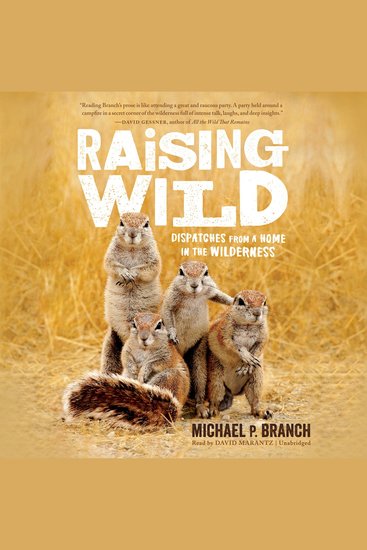
    Combining natural history, humor, and personal narrative, Raising Wild is an intimate exploration of Nevada’s Great Basin Desert, the wild and extreme land of high desert caliche and juniper, of pronghorn antelope and mountain lions, where wildfires and snowstorms threaten in equal measure. 
    Michael Branch “earned his whiskers” in the Great Basin Desert of northwestern Nevada, in the wild and extreme landscape where he lives off the grid with his wife and two curious little girls. Shifting between pastoral passages on the beauty found in the desert and humorous tales of the humility of being a father, Raising Wild offers an intimate portrait of a landscape where mountain lions and ground squirrels can threaten in equal measure. With Branch’s distinct lyricism and wit, this exceedingly barren landscape becomes a place resonant with the rattle of snakes, the plod of pronghorn antelope, and the rustle of juniper trees, a place that is teeming with energy, surprise, and an endless web of connections. Part memoir, part homage to an environment all-to-often brushed aside as inhospitable, Raising Wild offers an intergenerational approach to nature, family, and the forgotten language of wildness.
    Zum Buch
  • Always Trust Your Cape - How I Lived the American Dream - cover

    Always Trust Your Cape - How I...

    Donald Eugene Moore

    • 0
    • 0
    • 0
    I have an enormous amount of respect for people who consider themselves entrepreneurs. 
     
    People who, in most cases, take tremendous risks in hopes of experiencing tremendous rewards. Not only for themselves but for the world at large. 
     
    Entrepreneurs hire the most people, drive the economy, create innovation, promote research and development, while shaping new products and services. They solve problems with existing solutions, and technologies, while in most cases utilizing existing resources more effectively and more times than not on shoestring budgets. 
     
    I consider entrepreneurs to be the great pioneers of today's business world. If you are considering launching your own entrepreneurial journey, are well on your way, or anywhere in between, my passion and purpose in writing this book is to give you confidence!
    Zum Buch